





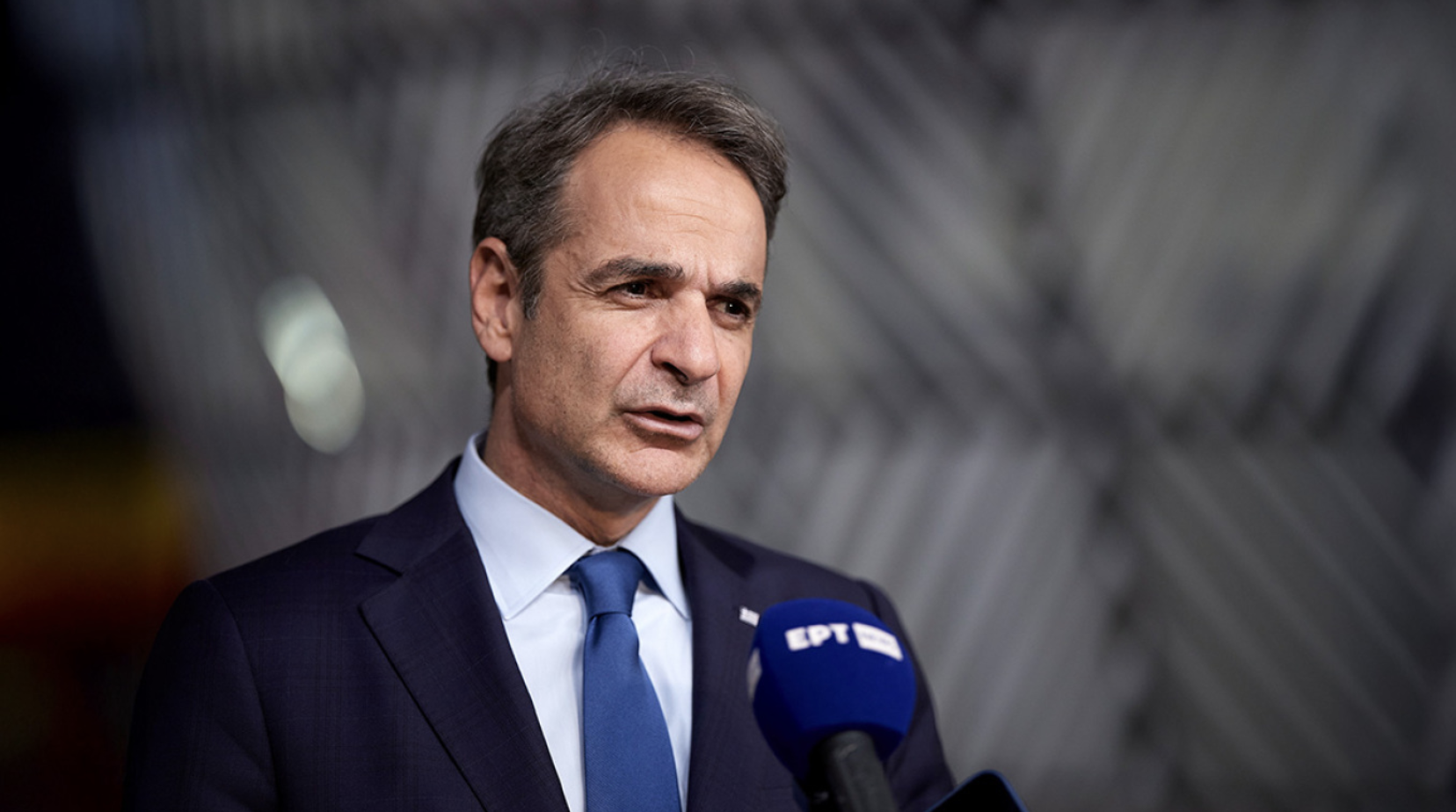
“We will use every measure to prevent the establishment of a new migration route to Crete – I would say both carrot and stick,” emphasized Prime Minister Kyriakos Mitsotakis during his press conference after the conclusion of the European Council summit in Brussels, responding to a question on migration and Libya’s stance.
Regarding defense procurement, the Prime Minister stated that cooperation with third countries applies to those that share our foreign and security policies, sending a clear message to Turkey. “We exercise sovereign rights on the ground,” he clarified.
One of the central topics of the press conference was the migration crisis, with particular reference to the increase in flows from Eastern Libya to Crete.
The Prime Minister underlined the importance of the discussion on Libya, both at the informal meeting of like-minded countries on migration and at the European Council itself.
On migration and Libya:
“It is positive that the issue of Libya was discussed both in the morning’s informal meeting and at the Summit itself. Together with my Italian counterpart, we briefed our colleagues on the significant increase in flows and this new route that seems to be opening between Eastern Libya and Crete. It is encouraging that the European Commission recognized the risk of this situation becoming permanent and appears willing to take action.
A visit to Libya is scheduled for early July by the Commissioner for Migration, following the visit of the Greek Foreign Minister, accompanied by his counterparts from Italy, Malta, and Greece. The message to be delivered is that this practice cannot continue and that an understanding with the Libyan authorities must be reached for better border monitoring.
Greece has acted unilaterally by dispatching ships outside Libya’s territorial waters, and whenever boats are detected, we seek communication so that they are intercepted by the Libyan authorities and returned to Libya.
We will use all the measures at our disposal, as Greece and as Europe – both carrot and stick – to ensure that this new route does not become permanent. Those using this route are Egyptian nationals. They should be returned immediately to Egypt. The message will be conveyed to Egypt to accept the return of its citizens who end up in Europe without asylum rights, since Egypt is considered a safe country.”
Press Conference of the Prime Minister after the European Council in Brussels
On European defense, Mr. Mitsotakis referred to two funding tools being promoted to strengthen the EU’s defense capabilities, expressing optimism about the discussion on common borrowing.
On defense procurement:
“Countries previously in the ‘frugal’ category, like Denmark and Finland, now recognize the need for defense spending and agree that such expenditures should be financed by a European tool. Greece was among the first to insist on relaxing fiscal rules so that additional defense spending would not count toward excessive deficit limits – and we succeeded, as our country has activated the escape clause.
The SAFE is a funding tool; we are assessing how useful it could be for our country. It encourages joint procurement among EU states, and we may be able to utilize it. We are awaiting the final proposals from the Ministry of Defense.
If you look at the European Council conclusions – as published in the morning and now – you’ll notice one single, but very significant change for Greece. In paragraph 21, it now clearly states that cooperation with third countries presupposes that they are like-minded and, critically, share the EU’s common foreign and security policy objectives.
This is another institutional safeguard for us – a European Council decision that countries wanting to participate in these financial tools must align with the EU’s foreign and security policies. They cannot, for instance, have low compliance levels.”
On the Greece-Turkey-Libya triangle, responding to a question from ANA-MPA regarding the mention of the Turkey-Libya memorandum in the conclusions:
“Firstly, Mr. Armenis, it is positive that, at Greece’s request, the previous language was repeated, characterizing the Turkey-Libya memorandum as null and void.
This is important in the current context, sending a clear message to Libya that we – not just Greece but Europe – do not accept such faits accomplis. Let me also say, because I’ve heard superficial and unfounded criticism back home, that when a country exercises its sovereign rights on the ground – as Greece has done, not just in theory – by designating offshore blocks and granting extraction licenses south of Crete, some reactions may be expected.
Yet, without having reviewed the announcement in full detail, it appears that the blocks respect the median line. This is a positive development. And our invitation to Libya – to any authority capable of negotiating – to delineate maritime zones remains fully valid.
One last point: Greece had opportunities in the past to make such delineations but didn’t. Let’s remember that. We, by contrast, have delineated EEZs and continental shelves with Egypt and Italy – and we are exercising our sovereign rights.”
On the Middle East, Mr. Mitsotakis stated:
“First of all, we believe in diplomacy and call on all parties to negotiate the future of Iran’s nuclear program in a manner that ensures Iran will never obtain nuclear weapons. This is a view shared broadly among my peers. The solution, we emphasize, must be diplomatic, not military.
Greece once again raised the humanitarian situation in Gaza. The conclusions include a strong call to end Israel’s operation in Gaza, so that civilians – especially Palestinian ones – do not continue to suffer. At the same time, this must be paired with the release of the remaining hostages, who are still alive.
Now is the time to apply maximum pressure on Israel to take such a step.”
On the OPEKEPE case, the Prime Minister said:
“I do not often comment on domestic affairs while abroad. I’ve spent the day without access to my phone due to the Summit. I have not been fully briefed on the case file. I will be soon, and once I make my decisions, you will be informed.”
Press Conference of Prime Minister Kyriakos Mitsotakis after the conclusion of the European Council Summit in Brussels
Nadine Hardalia (SKAI): Good evening, Mr. Prime Minister. Could you provide an overview of what was discussed in the informal morning meeting on migration, particularly concerning Libya? How could the EU cooperate with Libya, and were specific ideas proposed?
Second question: Were any measures discussed at the European Council in case Libyan authorities refuse to cooperate in reducing the flows?
Kyriakos Mitsotakis:
First, it is extremely positive that Libya was discussed both in the morning’s informal meeting of like-minded countries and at the Summit. Alongside my Italian counterpart, we briefed our colleagues on the rising flows and this new route between Eastern Libya and Crete.
Also positive is that the European Commission recognized the risk of this situation becoming permanent and appears willing to act. The Commissioner for Migration will visit Libya in early July – I believe shortly after our Foreign Minister’s visit – accompanied by his counterparts from Greece, Italy, and Malta. They will travel to both Eastern and Western Libya to deliver the message that this practice must stop and to ensure better border surveillance.
At the same time, as you know, Greece has acted independently by dispatching vessels outside Libya’s territorial waters to better monitor the situation. When small boats are detected, we attempt to coordinate with Libyan authorities so they can intercept and return them.
We will use all available measures – as Greece and as Europe – “carrot and stick,” as we say, to prevent this new route from becoming permanent.
Lastly, a significant number of those using this route are Egyptian nationals. They should be returned to Egypt immediately. This must become a common European policy, and the message will be sent to Egypt to accept the return of its citizens who reach Europe without the right to asylum, as Egypt is considered a safe country.
Alexandra Voudouri (Kathimerini): Mr. Prime Minister, beyond the two funding tools for EU defense, do you believe there will eventually be discussion on common borrowing? And does Greece have interest in the SAFE mechanism?
Kyriakos Mitsotakis:
Hopefully yes – that is my answer. It’s positive that even previously frugal countries, such as Denmark and Finland, now see the need for increased defense spending and agree that such expenses may require European-level funding.
Greece, from early on, pushed for relaxing fiscal rules so that extra defense spending wouldn’t count toward excessive deficit calculations. We succeeded, and have already activated the national escape clause.
SAFE is a financial instrument. We are assessing how beneficial it may be for us. It encourages joint procurement among EU nations and could be useful. We await the final proposals from the Ministry of Defense.
Ask me anything
Explore related questions




