





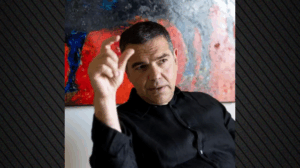
Just one day after SYRIZA marked the 7-year anniversary of the “Ithaca” speech that announced the end of Greece’s bailout programs, Tsipras gave an interview to Le Monde—widely seen as a signal of his intention to return to active politics.
Photographed by Louisa Vradi for Le Monde, Tsipras reiterated familiar themes: harsh criticism of the current government, and a defense of his handling of the bailout era, famously remarking:
“Thanks to what my political opponents call a ‘flip-flop,’ Greece today is a normal country, no longer under international supervision.”
Yet he concluded with a telling remark:
“I was never thirsty for power. But I miss active politics and contact with voters.”
Key points from Tsipras’ interview:
- The roots of the crisis: Greece’s collapse stemmed from three main factors—its dysfunctional production model, widespread corruption, and a clientelist state. The crisis was a “modern Odyssey” for the Greek people. Like Odysseus returning to Ithaca, Greece’s exit from the bailout programs in 2018 marked the start of a new era. However, the conservative government failed to seize the opportunities created by the end of international financial oversight.
- Corruption returns: “We have returned to generalized corruption. The recent scandal involving European agricultural subsidies is telling,” Tsipras said.
- Correcting myths about 2015: He admitted he had not spoken openly about that dramatic period—despite being its central figure—but announced he is writing a book to be published by year’s end to “set the record straight.”
- Unequal growth: Current economic growth benefits only a minority. Research shows just 1 in 5 Greeks live comfortably, 45% face financial difficulties, and 35% are in debt.
- Debt restructuring: In 2015, his government managed to restructure Greece’s debt and secure low interest rates until 2032. “This will no longer apply afterward, and without high growth rates, repayment will be difficult,” he warned.
- Inequalities: Despite creditor pressure, Tsipras said his government placed the burden of austerity on the wealthy and reduced inequality. By contrast, under Prime Minister Kyriakos Mitsotakis, inequalities have deepened.
- Between 2015–2019, the incomes of the poorest 10% rose by 45%, while the richest 10% saw a 2.7% drop.
- Between 2019–2023, the poorest 10% lost 8.1% of their income, while the richest 10% gained 13%.
- Austerity burden: His 2015–2019 program imposed €8.1 billion in cuts and taxes, compared to €44 billion under the two previous bailout programs. “84% of austerity was implemented before my government,” he stressed.
- Left vs. Right: He accused Mitsotakis’ conservative government of protecting elites at all costs, contrasting it with the Left’s commitment to the welfare of the many, the weak, and the middle class.
- On the 2015 referendum: Tsipras defended it as a way to secure better terms for Greece. “It was a dramatization strategy to win concessions from creditors. And to some extent, we succeeded.”
- Pride in compromise: “Thanks to what my opponents call a ‘flip-flop,’ Greece became a normal country again, free from IMF officials dictating policy. I am proud of that choice.”
- On his future: “I was never hungry for power. But I do miss active politics and being in touch with voters.”
Ask me anything
Explore related questions




