





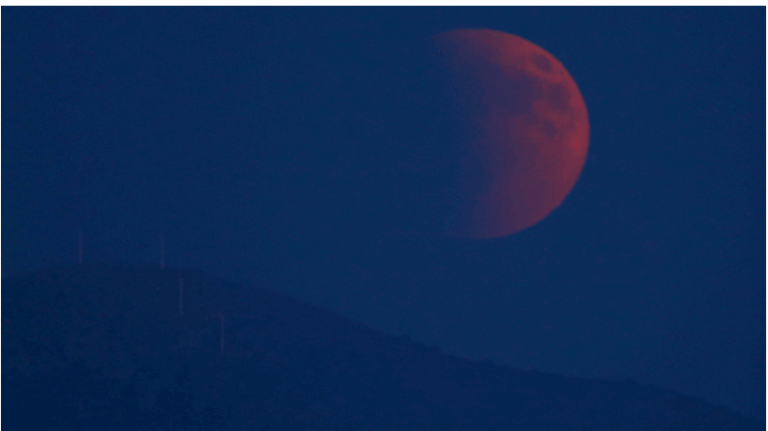
On the night of Sunday, September 7, the sky will host a rare spectacle: September’s full moon coincides with a total lunar eclipse, creating the striking phenomenon known as the “blood moon.”
The eclipse will be visible across much of the globe. From start to finish, it can be seen throughout Asia and Western Australia, while parts of it will be observable in Europe, Africa, Eastern Australia, and New Zealand. In Greece, the total phase will be visible from 20:30 to 21:52, with the maximum point occurring around 21:11.
Eclipse Timeline for Greece:
- 20:30 – Start of total eclipse: The Moon darkens and takes on a reddish hue.
- 21:11 – Maximum eclipse: The Moon lies deepest in Earth’s shadow.
- 21:52 – End of total phase: The Moon gradually brightens again.
- 22:56 – End of partial eclipse: The Moon exits Earth’s main shadow.
- 23:55 – End of penumbral phase: The Moon fully leaves Earth’s outer shadow.
The phenomenon requires no special equipment—the naked eye is enough to enjoy the view. Binoculars or a small telescope, however, can enhance the experience, revealing more detail on the Moon’s surface.
Why the Moon Turns Red
This eclipse occurs just 2.7 days before the perigee, the Moon’s closest point to Earth, making it appear slightly larger in the sky. The most striking feature is its vivid red hue: about 36% of the Moon’s diameter passes through Earth’s darkest shadow, producing a deep crimson color. The effect happens because sunlight is filtered and refracted through Earth’s atmosphere, scattering shorter wavelengths and leaving the Moon bathed in shades of red and orange.
Watch video from Larissa: The “Blood Moon” over the Greek sky
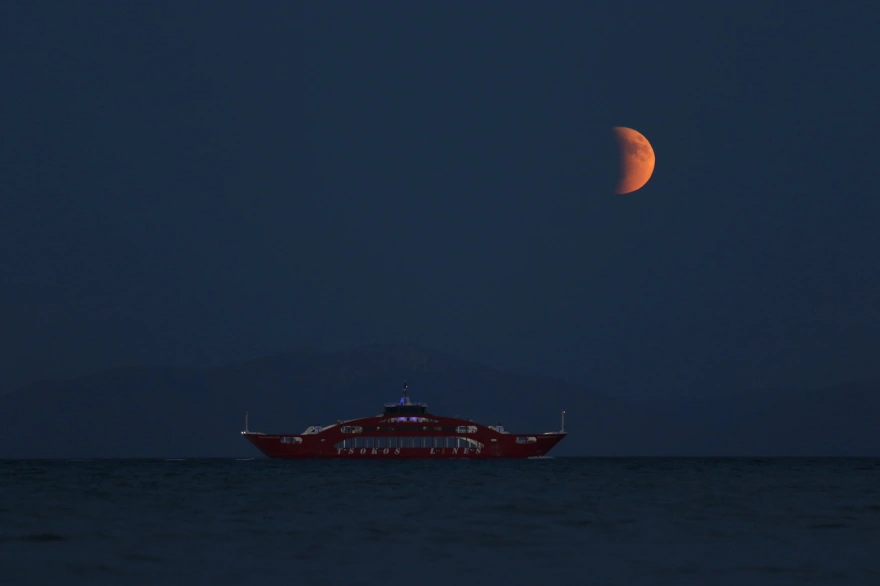
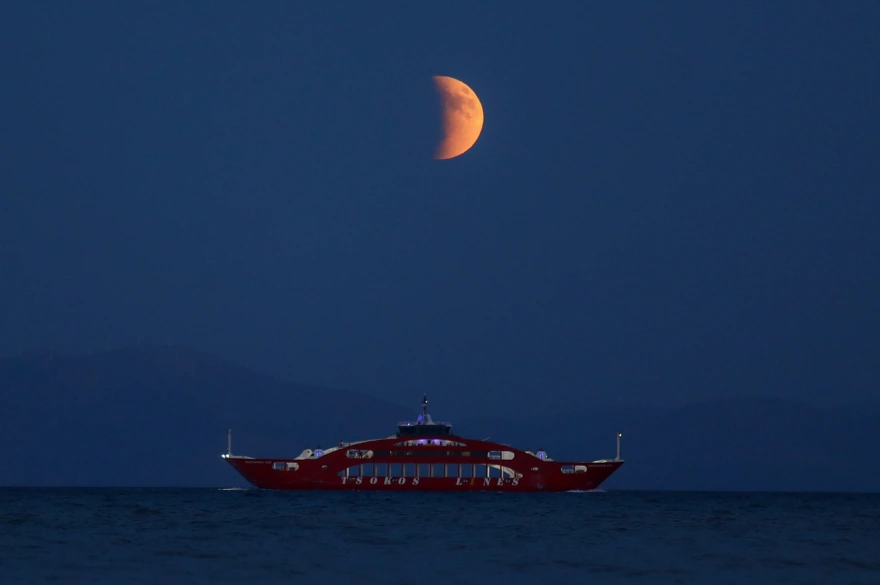
See the photos: The September lunar eclipse as it unfolded
Ask me anything
Explore related questions




