





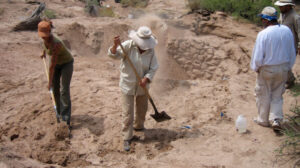
Three elephant skulls dating back to 7.7 million years ago have been discovered in excavations in Caesarea, central Turkey.
The excavations, which began in 2018 following a report by a shepherd in 2017 near the Yamula Dam, are continuing under the supervision of the Caesarea Museum Directorate and sponsored by the city.
The skulls were found in the Kochashinan area along the Kizilirmak River. The excavations also unearthed a variety of fossils, including remains of prehistoric giraffes, elephants, mammoths, rhinos, goats, antelopes, turtles and pigs.
Archaeologist Omer Dagg told Turkey’s Anadolu News Agency that his team is excavating around the dam, and is now focusing mainly on elephant fossils.
“We can call this year the year of the elephant,” Doug said. “Since the excavations began in 2018, we had found two skulls. But this year, in just one season, we discovered three,” he added, noting that while the tusks were somewhat damaged, one skull was found with the lower jaw intact.
Radiometric analysis dated the excavations at Caesarea to about 7.7 million years ago, with most of the elephant fossils found in the Sevrille area, now called the “elephant belt”. The archaeologist stressed the importance of the excavations because of the size and preservation of the megafauna fossils, which have attracted international scientific attention.
“The concentration of elephants in some places and the observed density provide information about the paleogeography of the site,” Doug said.
Ask me anything
Explore related questions




