





The Mediterranean is changing at an alarming pace. A new international scientific paper, published in the leading journal Geosciences (MDPI), unveils a pioneering computational model that accurately forecasts the risk of invasion by these species.
Developed through a collaboration between the University of Thessaly, the Technical University of Denmark, and Turkey’s Ege University, the model uses artificial intelligence algorithms, machine learning, and environmental datasets with projections up to 2035. It is the first of its kind created in Greece and one of the most innovative in Europe.
The Sea as an “Invasion Zone”
Researchers describe the model as a kind of “radar” for the seas, able to predict when and where invasive species are likely to appear. Two critical factors stood out: water temperature and salinity. With climate change steadily warming the Mediterranean, the risk of non-native species establishing themselves is becoming increasingly immediate.
From Seafloor to Society
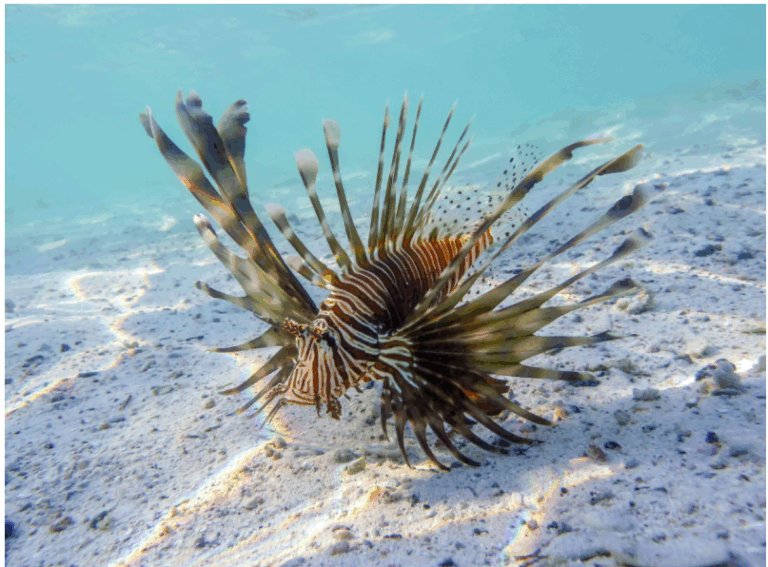
The silver-cheeked toadfish is highly toxic and poses a serious threat to public health, while both it and the lionfish can inflict severe damage on fish stocks. The consequences extend far beyond the environment—endangering fisheries, local economies, and Mediterranean biodiversity as a whole.
“Climate Change is Transforming the Sea”
Dimitris Pafras, PhD candidate and co-author of the study, emphasized:
“Climate change is not some distant concept. It is reshaping the very conditions of our seas, creating fertile ground for the spread of dangerous invasive species. Early prediction and preventive action are our only tools to protect both the environment and the communities that depend on it.”
A Breakthrough with Global Significance
This methodology is not limited to a local scale. It can be applied across the entire Mediterranean and may serve as an international model for tackling marine biological invasions under the realities of climate change.
Ask me anything
Explore related questions




