





Temporary Employment Agencies, or TEAs, are expected to play a key role in addressing labor shortages within the framework of controlling legal migration.
The discussion around the declining number of available workers resurfaces every time labor demand peaks in agriculture — following the seasonal cycle, even as the climate crisis is altering traditional weather patterns.
The Draft Law
Within this framework, the leadership of the Ministry of Migration and Asylum is attempting to solve a longstanding puzzle affecting rural Greece: finding enough laborers to work the land without causing problems in local communities due to the presence of migrants of unclear origin and identity. In theory, the new legal migration bill presented at the latest Cabinet meeting aims to offer a solution.
The idea is simple. Greece already has bilateral agreements for the recruitment of workers with Egypt and Bangladesh. However, in practice these agreements have not been functioning effectively, largely due to bureaucracy — particularly the workload placed on consulates to vet each worker. The ministry aims to eliminate these bureaucratic obstacles by making better use of existing agreements while simultaneously implementing the strict migration policy to which it is committed.
Under the doctrine of “no more benefits — anyone granted asylum must work,” the Ministry of Migration seeks to encourage these populations to enter the labor market to cover the significant labor shortages that have emerged in recent years.
The new bill includes a range of measures covering the entire spectrum of legal migration: from extending residence permits and simplifying procedures to introducing new visa categories for highly skilled workers and students. However, the most crucial change concerns how to utilize the roughly 20,000 refugees who are granted international protection in Greece each year.
The TEAs
The new structure relies on Temporary Employment Agencies, which will act as the central link between employers and workers. These agencies will receive requests for personnel, identify available workers, and handle the process without lengthy consular procedures.
Experience from recent years with bilateral agreements, such as those with Egypt and Bangladesh, showed that implementation often stalled because of consular interviews. Under the new model, the employer requests personnel, the country of origin guarantees the worker’s profile, and the TEA completes the process. The interview is abolished once the country of origin certifies the worker, removing further obstacles.
Although the framework will initially rely on existing TEA regulations, it will later be tightened. The ministry plans to introduce criteria regarding annual turnover, guarantee letters, and staffing levels to ensure that only reliable and capable agencies undertake this role. “We want to bring in major players to guarantee effectiveness,” a ministry source told Proto Thema.
TEAs have existed as regulated entities in Greece for about two decades, supervised by the Labor Inspectorate and the Ministry of Labor. Currently, around 20 such companies operate in Greece, though fewer are active in the market due to strict requirements (minimum capital, guarantee letters, permanent staff). Some are subsidiaries of Swiss, Austrian, or American multinationals employing thousands in tourism, telecommunications, logistics, and other sectors.
TEAs’ core activity is to hire employees and then place them with businesses that have temporary or seasonal needs. Essentially, the worker is employed by the TEA but provides services to the end employer. This model has mainly been used in large industries, banking, and logistics, but the Ministry of Migration now wants to extend it to manage labor from third countries.
In practice, TEAs already collaborate with the State on unemployment and training programs. Their new role in migration, however, is different: they will become the official intermediaries for managing labor from third countries. This means that, beyond traditional recruitment services, they will handle the full process of entry, legalization, and placement of workers from countries with which Greece signs agreements.
Beneficiaries
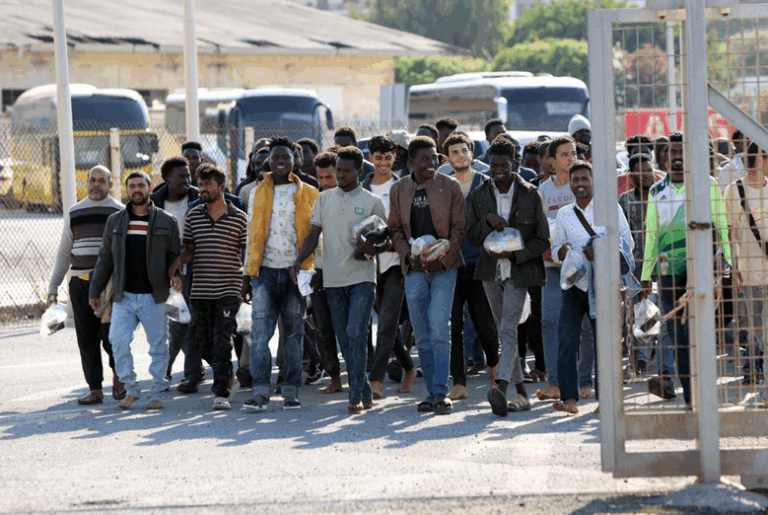
For refugees who have been granted asylum, this represents a significant change. Until now, although they theoretically had the right to work, few found organized employment because there was no structured system linking them to employers. The new framework aims to fill that gap by placing asylum beneficiaries at the center of employment procedures.
At the same time, language and vocational training programs will be developed in sectors with labor shortages. Agriculture, tourism, and construction — all facing staffing challenges — are expected to benefit from this labor force, as well as from workers arriving under the bilateral agreements with Egypt and Bangladesh for up to nine months.
Minister Thanos Plevris has made the ministry’s intentions clear, both in Cabinet and publicly: “Asylum beneficiaries must enter the labor market, while benefits will be cut.” In a recent interview, he stated, “Instead of giving benefits, we will quickly move toward developing their skills according to the country’s needs. Once they complete this program (5–6 months), if they want to stay in Greece, they will have to work. There will no longer be any allowance for ‘paying your rent while you sit and do nothing.’”
For the approximately 20,000 refugees granted asylum each year, mandatory labor market integration represents a new reality. If implemented transparently and effectively, the system could fill gaps in critical economic sectors and reduce undeclared work.
Public consultation on the bill is expected to begin within the month. Passing the law will be the first step; the real challenge will be putting it into practice so that the labor market becomes the primary tool for managing migration.
Migration Flows
This new strategy comes at a time when data clearly show a shift in trends. According to official figures, in June of this year there were 4,240 arrivals, compared to 2,652 in June 2024. In July, just before stricter measures were introduced, arrivals reached 6,109 compared to 4,056 last year. However, in August, when the new measures took effect, arrivals dropped to 2,874 from 5,928 in August 2024. This trend continued in September, with 4,209 arrivals compared to 6,938 in the same period last year.
The ministry interprets this sharp decline as evidence that closing “windows” for illegal entry can be combined with creating stable, institutionalized channels for legal migration.
Ask me anything
Explore related questions




