





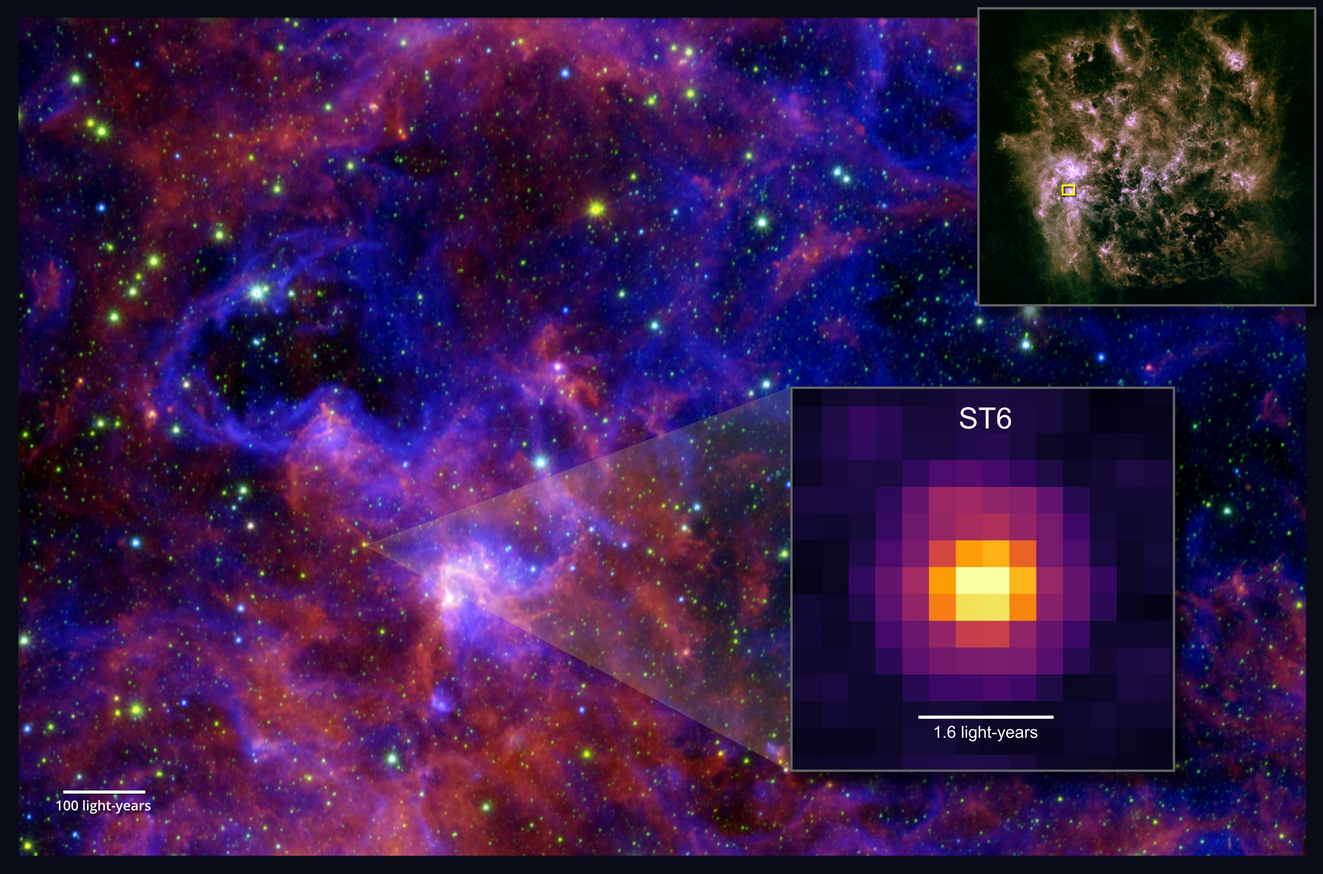
Astrophysicists from Keele University, in collaboration with an international research team supported by NASA, have identified large complex organic molecules beyond the Milky Way, offering a glimpse into the chemistry of the early universe.
In a discovery that could reshape our understanding of how the chemical ingredients of life spread across the cosmos, astronomers detected organic molecules with more than six atoms in the ice surrounding a young star called ST6, which is forming in another galaxy.
Using special instruments aboard the James Webb Space Telescope, the researchers identified five different carbon-based compounds in the Large Magellanic Cloud — the closest galaxy to our solar system.
The team detected five complex organic molecules, many of which are also found here on Earth: methanol and ethanol (common types of alcohol), methyl formate and acetaldehyde (mainly used as industrial chemicals on Earth), and acetic acid (the main component of vinegar). One of the molecules — acetic acid — has never before been definitively detected in space, while ethanol, methyl formate, and acetaldehyde represent the first detections of these organic molecules in ices beyond our galaxy.
The university team detailed their findings in a paper published in The Astrophysical Journal Letters, a leading scientific journal that reports discoveries in astrophysics and astronomy.
Ask me anything
Explore related questions




