





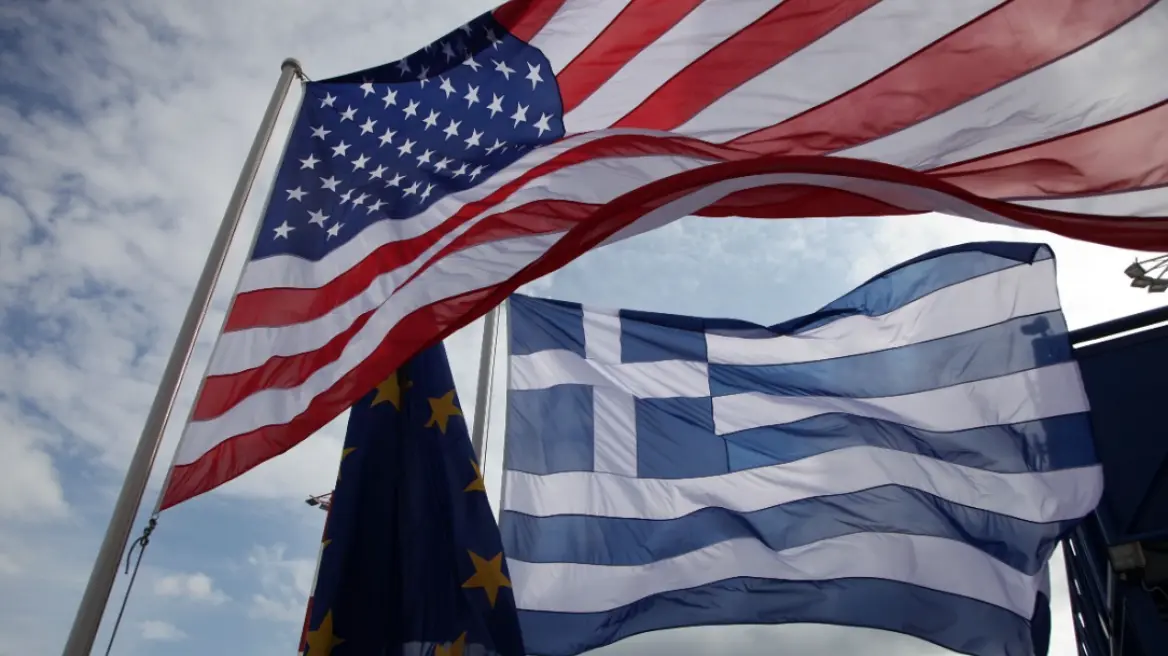
Energy, technology, defense and real estate are the four sectors where the United States sees the strongest investment opportunity in Greece. This is the conclusion of the new annual 2025 Investment Climate Statement – Greece released by the US Embassy in Athens, drafted by the State Department, and published shortly before the arrival of the new ambassador, Kimberly Guilfoyle.
The Greece chapter is authored by the Economic & Commercial Section of the US Embassy in Athens in cooperation with the Bureau of Economic and Business Affairs in Washington. The report functions as the official playbook for US investors and executives — and forms the basis of the diplomatic line Guilfoyle will carry in her talks with the Greek government and private sector.
According to the State Department, Greece has become “a stable and attractive investment destination” following the recovery of investment grade and structural reforms in recent years. The US is already the 6th largest foreign investor in the country, with companies such as Microsoft, Meta, Pfizer, Amazon Web Services and Deloitte advancing significant projects in energy, technology and healthcare.
Washington identifies four key verticals with highest opportunity:
• Green energy: Greece is described as an “energy transit hub” for LNG and renewable power. The report explicitly states that LNG projects in Revithoussa and Alexandroupoli make Greece a strategic gateway for Europe. It also stresses the need for investment in green hydrogen infrastructure and grid interconnection with neighboring countries.
• Technology & digital transformation: The report acknowledges Greece’s progress in digitizing the State and in cultivating a startup ecosystem that attracts players like Microsoft and AWS. Washington sees “significant investment opportunity in data centers, artificial intelligence and cybersecurity.”
• Real estate & tourism: The revised Golden Visa framework with €800,000 thresholds in high demand zones and €400,000 elsewhere, combined with limits on Airbnb, is seen as “a transparency step” that draws serious institutional capital and stabilizes the market.
• Human capital & ReBrain Greece: DoS presents the program as an innovative model for repatriating Greek talent with salaries of €3,000/month in tech, healthcare and research. Combined with Law 4758/2020 tax incentives for relocating tax residency to Greece and the 50 % income tax cut for digital nomads for seven years — the report calls Greece “one of the most attractive labor markets in Europe.”
On the negative side, the State Department lists the frictions that still weigh on the business climate: regulatory complexity, slow judicial process, bureaucracy, delays in permitting for renewables and zoning, lack of clean title documentation on real estate, and pharma clawbacks. It also cites labor shortages in tourism and construction and shadow economy estimates up to 36% of GDP (CEPR).
Conversely — the regained investment grade, €35.95 billion RRF funds, digital transformation momentum and fast-track tools form a combination of structural friction + strong positive leverage shaping the country’s investment narrative.
The report also references Greece’s new FDI screening regime for national security — covering investments in strategic sectors such as energy, defense and cybersecurity. DoS calls this “a sign of economic maturity” and includes it in the positive elements of the investment climate.
On political risk, the report states that Greece is “a pillar of stability in the Eastern Mediterranean.” Ambassador Kimberly Guilfoyle recently reaffirmed this approach by saying: “Greece is the cornerstone of stability in the East Mediterranean – and I envision deep collaboration between Greek innovation and American investment, from Athens to Silicon Valley.”
Ask me anything
Explore related questions




