





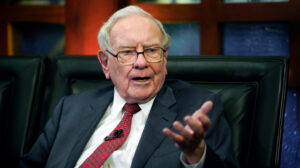
In his office in Omaha, on a November morning, Warren Buffett writes his final letter to the shareholders of Berkshire Hathaway. After 55 years of leadership, the 94-year-old investor bids farewell to his role as CEO — but not to the philosophy that made him a legend. “As the British would say, I shall retire. Sort of,” he notes with his characteristic understatement.
Buffett’s departure marks the end of an era, but also the beginning of another — one in which his name will remain synonymous with the most human version of capitalism.
Greg Abel, a man three decades younger, takes over as CEO — described by Buffett as “an outstanding manager, an honest interlocutor, and a tireless worker.” Buffett himself will remain Chairman of the Board, continuing to write a yearly message every Thanksgiving Day — a personal ritual of faith, discipline, and gratitude.
From Omaha to the Top of the World
Born in 1930 in Nebraska, the son of a congressman and small-time investor, Warren Buffett bought his first stock at age 11. At 26, he founded Buffett Partnership, and a few years later acquired a small textile mill called Berkshire Hathaway. He transformed it into one of the world’s most powerful investment conglomerates, with interests spanning insurance, energy, manufacturing, and consumer goods.
Since 1970, as chairman and majority shareholder, he built his empire on three simple principles: patience, consistency, and trust in people.
By his side, the late Charlie Munger — his most loyal partner — helped form one of the most stable duos in modern business. The two men proved that investing genius is not an act of intuition but an exercise in ethics and discipline.
From The Washington Post to Coca-Cola, from American Express to Apple, every move Buffett made followed the logic of value investing — investing in real worth, not in temporary hype.
And when crises came, he responded with calm: “Buy American. I am,” he wrote in The New York Times in 2008, amid the financial meltdown. It wasn’t a slogan — it was a way of life.
The Philanthropist of Logic
With a net worth exceeding $160 billion, Buffett never sought to live like a billionaire.
In the same Omaha home since 1958, eating breakfast at McDonald’s, and driving the same old Cadillac, he became a symbol of modesty and self-discipline.
In 2006, he announced he would donate 83% of his fortune to the Bill & Melinda Gates Foundation — one of the largest philanthropic commitments in history. To date, he has given more than $60 billion to charitable causes.
“Governance from the grave has never worked,” he now says, explaining that he leaves his children full freedom to continue the family’s mission as they choose.
For Buffett, philanthropy was never an act of atonement — it was an extension of his realism: a conscious return of wealth to the society that created it.
The Final Letter
Buffett’s farewell letter reads like a life lesson — a summary of the man behind the legend.
“I’m happy to say that I feel better about the second half of my life than I did about the first,” he writes.
“Don’t torture yourself over mistakes. Learn something from them and move on. It’s never too late to get better.”
He also refers to the story of Alfred Nobel, who changed the course of his life after reading his own mistaken obituary.
“Don’t wait for a newspaper to do it for you,” Buffett writes. “Decide what you want your obituary to say — and live accordingly.”
That may be his most defining maxim: investing is not about money, but about legacy.
He reminds readers that “kindness costs nothing but is priceless,” that success is not measured in shares but in relationships, and that “the janitor is just as human as the chairman.”
The Legacy
Buffett’s final message to investors and the next generation of leaders is clear:
- Stay humble, even when you succeed.
- Learn from mistakes — they’re the cheapest school.
- Choose your heroes wisely, and emulate them.
- Ruling from the grave does not have a great record, and I have never had an urge to do so.
In his closing paragraph, Buffett wishes everyone a “Happy Thanksgiving” and ends with a phrase that could hang in any leader’s office:
“It’s never too late to change. Or to do the right thing.”
The End of an Era, the Beginning of Another
Warren Buffett may be leaving the helm of Berkshire, but he leaves behind a way of thinking, investing, and living.
In a world of numbers, he added a rare quality — time: the time it takes for a portfolio to mature, or for a life to become worth remembering.
Ask me anything
Explore related questions




