





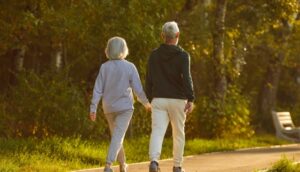
The Greek and wider European population is aging at a rapidly increasing rate. By 2060, 34% of citizens in Greece will be over 65 years old, according to data from the Ministry of Health presented by the Deputy Head of Health and Social Solidarity of the Region of Central Macedonia, Melina Dermendzopoulou, at a workshop organized by the Region in cooperation with the Regional Department of Thessaloniki, Kilkis, and Halkidiki of the Panhellenic Association of Physiotherapists.
Ms. Dermendzopoulou pointed out that although life expectancy has increased (in Greece it is 81.1 years), after the age of 65, two-thirds of these remaining years are accompanied by a chronic disease. She noted that most chronic diseases are caused by behavior-dependent factors such as smoking, diet, and lack of physical activity. In this context, she stressed that healthy ageing is an issue that must be addressed, adding that it is no coincidence that the World Health Organization is in the process of revising its Strategy for Healthy Ageing for the period 2026–2030.
“We are growing older, but how are we growing older? While longevity is a sign of progress in public health, poor health in old age should not be considered inevitable. On the contrary, healthy ageing is linked to our choices — the lifestyle we adopt from a young age, our approach to healthy eating and exercise, and the avoidance of harmful habits,” she added.
At the same time, she emphasized that the Region prioritizes policies that promote safe ageing and the well-being of older people through cooperation with various agencies. She highlighted efforts to create elderly-friendly environments, such as safe and accessible buildings and transport, as well as actions and initiatives that encourage physical activity and healthy eating. She also referred to funding for initiatives that address social isolation and loneliness.
She further stressed the need to integrate healthy ageing into a multidimensional policy framework aimed at reducing avoidable diseases and disabilities, supporting older adults, and creating conditions for adopting better and healthier habits. “It is vital to adopt a holistic approach involving many stakeholders — from national to regional and local levels — with the participation of academics and professionals such as physiotherapists, associations representing older people and their families, as well as state representatives,” Dermendzopoulou added.
For his part, the President of the Panhellenic Association of Physiotherapists, Petros Lymperidis, emphasized that “physiotherapists promote independence and functionality, improve quality of life, and are key contributors to healthy ageing.” Finally, the President of the Regional Section of Thessaloniki, Kilkis, and Halkidiki of the Panhellenic Association of Physiotherapists, Dimitra N. Fytili, remarked: “The Third Age and the promotion of healthy ageing are shared priorities. The conference demonstrated that when the scientific community cooperates with institutions, we can implement interventions that have a real impact on citizens’ lives. We remain committed to pursuing efforts that enhance the autonomy, mobility, and overall quality of life of older people with respect, responsibility, and meaningful social contribution.”
Ask me anything
Explore related questions




