





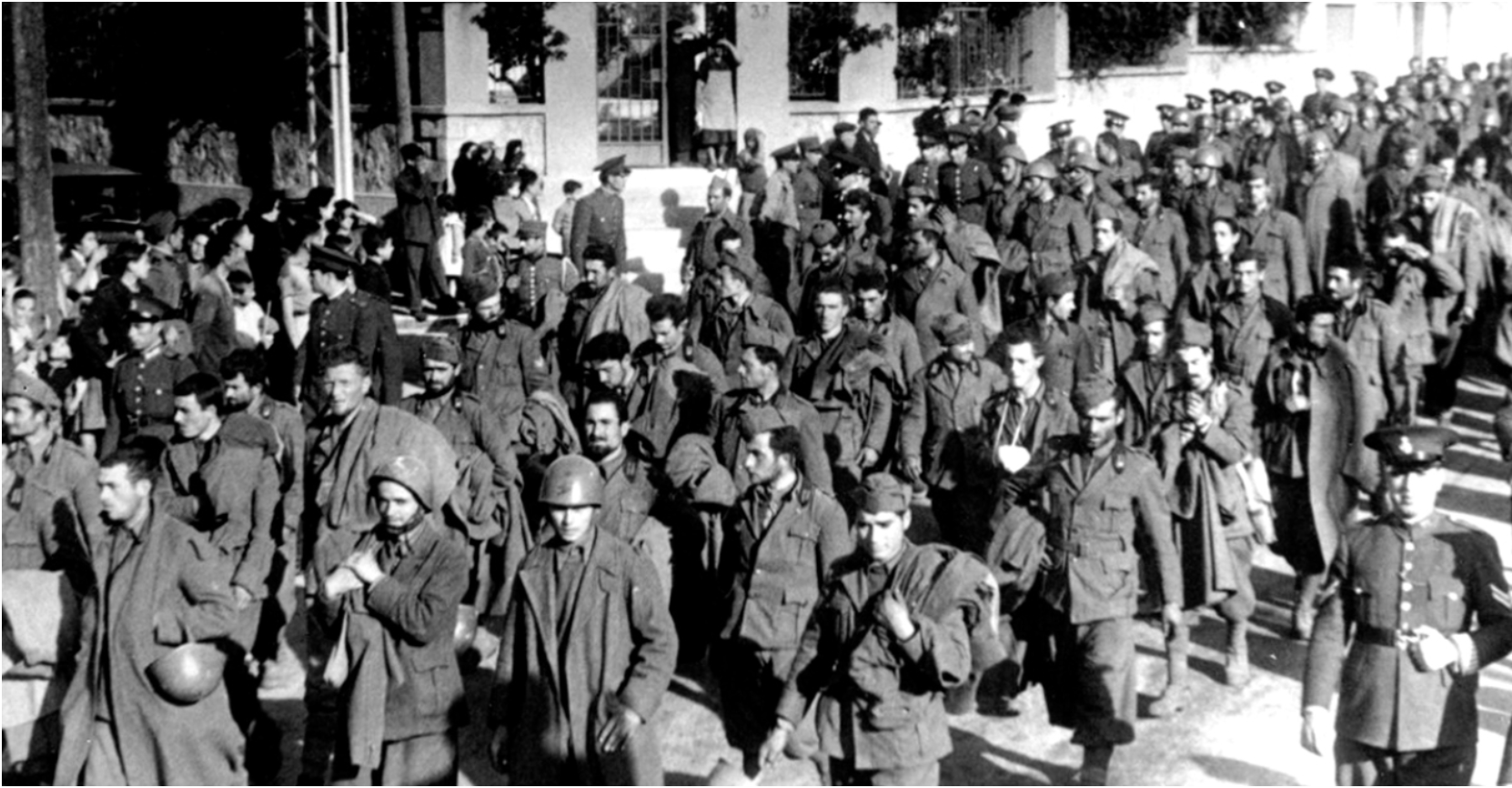
The actions of the Hellenic Army during the war with Italy include a series of unknown stories and events. Of particular interest is the activity of the V (5th) Division, or Division of Cretans. It remained as a reserve on the Great Island, departed in November 1940 for the front, and from January 1941 took part in war operations where it achieved significant successes but also suffered heavy losses. After the German invasion of Greece, the men returned to the mainland.
However, the Germans forbade them to travel to Crete, which they struggled greatly to capture (Operation “Mercury”). Thus, with meagre assistance from the state, most of the men of the V Division wandered hungry and ragged through Athens.
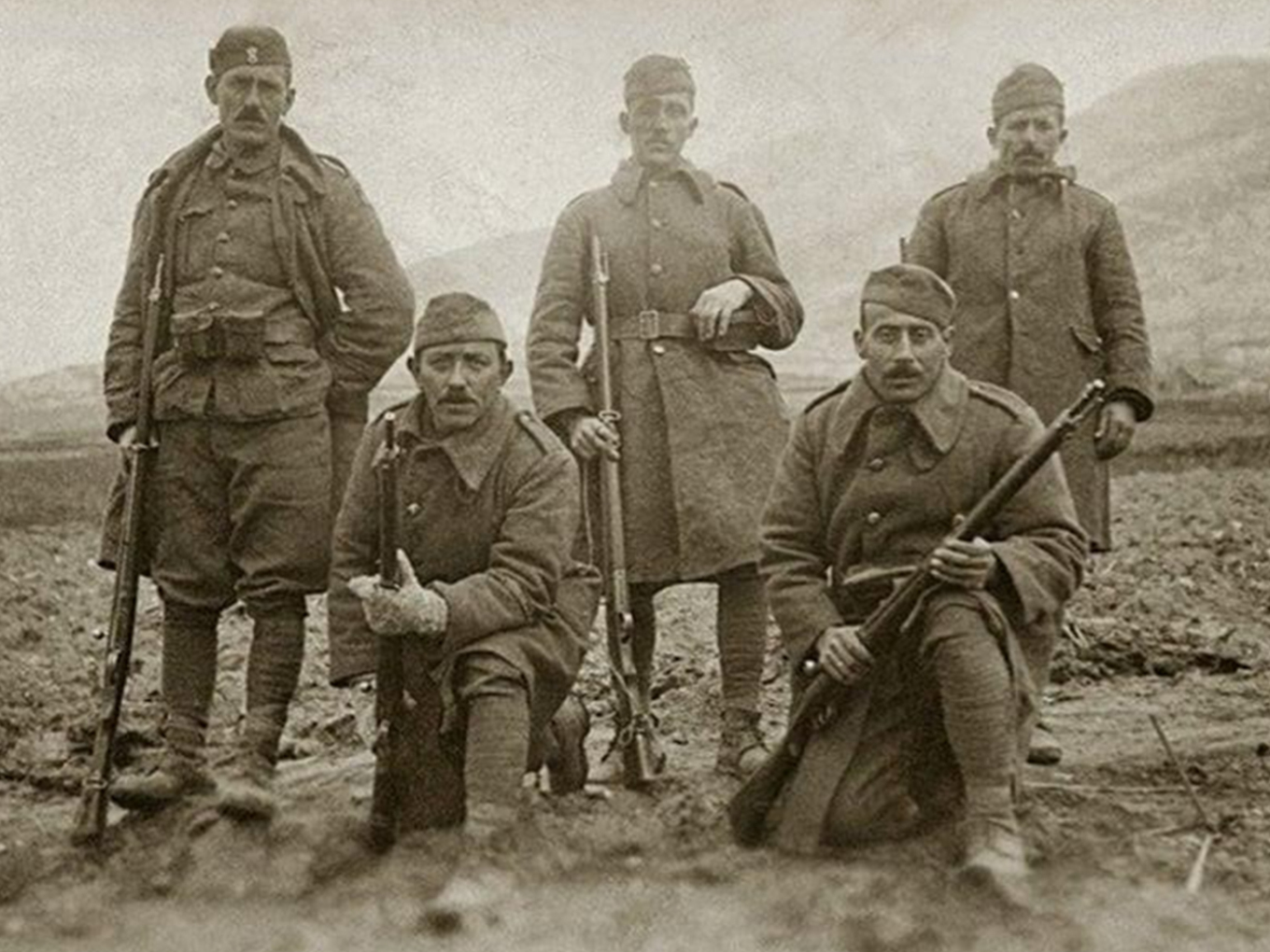
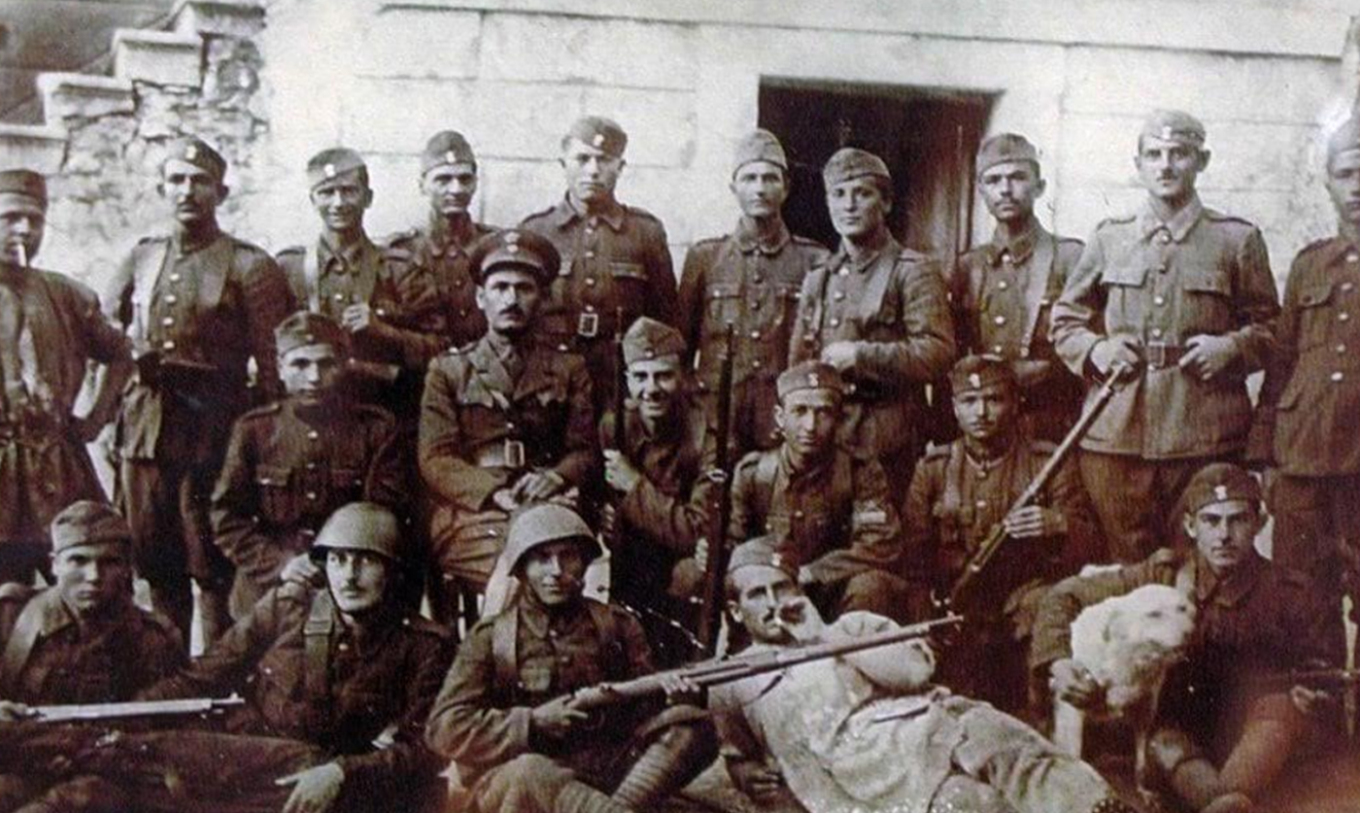
Men of the Division of Cretans
The Italians arrested many of them and transferred them to Larissa, where they unlawfully designated them as “prisoners of war.” A tragic incident that marked the history of the V Division was the murder of its Commander, Major General Georgios Papastergiou, in Kissamos, Chania, at the end of April 1941, by a Cretan gendarme, who in turn was executed a few days later by his colleagues.
Papastergiou, who was considered to have abandoned his men, had travelled alone to Crete and faced the fury of the locals, both for their dead relatives and for going to the island without caring for the officers and soldiers of the V Division. Detailed information on the Division of Cretans is presented by Dr Ioannis Papafloratos in his book “The History of the Hellenic Army 1833–1949,” Volume II. We thank him warmly once again for granting us permission to include many elements from his two-volume work in our article.
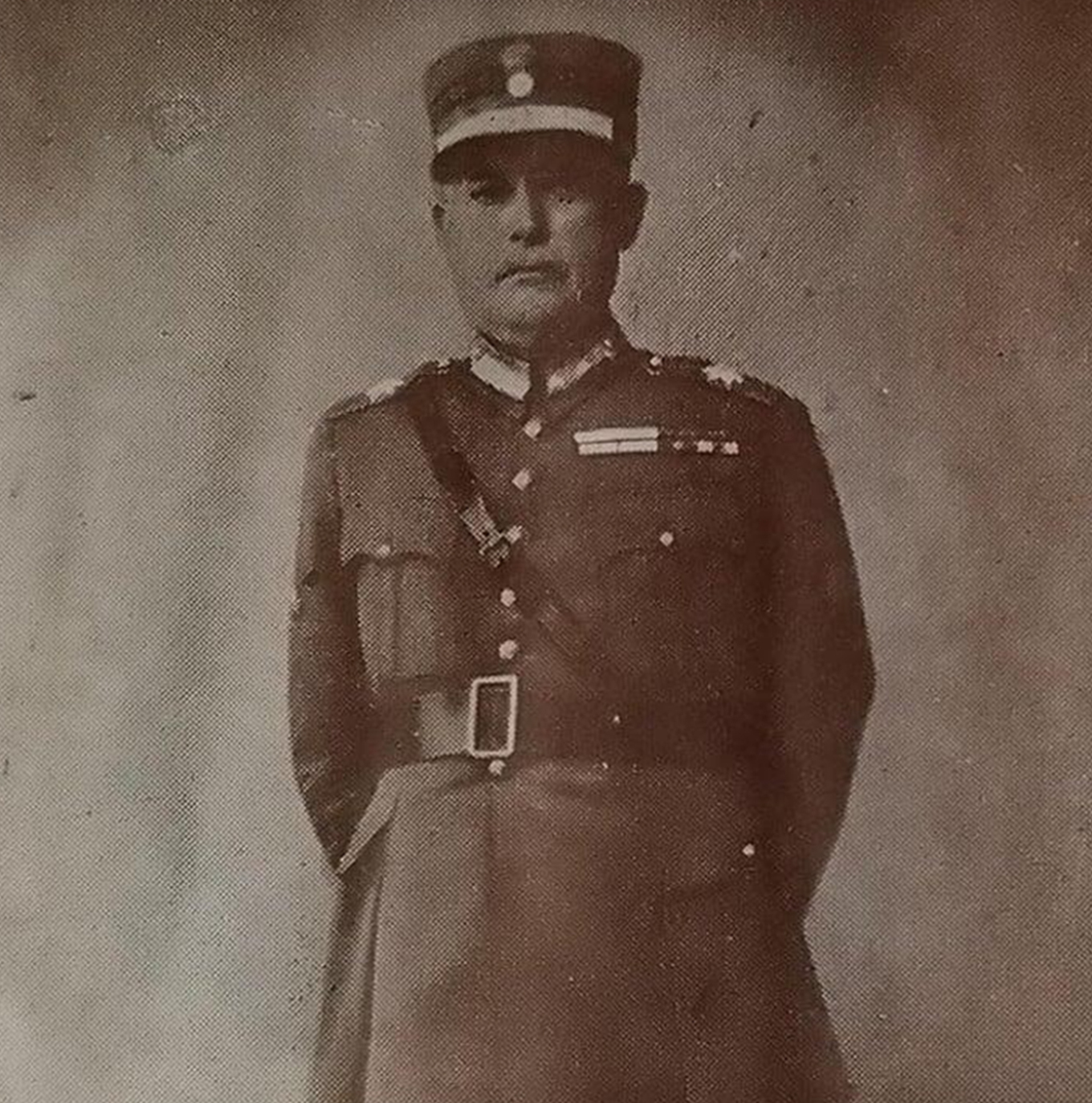
Major General Georgios Papageorgiou
The V Division (from its formation in 1912 until 1923)
The V Division was formed on the eve of the Balkan Wars, in which it participated. In the spring of 1917 (April), the Division of Crete, which had begun forming in October 1916, was incorporated into the V Division. It took part in World War I, in battles against the Bulgarians in Macedonia, and also participated in the Asia Minor Campaign with notable successes.
After the withdrawal from Asia Minor, the V Division was reorganised under Colonel Kondylis. Its initial base was in Serres. The Division of Crete, the IX (9th) Division, and temporarily the 3/40 Evzones Regiment were merged into the V Division. Thus, a capable, battle-ready force was created, prepared in case the negotiations in Lausanne collapsed.
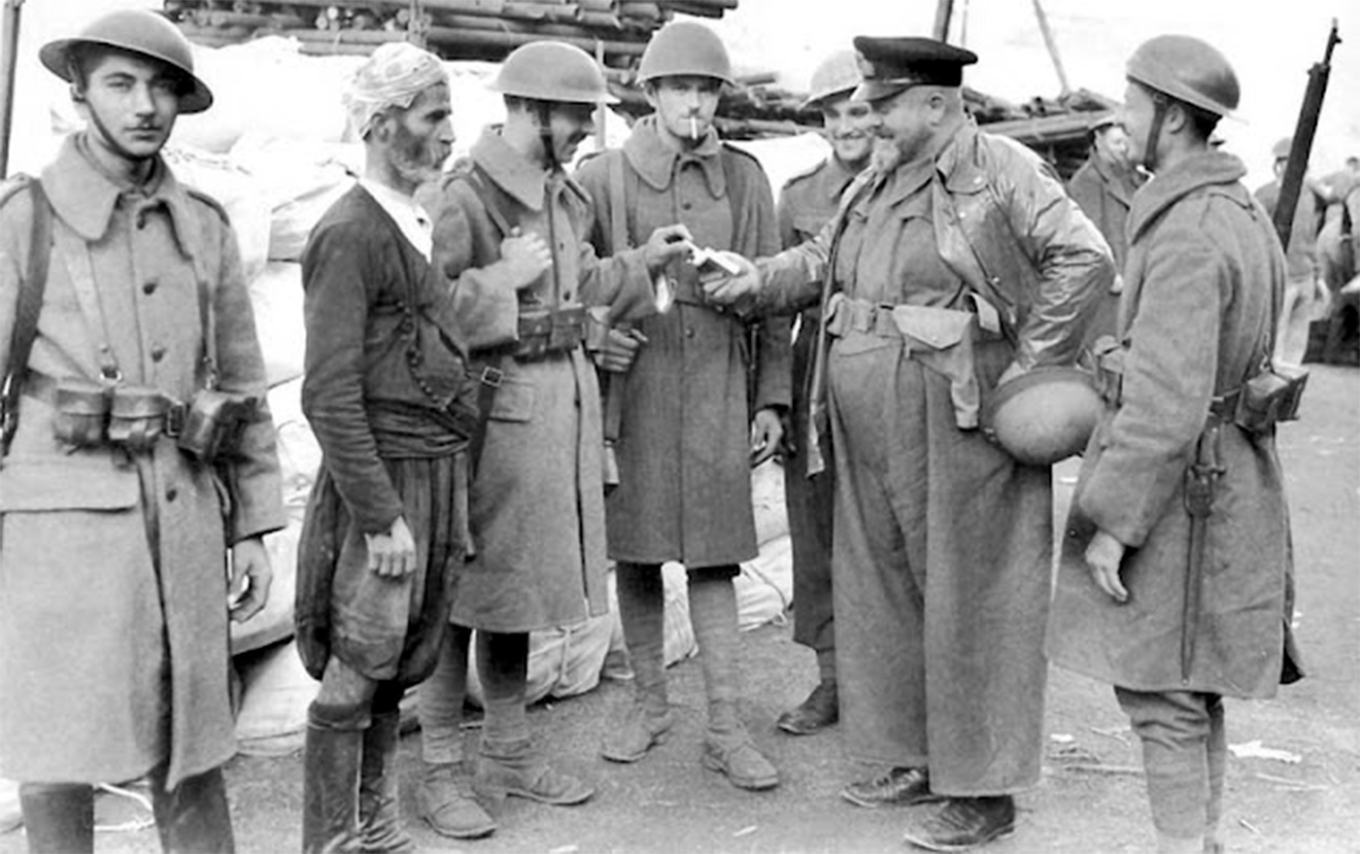
Members of the V Division of Cretans
Eventually, on 30 June 1923, the Division officially received the name V Division, was integrated into the III Army Corps, and participated actively in suppressing the Gargalidis–Leonardopoulos counter-movement (October 1923). In 1924 the V Division was transferred to Crete, which thereafter became its permanent base, as the Division of Cretans.
The Division of Cretans during the Greco-Italian War – Heroism, but also losses
The Division of Cretans initially remained in reserve on the Great Island. It consisted of the 14th Infantry Regiment (based in Chania), the 43rd Infantry Regiment (based in Heraklion), the 44th Infantry Regiment (based in Rethymno), the V Artillery Regiment of Souda, the Sappers and Signals Companies, the Chania Military Hospital, and other formations. The total strength of the Division was 566 officers, 18,662 soldiers, 687 pack animals and 81 vehicles. By 10 November the V Division had completed its mobilisation and was ready to be transferred to the front.
We should note that in Crete, the V Division was replaced by the Military Command of Chania, under Lieutenant General Ioannis Alexakis. All three battalions of the unit were transferred a little later to mainland Greece. On 10 November 1940, the V Division was ready to depart, following the orders of Alexandros Papagos. Its arrival in the operational area took place around the end of November 1940, when it reached Western Macedonia (the region of Amyntaio – Argos Orestiko).
It was then placed under the command of the III Army Corps and moved by road toward Korçë. On 2 January 1941, the 44th Infantry Regiment began its march toward the region of Vastoni – Tresova, where it arrived a few days later. In contrast, the rest of the Division’s units moved toward Leskovik and were placed under the command of the II Army Corps. On 29 January, the V Division fought its first battles during the operations to capture Trebeshina.
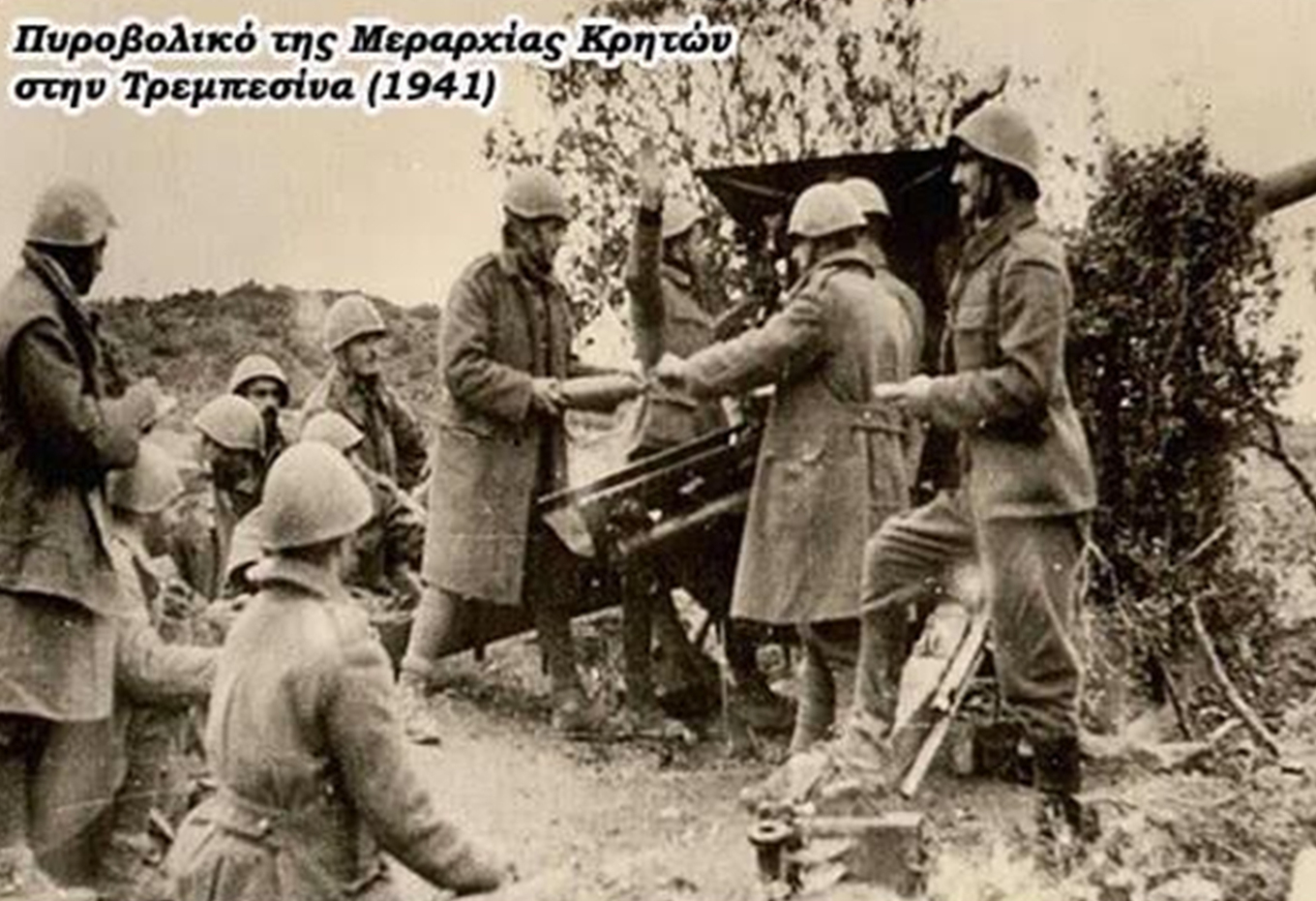
Artillery of the Division of Cretans in Trebeshina
This is a mountain north of Kleisoura, with an elevation of 1,924 meters, and it has been described as “man-eating Trebeshina” due to the many dead from the battles fought for its capture. On 31 January, the 14th Infantry Regiment captured heights 1620, 1730 and 1923. The Italians, supported by their Artillery and Air Force, attacked the Greeks with fury.
However, the Division of Cretans successfully repelled the Italian attacks, who abandoned their dead, their wounded, and their equipment on the battlefield! But the V Division also suffered losses: 27 dead (3 officers and 24 soldiers) and 135 wounded (5 officers and 130 soldiers). The 44th Infantry Regiment was positioned in the Kleisoura pass and, with the help of the Artillery, destroyed six Italian tanks. The Italian air force repeatedly attacked the 44th Regiment, killing 6 soldiers and wounding 4 more. A heavier blow was the destruction of the building housing the Division’s Command, after fierce Italian attacks. Several soldiers were also wounded.
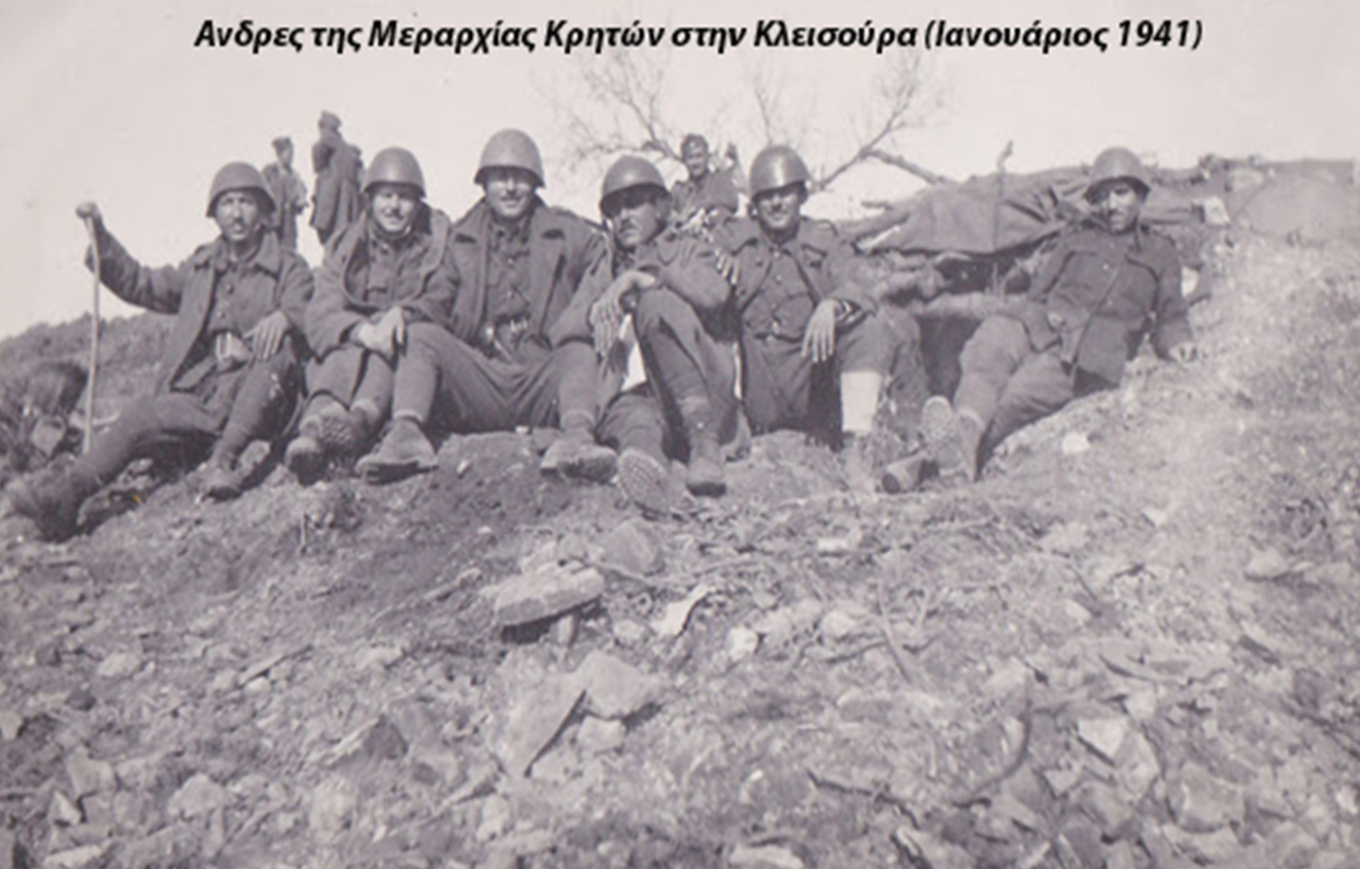
The brave Cretans, however, were undaunted. On the morning of 13 February, the I and II Battalions of the 44th Infantry Regiment launched attacks to capture jumping-off positions in Trebeshina. The Cretans pushed back the Italians who had occupied height 1816 (the numbers usually indicate the elevation of the hilltops) and established themselves on its western slopes. An attack followed at the Metzkorani saddle, but it was interrupted due to a severe snowstorm.
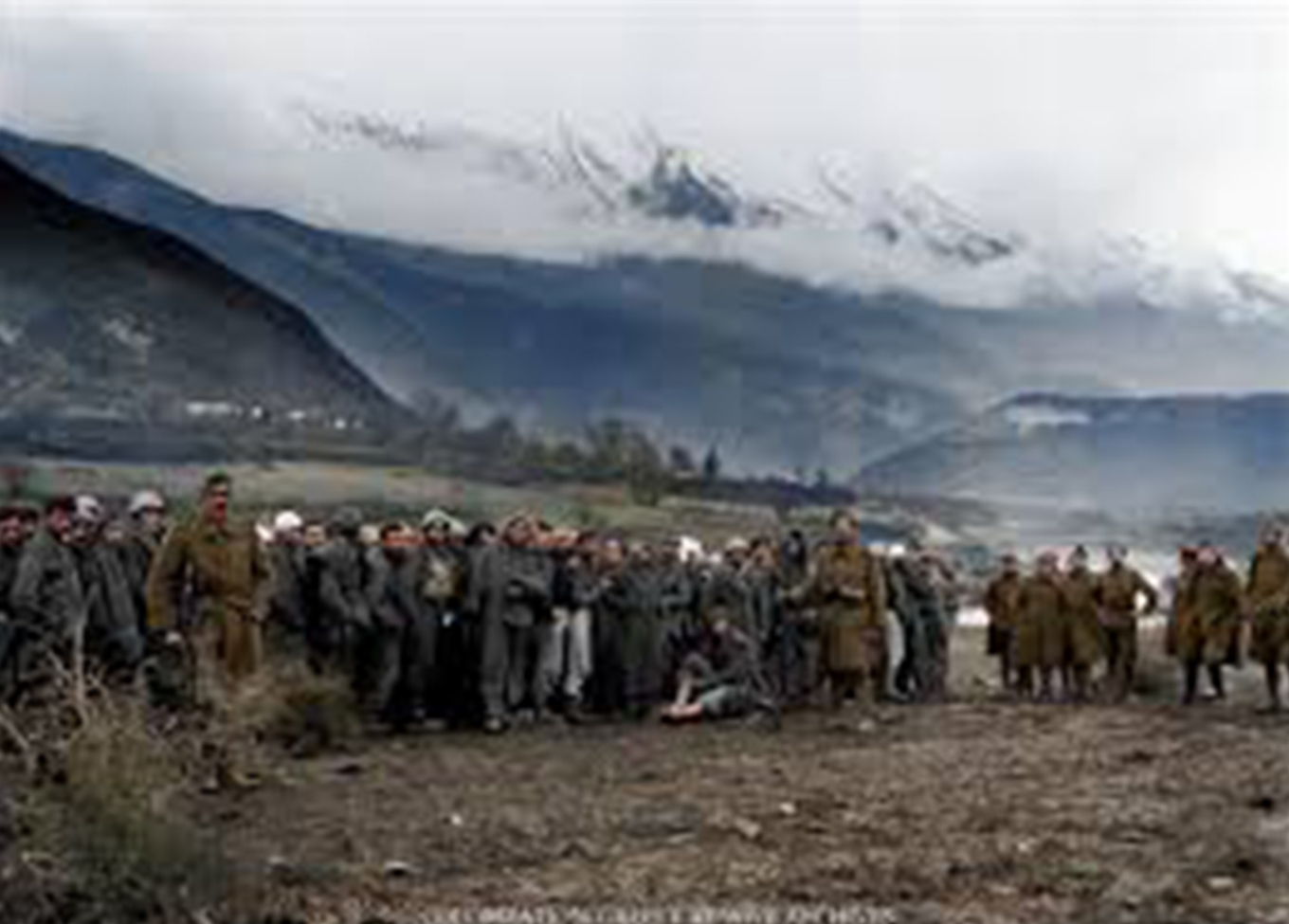
The Italians did not stop their furious counterattacks. Most significant was the one launched against the Greeks positioned in the village of Arzo di Somira, on the night of 13–14 February 1941. The fighters of the 44th Regiment not only managed to repel the enemy, often fighting with bayonets, but also captured 200 Italian prisoners!
The next day, the 44th Infantry Regiment was ordered to attack in the direction of 1260 – Punta Nord, which forms the ridge of Mount Senteli. The III/44 Battalion fought a hard battle at Hill 1178, while the Italians launched new attacks, without success, to recapture the lost ground. The III/44 Battalion was pinned down in front of Hill 1260. Two more units of the 44th Infantry Regiment were then ordered to support the III/44 Battalion.
Indeed, the next morning the III Battalion captured Hill 1260, the II/44 Battalion captured Punta Nord (1647), while the I/44 Battalion captured the Bezkerani pass. The units of the 44th Infantry Regiment positioned themselves along the ridge of Mount Senteli and managed to hold it despite Italian counterattacks.
Perhaps the greatest problem for the Cretans was the extremely low temperatures, which not only tormented them but also disabled much of their portable weaponry. The Italians continued their counterattacks, but without result. The men of the 44th Infantry Regiment managed not only to repel them but also to advance deeper into the territory of Northern Epirus.
However, during the battles of February 15–16, 1941, the Regiment suffered heavy losses: 1 officer and 45 soldiers killed, and 282 wounded (15 officers and 267 soldiers). Another 41 soldiers fell out of action due to frostbite. The Italians brought new forces into the area but achieved nothing. With a series of counterattacks, the 44th Infantry Regiment captured more fortified positions, though another 100 of its men were put out of action.
The Italian spring offensive and the attempt to bribe the Cretans
On March 9, 1941, the Italians launched the much-advertised “spring offensive,” confident of its success. Mussolini himself observed the fighting during the first days, but when he saw its disastrous failure, he left disappointed. The 5th Division, which was positioned in the Trebeshina–Senteli sector, not only repelled the Italian attacks but also captured several prisoners. After March 15, Italian attacks weakened and were reduced to sporadic artillery fire until April 12, when—due to the German invasion of Greece—the mission of the Cretan Division came to an end.
By April 12, the Cretan Division had lost one-third of its men and half of its pack animals, mainly due to harsh weather conditions. From April 13 onward, the 5th Division began to withdraw because of the new realities created by the German invasion. The 5th Division largely maintained its cohesion and surrendered its weapons on April 24 and 25. Its losses were heavy—heavier than any other Greek division: 1,141 dead, 2,025 wounded, 2,553 frostbitten, and 434 sick with various ailments.
In total, the Division’s losses amounted to 6,154 officers and soldiers. The Italians were astonished by the bravery of the Cretans. Thus, they decided to… bribe them (!) during the battles. A leaflet dropped by the Italians on the lines of the 5th Division read:
“Soldiers of Crete,
England, for its own selfish interest, has pushed you to the mountains and to death, onto these wild Albanian mountains. In your place, on your wonderful island, the English soldiers rule despotically. In your own homes the English sit. Your women are troubled by the English. Why do you fight? Because England wants it, which has bought your Government. Do not forget that your great fellow citizen, Venizelos, desired and sought the friendship of Italy. Throw down your weapons and come. We shall treat you fraternally and return you to your island and your families. As the first sign of our goodwill, we will give 500 drachmas to each man who surrenders to us with this leaflet.”
The return to Greece, the ban on traveling to Crete, the aimless wandering of the Cretans in Athens, and their capture by the Italians
As if all they had endured in Albania was not enough, the Cretan Division suffered terribly upon its return as well. Officers and soldiers reached Nafpaktos and from there, under difficult conditions, the Peloponnese. Some went to Patras, others to the southern coast. Those who reached Tripoli were informed by the Germans that they were not allowed to travel to Crete due to Operation Merkur for its conquest.
The men of the 5th Division tried to find ways to reach the island. Most came to Athens and stayed with relatives or friends. But those who came from mountain villages in Crete and knew no one in the capital had nowhere to stay. They settled in the gardens of the Zappeion. Without money and food, many suffered from lice. The Ministry of National Defence of the Tsolakoglou collaborationist government informed them that it could not help them return home. It supplied them with food from military warehouses, established “Food Committees,” and provided some allowances.
These measures were temporary. The Cretan fighters began to sell their belongings, even their clothes. As there was nothing left to sell, they gathered in the Panathenaic Stadium. Italian carabinieri surrounded them and arrested 1,200 of them. They were packed into train cars and sent to Larisa, where a camp had been set up (4.5 km east of the city).
The Italians arbitrarily and illegally classified the Cretans as “prisoners of war.” Little is known about their living conditions. The Italians imposed inhumane punishments without reason. Initially, there was no water, and the food was scarce and of poor quality. In the first days, 350 prisoners escaped, while 250 were released in June 1942 in terrible condition. Most of the others died from vitamin deficiency, malaria, lice, and some went insane… Such is the fate of heroes in Greece.
The murder of the Commander of the 5th Division, Papageorgiou, in Crete in late April 1941
Commander of the Cretan Division until April 15, 1941, was Major General Georgios Papastergiou from Fanari, Karditsa. He was relieved of his duties due to nervous collapse and was succeeded by Dionysios Papadogkonas, who led the Division to mainland Greece.
Ask me anything
Explore related questions




