





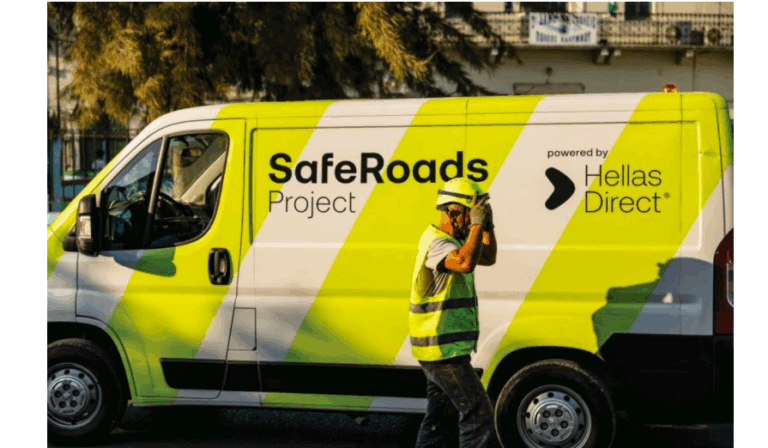
At first glance, the Safe Roads Project looks like Hellas Direct’s nationwide effort to refresh faded school crosswalks — but it’s much more than that.
Launched in 2017 and relaunched with new momentum in 2022, the program has expanded from Attica to Kalymnos, from Preveza to Aigio, and from Milos to Thessaloniki. With two fully equipped vans and dedicated crews, the project has already delivered tangible results: more than 110 municipalities — roughly one in three across the country — have joined, and over 1,800 school crosswalks have been repainted.
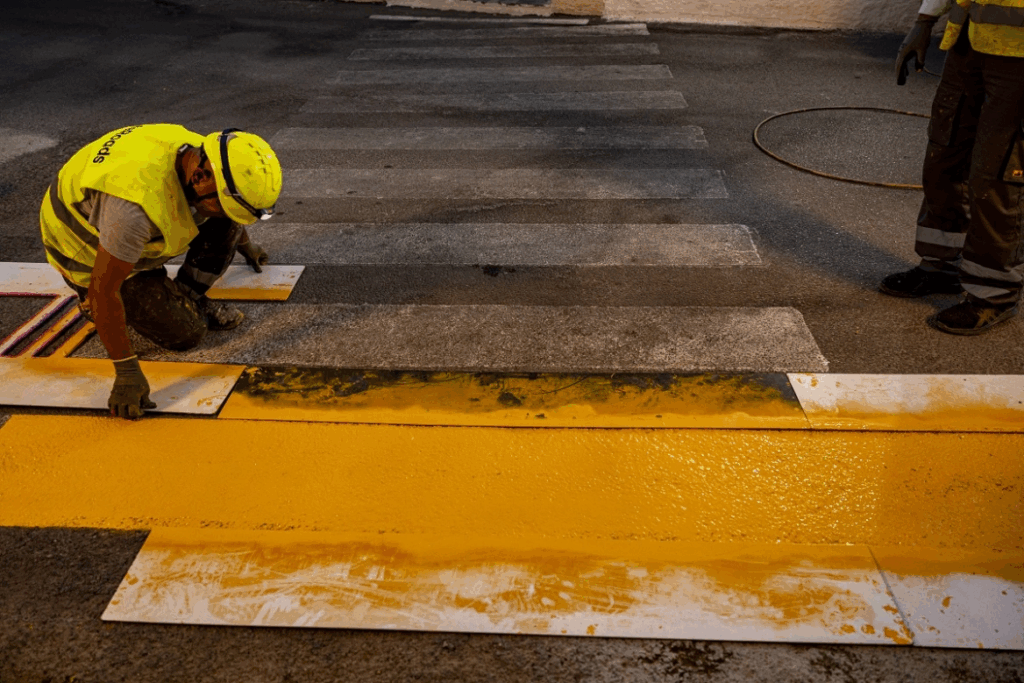
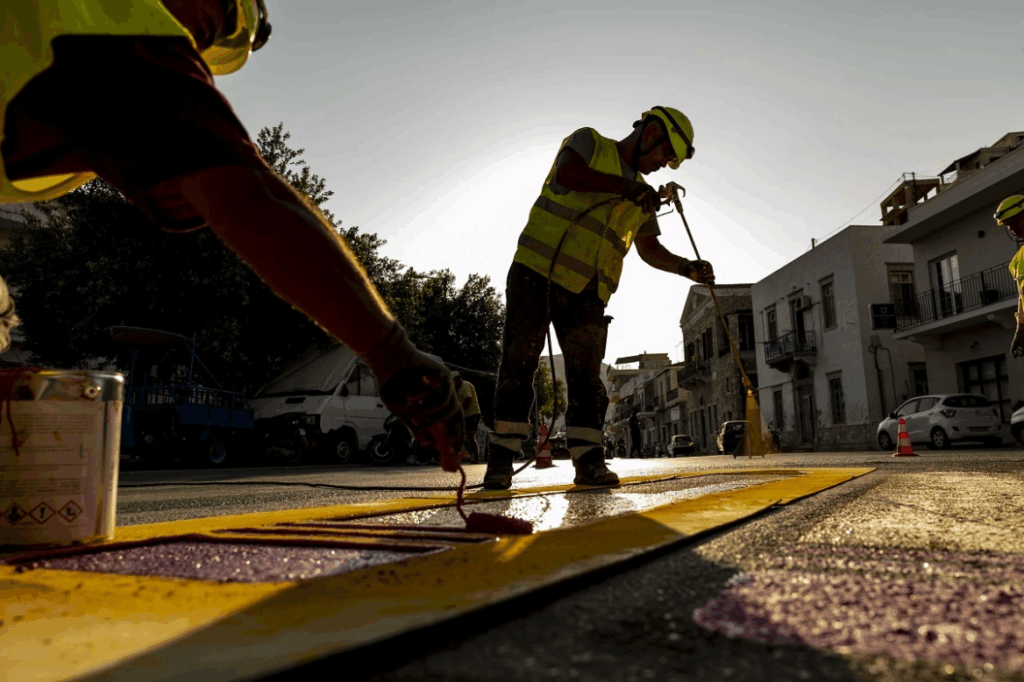
The process is simple. Hellas Direct receives requests from parents, teachers, school administrators, and local authorities. Once the municipality grants approval, the company covers the cost and carries out the work, offering a practical solution to an everyday safety issue.
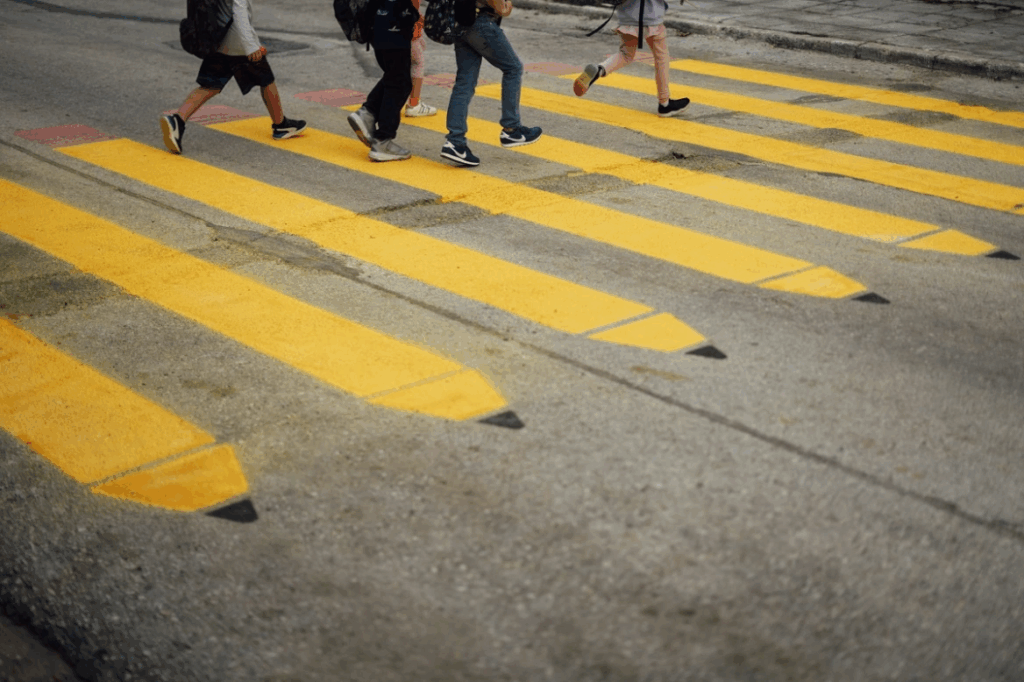
But Safe Roads goes far beyond the street.
Dimitris Antoniou — activist, author, and member of the Hellas Direct team — visits schools to teach children about road safety. Through interactive games and VR experiences, students get to confront dangerous scenarios in a safe, controlled environment. Over the past three years, he has visited more than 250 schools, speaking to thousands of children.

Safe Roads isn’t just a crosswalk-renewal program — it’s an act of care for the community.
Children need both protection and education. Until about age 14, they don’t yet have the fully developed skills required for safe navigation on the road. Combined with their smaller size, this makes them more vulnerable — something the numbers sadly confirm. In 2023 alone, 430 children were killed on Europe’s roads. Between 2013 and 2023, that number reached 5,630. Almost half of those children — 45% — were passengers in cars; another 31% were pedestrians.
But children who learn today how to walk or cycle responsibly will grow into more aware, conscientious drivers. Small mindset shifts now can lead to major societal change later.
The “Vision Zero” approach to road safety
Vision Zero is Europe’s strategy to eliminate road deaths and serious injuries by 2050, with a 50% reduction milestone by 2030. It represents a shift in thinking: instead of placing all responsibility on the driver, it acknowledges that accidents aren’t random misfortunes but the result of weak policies, inadequate infrastructure, unsafe vehicles, and outdated attitudes.
EU data shows overall progress: road deaths dropped 12% from 2019 to 2024, and 2% from 2023 to 2024.
Greece, however, shows a more troubling trend: a 3% increase in 2023–2024, despite a modest 3% decrease over the 2019–2024 five-year period. With 64 deaths per million inhabitants, Greece ranks third from the bottom in Europe — above only Romania (78) and Bulgaria (74), while the EU average is 45. On the other end of the spectrum, Sweden has just 20, Malta 21, Denmark 24, and Norway — outside the EU — leads with only 16.
Other countries show what’s possible.
Norway’s long-term National Road Safety Plan has helped it achieve the lowest fatality rate in Europe.
The Netherlands recently cut road deaths by 30% through stricter enforcement and tougher penalties.
In 2024, Helsinki recorded zero road-traffic fatalities for an entire year — thanks in part to reducing speed limits in many residential areas to 30 km/h, a change that dramatically lowers pedestrian fatality risk.
These examples prove that Vision Zero is not an unrealistic dream. When infrastructure, education, culture, and enforcement work together, the results are real and measurable.
This is why initiatives like Hellas Direct’s Safe Roads Project matter.
They point the way forward: lower speed limits, safer school crossings, better infrastructure for pedestrians and cyclists, and road-safety education from an early age. With the right interventions, Greece can dramatically reduce traffic accidents — especially the fatal ones — and move toward a future where its roads truly protect the people who use them.

Ask me anything
Explore related questions




