





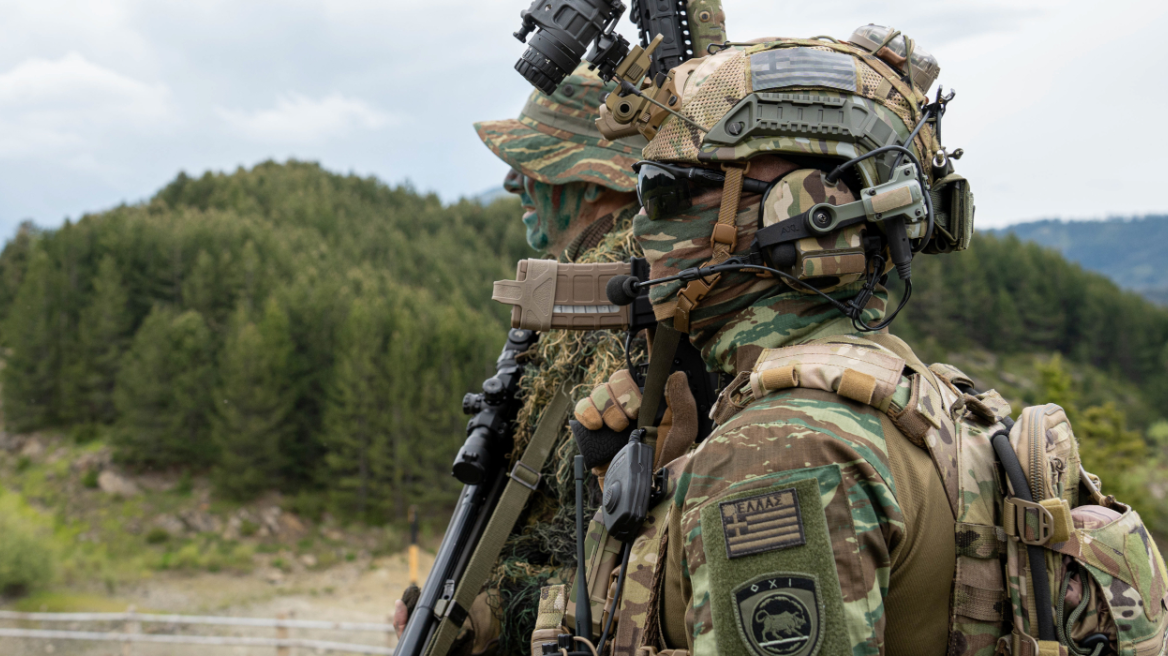
The Hellenic Parliament will usher in the new year with the “Roadmap for the Transition of the Armed Forces to the New Era,” as the omnibus bill of the Ministry of National Defence is expected to be the first law of the state for 2026. It includes a series of structural changes to the form and operation of the Armed Forces, while at the same time having sparked mass reactions on issues related to human resources management. For the first time in decades, the proposed legislative provisions comprehensively change the framework for conscripts as well, focusing mainly on the philosophy and content of training, although the strongest objections come from the Non-Commissioned Officers (NCO) Corps.
Already, a protest rally has been scheduled for January 8 in front of Parliament by active-duty and retired officers, as they announced during the hearing of stakeholders at the last meeting of the Parliamentary Committee on Foreign Affairs and Defence last Friday, in the absence of the competent minister Nikos Dendias. This continues their mobilisations against the omnibus bill, which began at this year’s Thessaloniki International Fair (TIFF) and are escalating toward its adoption.
The main pillars
At the same time, a key objective for the Ministry of National Defence is the rapid transformation of the current structure of the Armed Forces through the provisions of the omnibus bill, as officials at the Pentagon believe that the existing structure does not respond to the challenges of the 21st century, nor to the lessons learned from the theaters of war in Ukraine and the Middle East.
Instead, under the new institutional framework, priority is given to the development of defence technology and industry, and to the integration of digital applications into the Hellenic Armed Forces, at a time when Europe is rapidly developing its own defence infrastructure and heavily funding military mobility. At the same time, the proposed changes interact with the 12-year armaments program of the Armed Forces, as well as with the development of the domestic defence industry with the support of ELKAK (Hellenic Centre for Defence Innovation). The ultimate goal is a flexible, operationally capable and socially supported military in times of geopolitical upheaval that inevitably affect the Pentagon as well.
As regards the New Structure of the Armed Forces, it is supported by six main axes of change proposed by the “Transition Roadmap” to the new era, namely the bill to be voted on. These are: a new pay scale, a new rank structure, a new system of career progression for personnel, military education, conscription, and the reserve force.
New pay scale
Overall, the omnibus bill prioritises the rationalisation of human resources in the Armed Forces through the introduction of a new Rank Structure accompanied by a specific Duty Catalogue, while the spearhead of the reform is the new Pay Scale, satisfying one of the sector’s long-standing demands. The new pay scale incorporates the pay increases for military personnel that have been announced with an implementation date of 1 October 2025 (and therefore will be paid retroactively after the bill is adopted). It also provides for an increase in the Responsibility Allowance, while for the first time a Command Allowance (€150–€400) is introduced for officers and NCOs, according to the Pentagon. Overall, the increases apply to all personnel and range from 13% to 24%, and become even higher when Border Area, Command, Responsibility and other allowances are added.
However, trade union associations of active-duty military personnel speak even of reductions in certain cases, citing February payroll statements they recently received on the order of the competent minister, so as to see the new earnings they would receive after the adoption of the omnibus bill. In addition, the reference to a “personal difference” has alarmed personnel, as the new pay scale could also affect other benefits, such as lump-sum payments, as noted from the floor of Parliament.
New rank structure
According to the Pentagon, the new Rank Structure aims to address the phenomenon of the “inverted pyramid,” as described by the Minister of National Defence – that is, the “overinflation” of senior officers relative to conscripts. Specifically, 65% of officers come from the ranks of NCOs and EPOPs/EMTHs, resulting in an officer-to-NCO ratio of 1 to 0.8. For example, there are six times more majors than sergeants first class and five times more than sergeants, and more than twice as many colonels as sergeants, according to Pentagon sources. At the same time, the new Rank Structure has attracted the most reactions, along with thousands of negative comments during the public consultation.
The main reason for the reaction among Armed Forces personnel is the lack of transitional provisions, since the bill applies retroactively, affecting mainly serving senior officers. As union representatives argue, the time required in each rank before promotion is multiplied, meaning that personnel who until recently would be promoted to lieutenant colonel or even colonel (from NCO schools), or to second lieutenant (EMTH), will remain warrant officers, losing up to six ranks.
According to NCOs, at the moral level, the freezing of promotions does not offset the loss of prestige they will suffer due to non-promotion, at a time when morale is a crucial factor for daily performance. Indeed, criticism of the new Rank Structure was the main common denominator in the statements of both active-duty and retired officers during their hearing in Parliament, as it allegedly leads to stagnation in personnel development through the establishment of fixed organisational posts.
For this reason, the new Rank Structure is described as a “red line,” especially for serving NCOs, as it overturns their personal career plans and family planning. For example, officers originating from the NCO corps who already hold the rank of second lieutenant or higher (up to lieutenant colonel) would remain stuck at the same rank (for up to 16 years) until the end of their careers.
A similar path is expected for professional soldiers, who would advance from private to sergeant first class of command A’ class, instead of to master sergeant as previously applied. Serving Long-Term Volunteers (EMTH) would remain at their current rank, with no provision for promotion, instead of promotion up to the rank of second lieutenant.
At the same time, both active-duty and retired officers stress that in many combat units today active-duty NCOs serve in key roles (for example, in maintenance units). They therefore call either for the withdrawal of the bill or for its provisions to apply only to those entering military schools from now on, so that candidates have full knowledge of the new conditions.
“Career pathway”
For the Ministry of National Defence, a strategic objective of the omnibus bill is also the creation of a distinct and modern “Career Pathway” for Armed Forces personnel. This would be achieved through the introduction of a maximum number of organisational posts per rank, branch and category of origin, as well as through a new promotion system in which promotions would depend on available organisational positions. However, several associations of retired and active-duty personnel point to a “downgrading of the HAGS” (the Council of Chiefs of the General Staffs), arguing that many Armed Forces issues would now be proposed and submitted (under Article 287) to the Chief of the Hellenic National Defence General Staff instead of the minister.
Modernisation and upgrading are also being pursued in the field of military education, with the establishment of an Academic Education Command under which all military schools (ASEI, SSAS, ASMY) will fall, aiming at horizontal coordination of academic, research and financial matters. At the same time, the curricula of the Higher Military Educational Institutions are being fully redesigned, with new specialisation tracks, five-year study cycles and degrees with clearly defined scientific fields, while NCO schools are being elevated to higher education status for the first time.
In this case, however, military unions speak of their practical downgrading or even “silent abolition,” as if the bill’s provisions are implemented in full, it is uncertain whether there will be demand from secondary education graduates in the coming period. They also highlight the lack of clarity regarding the professional rights of future graduates.
New content for conscription
As for military service, its duration does not change, but it acquires entirely new content and organisation.
Specifically, all conscripts will initially be allocated to the Army, followed by the transfer of a specific number – by specialty – to the Navy and the Air Force.
Basic training will last 10 weeks and will include shooting simulators, drone operation and horizontal skills (such as first aid), followed by four weeks of specialised training and then 12 weeks of operational training in high-readiness units. After six months of service, those who choose nine-month service will be required to remain in border areas, while those who choose twelve-month service will be posted near their place of interest.
A point of friction, however, concerns deferments. The Pentagon seeks stricter rules, requiring for mental health reasons a medical opinion from a senior registrar or director of a public hospital. As for study-related deferments, Article 187 states that “the deferment of conscription lasts until 31 December of the year in which the conscript reaches the following age limits, as applicable: twenty-one (21) or twenty-two (22),” depending on years of study at a university. This has drawn protests, particularly from medical students, with PASP Medical School of the National and Kapodistrian University of Athens speaking of a reduction in the duration of deferments for postgraduate and doctoral studies, as well as the abolition of deferments for PhD holders excelling in research programmes abroad, as provided for under current law.
The new conscription model will also have a female dimension, as for the first time voluntary enlistment of 200 women aged 18–26 for 12 months is foreseen, starting in 2026, along with the option to serve as Reserve Officer Cadets and the determination of a monthly allowance.
150,000 active reservists
A declared goal of the Ministry of National Defence is the creation of a pool of 150,000 active reservists. To this end, the omnibus bill provides for raising the reserve age limit to 60, unifying it with the National Guard reserve pool, and creating a Reserve Commando Squadron in Rentina and Aspropyrgos, combined with a package of benefits and incentives.
Finally, the omnibus bill also seeks to regulate issues concerning Military Justice, as well as the transitional operation of TEΘA–TES–TAA, which currently manage the real estate of the Armed Forces, until they are functionally incorporated into the jurisdiction of the new umbrella fund National Defence Real Estate Fund. This has particularly concerned associations of retired personnel regarding the future management of donations and bequests of the Armed Forces.
Ask me anything
Explore related questions




