






The Vinyl Revival: More Than Just Nostalgia
Despite the rapid rise of digital media, the vinyl record market has seen a notable resurgence in recent years. More and more people—not just longtime collectors, but also younger generations—are seeking out vintage records, reissues, and new pressings. Over the past decade, new record stores have opened and continue to open, adding to existing ones to satisfy the renewed public love for vinyl.
Protothema.gr visited some of Athens’ most iconic record stores to document this growing trend.
Why Vinyl? The Appeal of Analog Sound
Store owners agree: the return to vinyl is not just about nostalgia, but also an aesthetic choice. Spyros Papanikolaou of Vinyl City (open since 1993) says, “People turn to vinyl because they love it. It’s the warm, analog sound, the collectible aspect, the whole process of putting a record on the turntable and listening to it. When you own a band’s record, you really feel connected to their music. The record is part of you.”
George Kanellopoulos of Old School adds, “Vinyl is timeless. Digital sound has tired people out. Now, they want to return to analog media like vinyl and cassettes. Even the process of opening a record, looking at it, admiring it—it’s a different format, a different product. The sound, the cover art, everything matters.”
Filippos Koundouras of Underflow (open since 2015), which also hosts live music events, notes, “Both older and younger generations are fixing up their old turntables or buying new ones. This is very important, because as more people buy turntables, record sales increase, and collectors grow. Collectors are increasing because, as they return to vinyl, they seek out historic records and rebuild their collections.”
A Diverse Customer Base: From Teens to Seniors
Record stores are no longer just for die-hard collectors. Eleni Neoudaki, owner of Record House (since 1973), says, “Young people, even teenagers, are getting into vinyl, often inspired by parents, uncles, or godparents who had systems and are now restoring them. Some buy new turntables or use their old ones.”
Lazaros, son of the owner of Discobole in Exarchia, adds, “The market for turntables and stereo systems has rebounded, which helps vinyl sales. Everyone is upgrading their home turntables and sound systems, expanding their vinyl collections. Aesthetically, it’s beautiful. This is what drives sales.”
George Kanellopoulos of Old School emphasizes, “The younger crowd, aged 18-30, is the most dynamic. Without them, vinyl wouldn’t be moving. Old collectors might buy one or two albums a month, but with such low sales, we’d have closed. It’s the young people rediscovering vinyl, and those who want to rebuild their collections after years.”
Filippos Koundouras of Underflow notes, “Our customers range from 14 to 80 years old.”
Women in Vinyl: Breaking Stereotypes
Xanthippi, who works at Zacharias (since 1994), says, “We’re seeing a different crowd approach vinyl. Young people and many girls—something worth noting. As a woman, I always felt like the rare bird in a male-dominated world. We used to say only men collect records, not women. I remember girls sitting outside the store while their boyfriends searched the shelves for hours. But now, more and more girls are coming in, knowing about bands and asking for discographies. This is encouraging for the new generation.”
Filippos Koundouras agrees, “Now, we see this balance. Many women have been buying records in recent years.”
What’s Selling? Classics and New Releases
George Kanellopoulos of Old School says, “People buy all music styles. Even the youngest return to classics. You might see a kid with an alternative look, and you’d think they’d go for 80s-90s music, but they ask for Greek folk, laika, Marinella, Kazantzidis. There’s a mix.”
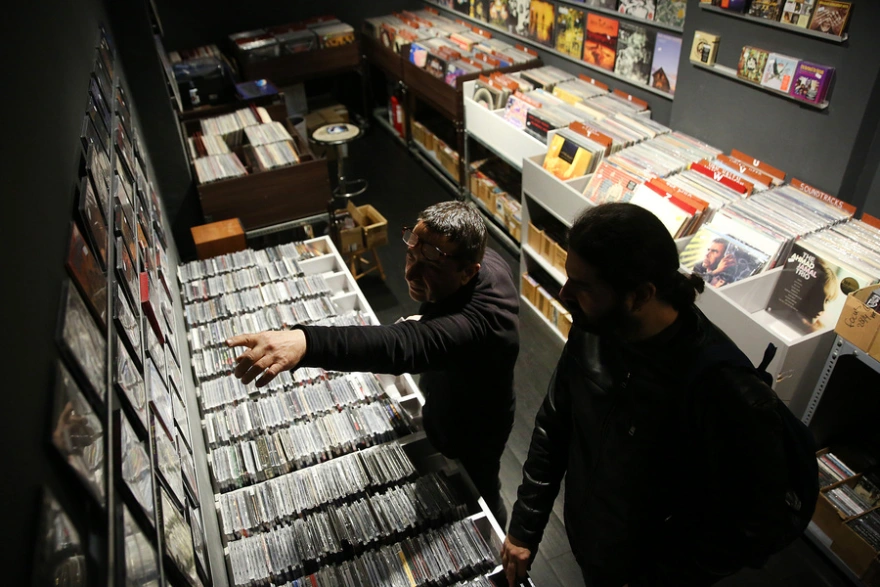
Eleni Neoudaki notes, “Customers ask for classics or new releases. Everything sells, from classical to jazz, pop, and especially classic rock. There’s always high demand for albums like Fleetwood Mac’s Rumours or Jeff Buckley’s Grace.”
Lazaros of Discobole adds, “New releases and deluxe editions sell well, especially when the music is good. For example, Taylor Swift, as a popular pop star, sold many vinyl records. Classics still outsell new releases, about 60-40%.”
Filippos Koundouras says, “People buy whatever I have. They ask for hip hop, but I don’t stock it. They also ask for old albums, especially original pressings, and new releases or reissues. For example, the reissue of Keith Jarrett’s The Köln Concert is in high demand.”
The Price of Vinyl: A Luxury or a Passion?
George Kanellopoulos points out, “New releases or reissues cost around €30-35. That’s a day’s wage. Given the economic hardship, I consider Greeks and young people heroes for saving money for a week to buy a €35 vinyl. It’s not cheap, and records have always been expensive, but money is tighter now. This dedication is almost heroic.”
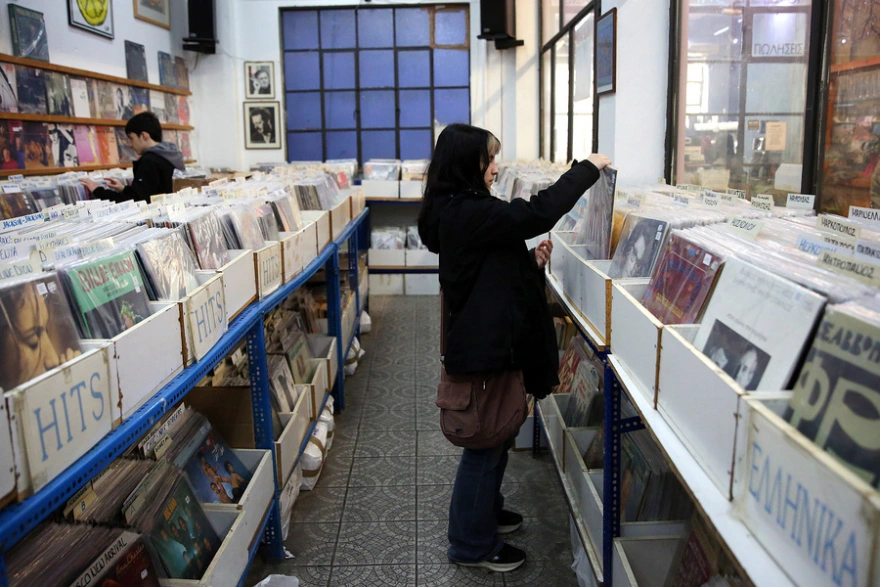
Lazaros of Discobole adds, “We’ve seen a big price increase, especially in Greece. Some records now cost up to €60. For example, three years ago, Metallica vinyls were €35; now, the retail price has jumped to €60.”
Tourists and the Vinyl Hunt
Record stores in busy areas like Monastiraki and Exarchia also attract tourists. George Kanellopoulos says, “There’s a tourist flow. They look for rebetiko, Greek blues, and other local music. This is another sales aspect.”
Vinyl’s Enduring Appeal
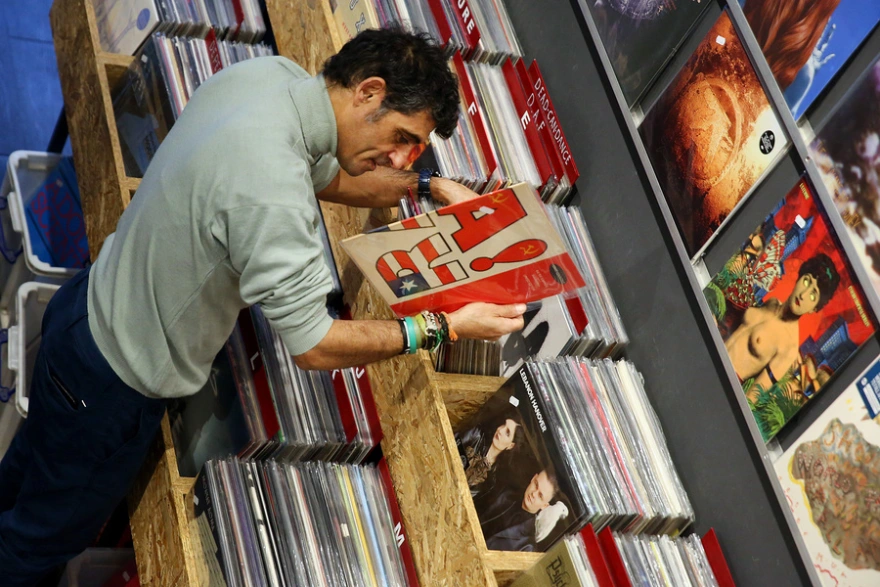
Despite high prices, collectors and music lovers continue to embrace vinyl. The fact that old record stores have survived the rise of CDs and streaming, and that new stores keep opening, proves that vinyl’s warm sound and tactile experience will never truly die. Whether it’s the ritual of placing a record on a turntable, the collectible nature, or the aesthetic appeal, vinyl remains a beloved format for music enthusiasts of all ages.
Ask me anything
Explore related questions




