





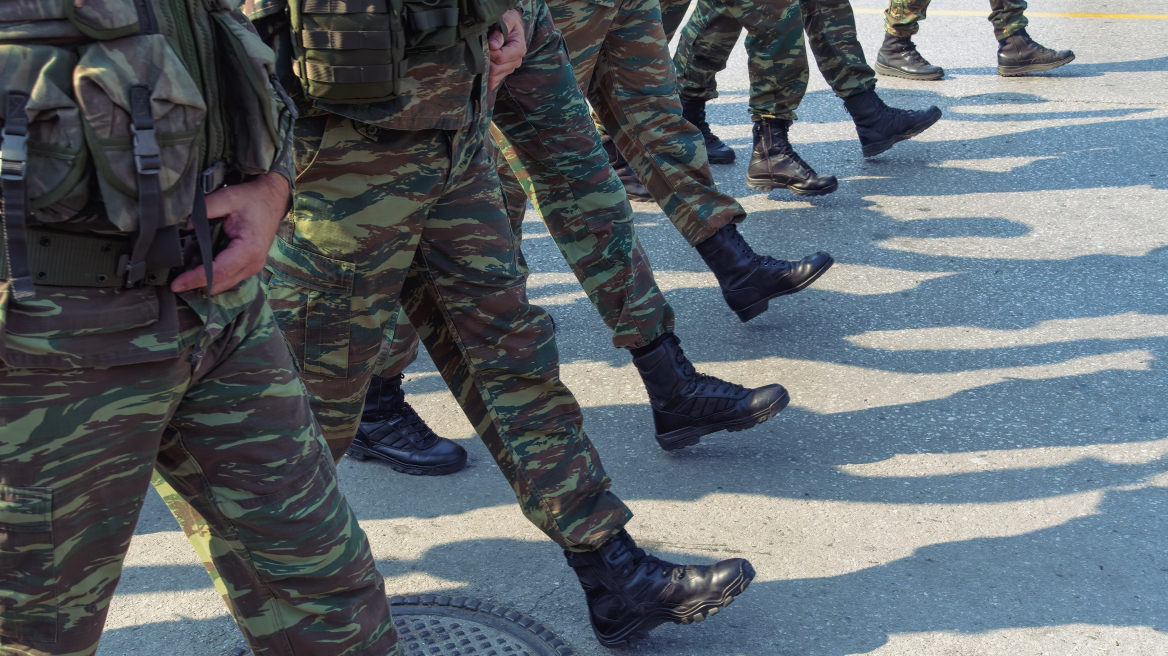
A series of significant changes is introduced by the new model of military service in the Hellenic Armed Forces, which will be launched with the enlistment of the First Intake (A’ ESSO) of 2026, from February 24 to 27.
As Minister of National Defence Nikos Dendias has pointed out, “the new service constitutes one of the main pillars of the ‘Agenda 2030’ reform.”
Mr. Dendias has also stressed that the changes are deemed necessary in order to adapt to modern conditions, geopolitical shifts, technological developments, and the new approach to military operations seen in recent conflicts.
According to sources from the Ministry of National Defence, the aim of the changes is to provide substantial training and specialties/skills that shape a capable reserve fighter and deliver a useful, well-trained citizen back to society.
The same sources emphasize that in this way, military service transitions from being a chore to a service with substance and value.
A central pillar of the changes is 10 weeks of basic training, conducted exclusively in the Army.
It provides comprehensive training for the modern soldier with the addition of new subjects (from drone operation to First Aid) and a significant upgrade of existing ones (more live-fire exercises, marches, and drills).
A key change in the new service is the provision of specialized knowledge at the Armed Forces’ Lifelong Learning Centers, in fields that become professional skills and will serve as qualifications for each young person who chooses them.
The main changes also include: qualitative and quantitative upgrading of rations, a new medical examination system at enlistment centers, the assignment of all conscripts to operational units after training, and a significant increase in monthly compensation from €8.80 to €100 for those serving in Thrace and the Eastern Aegean islands, and €50 for those serving in mainland areas.
In detail:
- Intake periods (ESSO) are reduced from six to four (February, May, August, and November).
- All conscripts are enlisted in the Army. Only soldiers with specialized professional qualifications will be internally transferred to the other branches, the Air Force and the Navy.
- Conscripts are enlisted at 13 Training Centers.
- Soldiers serve 12 months, except for those enlisted early or as first-borns, and those who choose or are selected to serve in Thrace, the Eastern Aegean islands, in ELDYK, and in the Presidential Guard’s Evzones Company, who will serve 9 months.
Stages of soldier training
First stage: Basic training, conducted at enlistment centers and including:
a) Initial training, including enlistment week, which concludes with the oath-taking ceremony, and
b) Combat training, where the soldier’s operational capability is fully developed.
Second stage: Special training, conducted at Specialty Training Units of the Major Commands or Formations to which their assigned units belong, or at Lifelong Learning Centers. During this stage, soldiers are trained in specialties and vertical skills.
Third stage: Unit training, conducted in the units where soldiers are assigned or transferred to complete the remainder of their main military obligation, focusing on their operational integration.
Basic Training (10 weeks)
- Increased practical training time.
- Increased number and types of live-fire exercises, including night firing, pistol firing, and training grenade throws.
- Increased tactical subjects, marches, small-group exercises, and night training, including combined higher-difficulty exercises (e.g., march with live fire, night march–fire with overnight field stay).
- Introduction of horizontal skills training useful in later life, including First Aid, fire protection, and environmental education.
- Introduction of training in Unmanned Aircraft Systems (drones), including theoretical instruction, detection–identification–countermeasure methods, and practical simulator training with increasing difficulty scenarios. Those who pass initial simulator scenarios undergo final testing with a training drone. Successful candidates complete the final two weeks of training, acquire drone operator skills, and receive a special insignia for their uniform.
Special Training (4 weeks)
- Conducted in selected operational units, specialized centers and schools, and Lifelong Learning Centers. Certain specialties (doctors, pharmacists, nurses, physiotherapists, microbiologists, IT soldiers, musicians, chemists, etc.) are assigned directly to units.
- Specialties not aligned with modern operational requirements are abolished and grouped into 19 training specialties (down from 46 main ones).
- Pilot implementation of specialty-skill programs at Lifelong Learning Centers, offering certified specialization. For the first 2026 intake, these include Heavy Machinery Operator, Lifeguard–Diver, Armorer, Drone Operator, and a special Cybersecurity program at the School of Computer Programmers.
- Skill programs will expand to more fields in future intakes.
Assignment to Operational Readiness Units
After completing basic and special training, soldiers are assigned to high-demand operational maneuver, combat support, and logistics support units, with priority placement (70%) in Thrace and the Eastern Aegean.
Soldiers are entitled to a regular transfer from their initial unit after six months from enlistment, for 12 weeks (for 9-month service) or 26 weeks (for 12-month service). Assignments are based on a points system (knowledge, skills, place of preference/locality).
Increase in Monthly Compensation
- Conscripts will receive €100 when serving in border areas and €50 when serving inland (up from €8.80).
- Children of large families will receive €150 (up from €35).
- Soldier-parents will receive €150 for one child, €200 for two, with an additional €50 for each extra child.
- Unmarried soldiers orphaned from both parents will receive €200 (up from €100).
Ration Upgrade
The qualitative and quantitative upgrade of rations includes implementation of a new supply regulation in line with modern nutritional standards and an increase in the meal allowance from €4.50 to €6.40.
The new meal plan is enriched with additional items based on required daily caloric intake, allows for individualized portions, and will be provided simultaneously across all training centers.
Ask me anything
Explore related questions




