





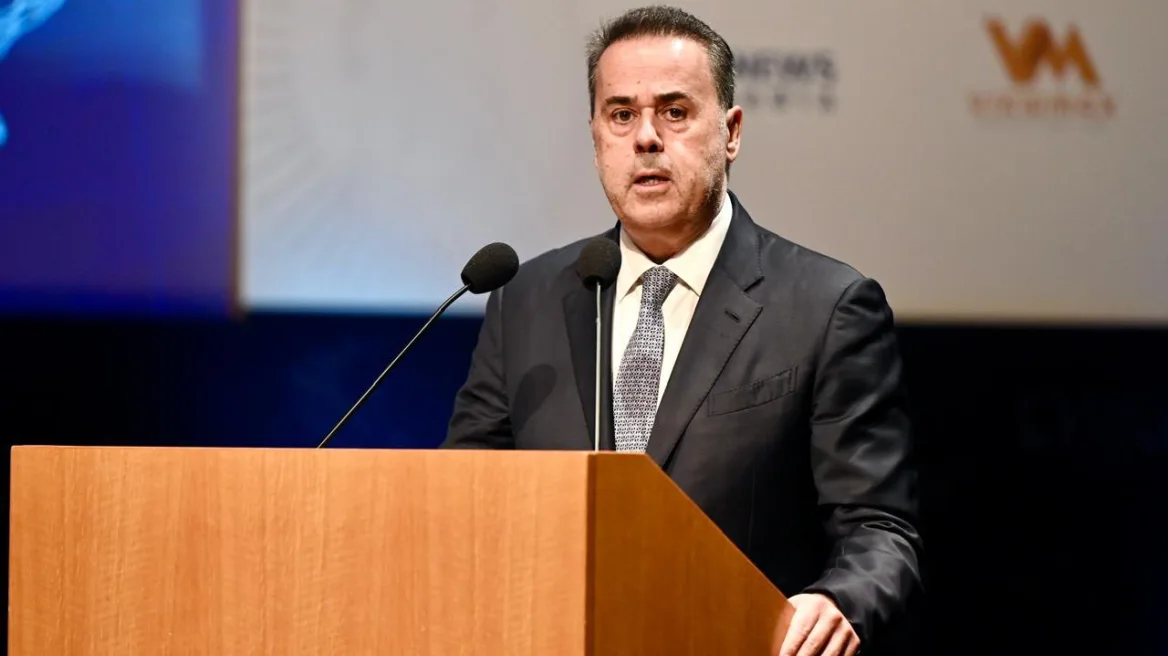
A tense confrontation took place at the EU Energy Council of Ministers between Greece’s Minister of Environment and Energy Stavros Papastavrou and Sweden’s Energy Minister Ebba Busch regarding the future of European electricity grids and the degree of centralized planning Europe’s energy infrastructure should have.
The discussion, held today in Brussels in preparation for the European Council summit on March 19, aimed to address all energy issues that will be discussed there. It highlighted the differing approaches among EU member states on how investments in electricity transmission networks and interconnections should proceed.
According to the council’s official agenda, the issues under discussion include energy prices, the role of the ETS emissions trading system, interconnections, and the functioning of the integrated electricity market—topics gaining new importance amid the crisis in the Middle East.
According to reliable sources, the Swedish side expressed reservations about the idea of more centralized European planning for energy networks, arguing that infrastructure investments must take into account each country’s national particularities. Stockholm’s position suggests that some proposals could put pressure on member states that already have well-developed power grids, hinting even at the possibility of limiting participation in certain interconnection initiatives if greater flexibility in planning is not provided.
Responding to these remarks, the Greek minister intervened in a sharp tone, noting that “with all due respect to my distinguished colleague from Sweden, ultimatums are not the way we should operate at this moment.”
Papastavrou emphasized that in recent years significant differences in electricity prices have been recorded among EU member states, with countries in Southeastern Europe at times experiencing much higher prices than those in Northern Europe. As he noted, this situation creates a “wall of electricity prices” within the single market, undermining its cohesion.
Although Greece currently ranks among the countries with the lowest wholesale electricity prices in Europe, the minister stressed that the problem of imbalances has not disappeared and that a common European response is required.
In this context, he underlined that creating a truly unified European energy market requires strong transmission infrastructure and interconnections, which would allow better use of energy resources and renewable energy production across Europe.
Concluding his intervention, the Greek minister invoked former European Commission President Jacques Delors, one of the architects of European integration, posing a symbolic question to his counterparts:
“What would Delors say if he were here? He would say: you must do it now.”
Earlier, upon arriving at the council meeting, Papastavrou described the large differences in wholesale electricity prices between Eastern and Southeastern Europe and the rest of the continent as the “elephant in the room” for Europe.
“Two years ago we were among the countries in Southeastern Europe with prices twice as high as the rest. This year, during the first ten days of March, Greece has the sixth-lowest price, but we have not forgotten the challenge,” he noted.
EU Energy Commissioner Dan Jørgensen also intervened in the discussion, stressing the importance of a common European plan for energy networks. As he put it, the absence of a shared strategy is “like trying to assemble a puzzle without looking at the picture on the box.”
The debate highlighted the differing views that still exist within the European Union about the future of energy integration. On one side, several southern countries support stronger European coordination and more interconnections to reduce electricity price imbalances. On the other, states with already well-developed energy systems appear more cautious about more centralized planning of energy infrastructure.
Ask me anything
Explore related questions




