





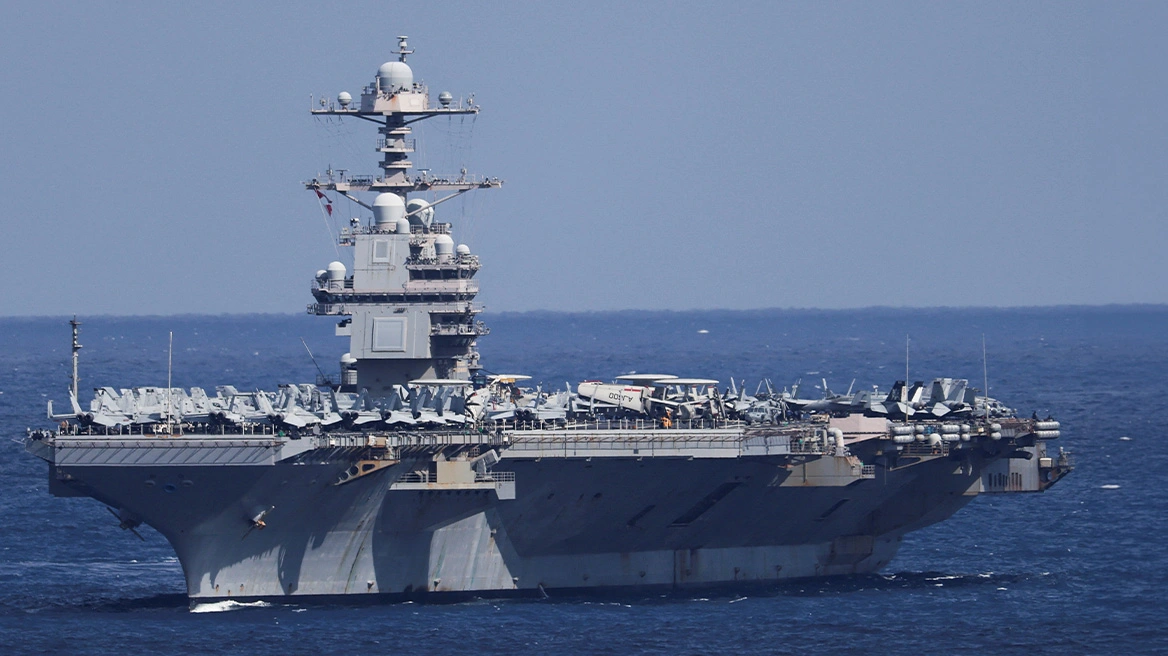
The fire that erupted last week aboard the USS Gerald R. Ford in the Middle East appears to have been more extensive than initially thought. According to The New York Times, flames that started in the laundry areas burned for more than 30 hours, with dozens of crew members suffering from smoke inhalation.
A statement from the U.S. Navy said the fire on the largest warship in the U.S. fleet was contained, was not related to combat, and caused non-life-threatening injuries to two sailors.
Although the same statement said that combat operations on the 100,000-ton vessel—deployed in the Red Sea—were not affected, the NYT report presents a different picture.
It notes that “conditions for the crew and the air wing of about 4,500 personnel aboard the $13 billion ship are far from ideal. Around 600 sailors lost their bunks in the fire and are sleeping on tables or the floor, while many are unable to wash their clothes.”
According to U.S. military officials and crew accounts, the fire broke out in the ship’s main laundry facility—reportedly in a dryer vent—before spreading through ventilation ducts to other parts of the ship.
The fire was eventually brought under control after sailors battled the flames for more than a day across multiple compartments of the carrier.
It is noted that the aircraft carrier, which has been on a 10-month deployment, had previously faced issues with its toilets.
The USS Gerald R. Ford began its latest mission in the Mediterranean, was then sent to the Caribbean as part of U.S. pressure on Venezuela aimed at the removal of Nicolás Maduro, and later returned to the Middle East.
Experts explain that such long deployments take a toll on both ships and crews. Maintenance schedules are tightly coordinated across the fleet, and extending a vessel’s deployment can delay repairs and strain equipment designed for shorter missions.
Ask me anything
Explore related questions




