





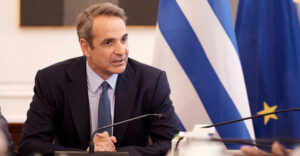
The increase of the minimum wage to €920 was announced by Prime Minister Kyriakos Mitsotakis during the cabinet meeting currently in session.
This represents a monthly increase of €40 compared to last year, with an annual benefit equivalent to almost half a monthly salary.
This is the sixth consecutive increase since 2022, with cumulative growth reaching +41.5% since 2019.
It is noted that the new increase does not only apply to the minimum wage, but also pushes upward seniority pay scales, public sector wage brackets, and various benefits.
As Mr. Mitsotakis stated: “In such a complex period, the national strength that is projected beyond our borders must be forged by internal stability and unity. The ability to distinguish the important and serious matters of a changing world from the small and insignificant issues of our partisan microcosm.”
The increase will take effect from April 1, while the target of a €950 gross minimum wage by 2027 remains in place.
The minimum wage has gradually increased from €650 in 2019 to €880, a total rise of 35.4%. This corresponds to €3,220 gross annually, meaning that those earning the base wage today—before the upcoming increase—is equivalent to receiving five additional base monthly salaries compared to 2019.
Taking inflation into account, sources from the economic team note that the increases have outpaced inflationary pressures. It is also noted that the target of an average salary of €1,500, announced by Mitsotakis during the 2023 elections, has nearly been achieved.
The new minimum wage increase also interacts with changes in the tax scale, while for workers under 30 the financial benefit is even greater due to higher tax exemptions or the tax-free threshold. The increase also affects a range of social benefits, as well as seniority allowances in both the public and private sectors.
Ask me anything
Explore related questions




