





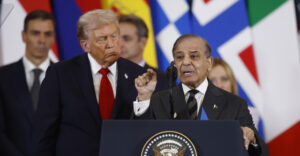
In a significant development for de-escalating tensions in the Middle East, Iran accepted Donald Trump’s proposal for a two-week ceasefire, opening a window of optimism for the future and temporarily reducing the risk of further escalation of the war.
The agreement, described as highly fragile, appears to have been reached after intense diplomatic contacts in recent hours, with Pakistan playing a key role as a mediator between Washington and Tehran.
As the BBC reports, talks continued at a rapid pace until the very last moment, with Pakistan acting as an intermediary, relaying messages between the two sides. According to an anonymous source cited by the British outlet, “a very small circle” of officials took part in the negotiations, while the atmosphere was described as “serious and restrained, but with hope that hostilities would cease.”
Why Pakistan?
The report notes that Pakistan has historically maintained close relations with Iran, with which it shares a border, describing the relationship as “brotherly.” At the same time, the country maintains open channels of communication with the United States, which allowed it to act as a reliable mediator in recent weeks. The BBC reports that President Trump has referred to Pakistan’s army chief, Field Marshal Asim Munir, as his “favorite” Field Marshal and has stated that he knows Iran “better than most.”
Reaching an agreement was not considered a given, as developments in recent days further complicated the situation.
According to the report, Israel’s attack on Iran, as well as Iran’s strikes on Saudi Arabia, heightened tensions and created new obstacles to diplomatic efforts. Pakistan’s Foreign Minister, Ishaq Dar, told parliament that until recently there had been optimism for a positive outcome of the talks, while stressing that the situation remains extremely critical.
A strict tone was also adopted by Pakistan’s army chief, Field Marshal Asim Munir, who noted that attacks against Saudi Arabia undermine efforts for a peaceful resolution of the crisis. Analysts estimate that this stance may increase pressure on Iran, given Pakistan’s defense agreement with Saudi Arabia, which has not yet been activated.
Diplomatic efforts for peaceful settlement of the ongoing war in the Middle East are progressing steadily, strongly and powerfully with the potential to lead to substantive results in near future. To allow diplomacy to run its course, I earnestly request President Trump to extend…
— Shehbaz Sharif (@CMShehbaz) April 7, 2026
Shortly after midnight in Pakistan, the country’s prime minister stated in a post on X that “diplomatic efforts are progressing steadily, dynamically and strongly, with the potential to lead to substantial results in the near future.” At the same time, he asked Donald Trump to extend the deadline by two weeks, and Iran to reopen the Strait of Hormuz for the same period.
According to the BBC, shortly before 05:00 in the morning, the ceasefire was announced, while Pakistan invited both sides to meet in Islamabad on April 10, with the aim of reaching a more permanent agreement.
As the BBC concludes, despite the achievement of a temporary ceasefire, the situation remains fragile, as there is still no trust between the two sides and their positions remain deeply entrenched. The key question is whether they can find common ground in potential talks.
Ask me anything
Explore related questions




