





Although Greece has Europe’s most powerful fleet of aerial firefighting assets and the OECD has recorded progress on prevention, professor of natural hazards Costas Synolakis highlights the gaps in the firefighting model and in post-disaster management. Here is what he says about the Forest Service, the electricity network and the local operational plans that are missing.
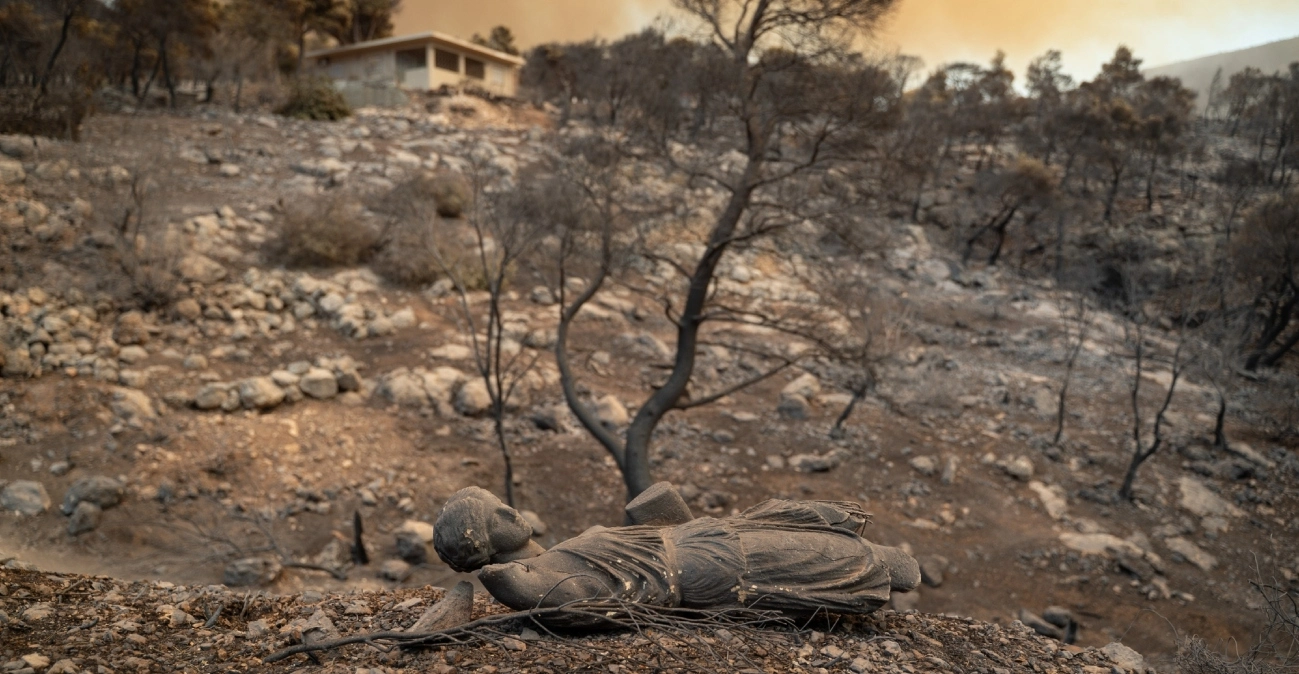
The wildfire that broke out on 31 July and battered Boeotia and Attica for almost five days left two people dead, more than 11,200 hectares of forest burned and dozens of homes destroyed. Given the extreme conditions that fuelled it and the sheer scale of the area burned, the blaze is classed as a mega fire, and it has, on the evidence so far, exposed gaps in the firefighting model, in prevention, and in the handling of the disaster’s aftermath.
The public debate has reopened old questions: whether Greece’s aerial superiority is really the answer to fighting fires effectively, and whether new measures are needed, and what those should be, given the conditions created by climate change. It has also revived an argument that has run for almost 30 years, over the transfer of firefighting responsibility from the Forest Service to the Fire Service.
Mega fires are nothing new for Greece. The 2023 Dadia forest fire, in the northeastern Evros region, is recorded as the most destructive on EU territory since detailed record-keeping began in 2000, and it followed the huge Evia wildfire of 2021. So where do the gaps lie, and why was the fire in Boeotia not brought under control quickly, before it grew to the scale it did?
Why Attica and Boeotia burned: air superiority in the sky, but the battle was lost on the ground
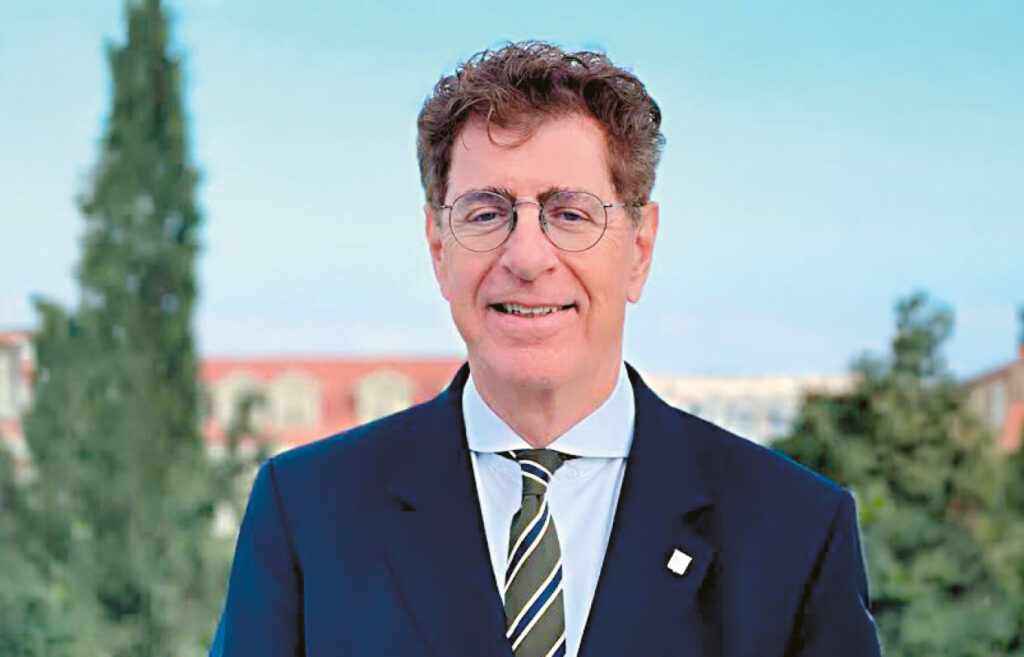
Synolakis says: “Without a full operational assessment, we cannot attribute specific responsibility, nor can we know for certain what happened in the first critical minutes. What we do know is that the fire developed under extremely adverse conditions: very strong winds, exceptionally dry vegetation, multiple spot fires from flying embers and very rapid spread. Under such conditions, a fire can outstrip the capacity for direct suppression within minutes. That does not mean specific critical points should not be examined: how quickly the original outbreak was detected, how much time passed between the alert and the first substantial response, whether ground forces were already in suitable forward positions, whether there were safe forest roads and water points, and whether the initial mobilisation matched the extreme level of risk.
The most fundamental gap is usually one that predates the fire itself. Local operational plans are often missing: vegetation mapping, likely spread scenarios, the positioning of firefighting forces, escape routes and the safest points from which to halt a fire front. A major wildfire is not tackled only on the day it breaks out. It is tackled through decisions made months and years earlier.”
The Antinero programme
As Synolakis notes, more is being done on prevention now than in the past: forest clearance, the maintenance of forest roads, firebreaks and works under the Antinero programme, Greece’s wildfire prevention scheme. “The OECD records, among other things, plans to maintain or open around 12,000 kilometres of forest roads and 1,600 kilometres of firebreaks, as well as the drawing up of forest fire protection plans, and, according to Google, the clearance of around 7,700 hectares of forest.”
He observes that “Antinero is still being rolled out, but we do not need to wait for it to be completed to see how effective it is. If we look now at which phases of Antinero had been completed in the areas that burned this year, we can draw initial conclusions and correct whatever needs correcting. My sense is that prevention often remains piecemeal, reactive and concentrated at the start of the fire season.”
As scientists point out, fire is a natural function of many Mediterranean ecosystems. It would therefore not be ecologically sound to clear every forest indiscriminately. Foresters decide where thinning is needed, where mosaics of different vegetation should be created, and where grazing, cultivation or prescribed burning can be put to use.
“We need to reduce ignitions: carry out systematic maintenance of the electricity network, control vegetation around power lines and use targeted, preventive power cuts. The climate crisis means that planning based on data even a few years old is no longer enough. We need to prepare for fires that are faster, more intense and harder to bring under direct control,” the professor points out.
80 aircraft
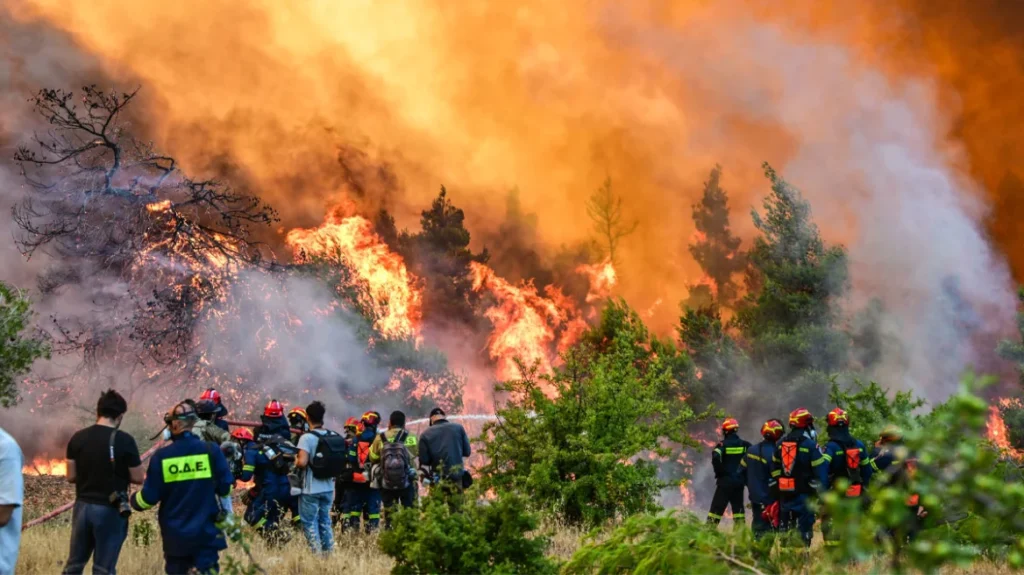
The major problem in the Attica-Boeotia fire was the strong, extreme winds that effectively grounded the aerial firefighting fleet for two days. Greece has the strongest fleet of aircraft and helicopters, owned and leased, in Europe, and it is due to be reinforced further with the phased delivery of new Canadair aircraft from 2028.
The country has more than 80 aerial assets, at a time when Germany, facing different conditions and following a different model, has just one. In an emergency, Germany turns to the EU’s civil protection mechanism, rescEU, to request aerial firefighting support.
“Greece really does have a very strong aerial fleet relative to its size and population. But that gradually created the illusion that aerial assets are the main answer. They are not,” Synolakis says, explaining: “Aircraft and helicopters are extremely useful for temporarily reducing the intensity of a fire, supporting ground forces and protecting critical points. But they cannot extinguish a fire for good without ground forces. What’s more, in strong winds, smoke or poor visibility, their effectiveness drops and crew safety comes under serious threat, as we tragically experienced in the most dramatic way on 2 August.” As he points out, “what is missing is a genuinely balanced model.
“We need to look at how flexible ground-based forest firefighting teams are, how well trained they are in creating control lines and, where appropriate, in backburning or controlled burning. We also need forward deployment of forces on days of extreme risk, night-time operational capability and a unified picture drawn from satellites, drones, cameras and weather data. In satellite imagery at least we have made huge progress, and I’m glad the state acted on my proposals for Greece to join constellations of thermal and SAR (synthetic-aperture radar) satellites. Aerial assets should support the operational plan. They cannot be the plan itself.”
The first 20 minutes
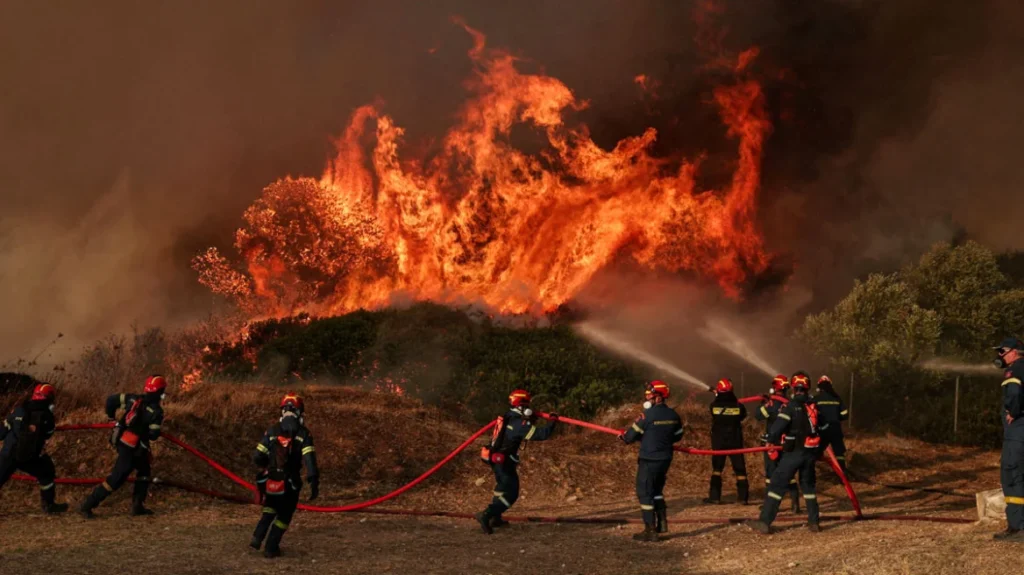
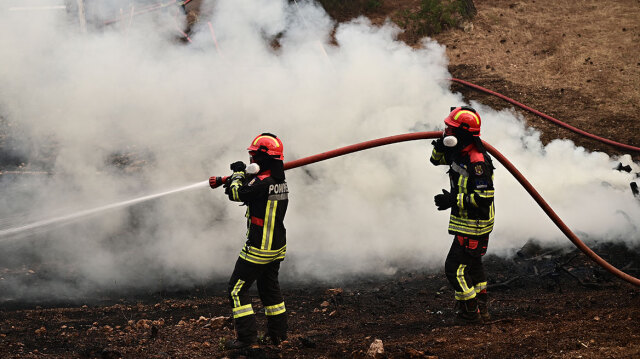
For Synolakis, fires are ultimately put out by ground forces, but only under the right conditions. Aircraft drop water or retardant and temporarily reduce the flames, but someone still has to get to the ground, secure the perimeter, extinguish smaller spot fires, clear fuel and prevent flare-ups.
“There are, however, natural limits. When flame lengths are very great, radiant heat is intense, embers spread the fire quickly and the wind keeps changing direction, firefighters cannot attack the fire head-on without putting themselves in danger. At that point they need to work from safe positions, from the flanks or from already burned ground, making use of roads, firebreaks and natural barriers.
Their capacity therefore depends not just on the number of firefighters and vehicles, but on whether there is access, water, local knowledge, reliable communications, the right personal equipment and a clear escape plan. Small, mobile, specialised teams are also often needed, able to reach places a heavy fire engine cannot. Finally, we need to change the idea that success is measured by the number of personnel announced. The critical question is how many forces were in the right place, with the right mission, in the first 20 or 30 minutes.”
A return to the Forest Service?
The Attica-Boeotia fire has once again brought into public debate the question of whether transferring forest firefighting from the Forest Service to the Fire Service was, in the end, the right decision.
“The Fire Service has a disciplined structure, experience in crisis management, the ability to mobilise quickly and a clear operational hierarchy. The problem, though, is that the transfer appears to have taken place without an integrated system of cooperation with the Forest Service being put in place,” the professor notes, and continues: “Putting out a forest fire is not simply a larger version of an urban fire.
“It requires knowledge of vegetation, topography, fire behaviour, forest roads and the ecology of each area, knowledge held by foresters and the people who work in the forest. So I’m not convinced,” he says, “that the answer is simply to turn back the clock, or to start a new turf war over responsibilities. The answer is unified command during an incident, combined with a permanent, institutionalised partnership between the Fire Service, the Forest Service, local government, scientific bodies and infrastructure managers, all year round.
The great weakness of the Greek model is that prevention, forest management and suppression still largely operate as separate worlds. The OECD has pointed out that Greece lacks a single, comprehensive national strategy for managing wildfire risk, even as it acknowledges that significant steps on coordination and preventive action have been taken in recent years.”
Fireproofing homes
From the day after the fire in western Attica was brought under control, crews began recording the damage, and by Thursday afternoon the survey was already almost complete. The 325 inspections classified 118 buildings as red (to be demolished), 119 as yellow (requiring repairs) and 88 as green. The government has announced faster procedures for compensating those affected, and a series of measures to repair the damage to both properties and the natural environment.
Experts say the mixing of urban and forest areas makes fires harder to fight, and that the measures taken so far, such as compulsory clearance of plots of land, are a step in the right direction but not enough on their own.
“International experience shows that it is the whole house that needs protecting, not just the plot around it. What is needed is a zone immediately around the building kept free of flammable materials, clean roofs and gutters, protected openings, fire-resistant or fire-retardant materials, safely positioned fuel tanks and access for fire engines. Fire is often carried by embers landing on roofs, vents or woodpiles,” says Synolakis, who suggests considering a programme of fire and earthquake retrofitting for existing buildings, modelled on the country’s energy efficiency upgrade schemes. “We need immediate legislation so that any compensation paid out for repairs to damaged buildings includes fireproofing upgrades, since these structures remain in high-risk areas.
Citizens do have a responsibility, but the state’s overall responsibility should not be shifted onto them. Clearing a single plot cannot substitute for managing the whole landscape, for proper spatial planning and for organised evacuation.”
Ask me anything
Explore related questions




