





Ukraine has been in a constant state of alert for 4.5 years, a situation that has taken a psychological toll on citizens and imposed costs running into many millions on the Eastern European country. According to the country’s Minister of Economy and Environment, Oleksandr Kravchenko, every hour of economic paralysis when air raid sirens sound costs Ukraine approximately $45 million.
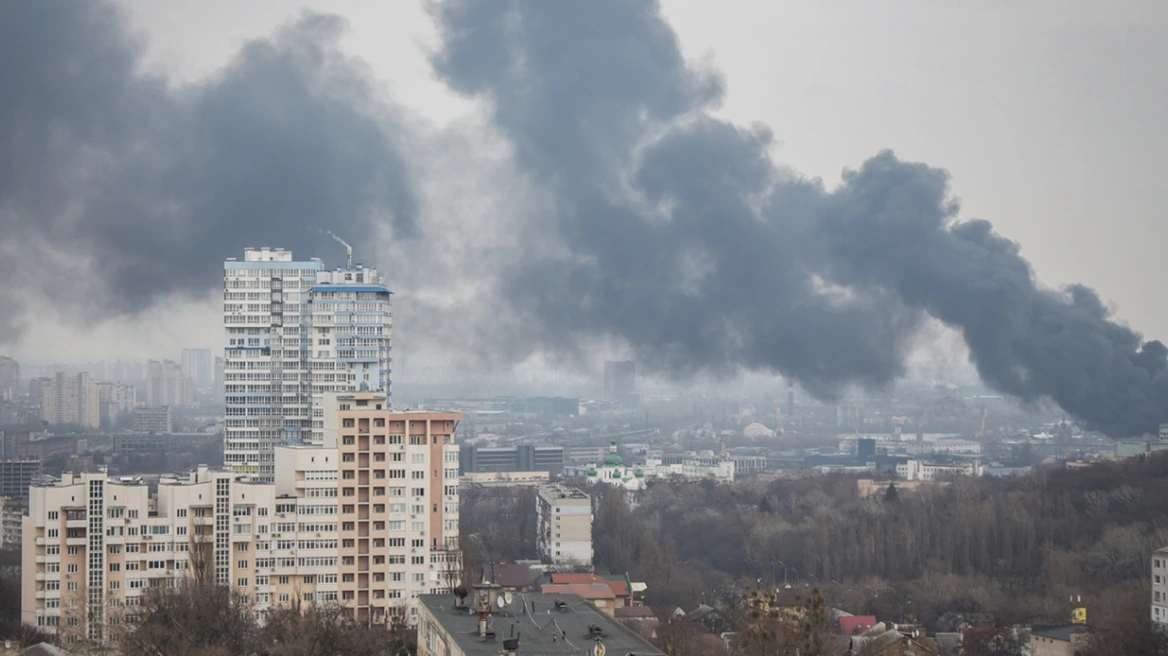
In recent weeks, Russia has intensified strikes against the infrastructure supporting the Ukrainian economy, targeting industrial facilities, warehouses, logistics hubs and data centers.
Kravchenko described the campaign to the Guardian as an attempt to “destroy almost the entire economy”. “What we had not fully anticipated was how quickly Russia would deploy these drones with jet engines and use them to hit everything,” he said, referring to the use of the new Russian weapons, which have struck Kyiv in recent weeks.
“When People Are in a Shelter, the Business Stops”
Speaking from the heavily protected government building in Kyiv, Kravchenko, a former McKinsey executive who joined the government in the summer, explained that the attacks have forced large parts of the economy into repeated shutdowns.
Workers are forced to take shelter, while the sirens can last for as long as 10 hours a day. “If people are in a shelter, the business stops,” he said.
Red Alert for Missiles, Yellow for Drones
To limit the economic impact, the Ukrainian government recently introduced a new two-tier warning system aimed at allowing businesses to continue operating when conditions permit.
The “red” alert concerns a missile threat and requires civilians to move immediately to shelters.
The “yellow” alert concerns drone threats and allows many businesses to remain open.
More than half of businesses, according to the Ukrainian minister, continue to operate during yellow alerts.
However, this distinction does not guarantee safety. On Monday, a Russian drone with a jet engine struck the National Academy of Sciences in central Kyiv while a yellow alert was in effect. Two people were killed in the attack, while workers were still inside the building.
$10 Billion in Infrastructure Damage in 2025
Kravchenko said that Russian attacks this year alone have caused approximately $10 billion in damage to fixed assets. Steelworks, warehouses, transport and logistics infrastructure, as well as, more recently, data centres, have been targeted.
At the same time, Russia has effectively blockaded Ukraine’s Black Sea ports, which before the blockade handled most of the country’s exports.
The Ukrainian minister estimated that the government is better prepared for another difficult winter, which could be “the toughest of the war”, due to the pressure on energy infrastructure and businesses.
To protect against future strikes, the Ukrainian government is examining ways to enable more private companies to acquire air-defence systems.
Kravchenko, however, warned that no business can be fully protected from Russian missiles and drones.
$20 Billion Fiscal Gap
The constant attacks have placed even greater pressure on Ukraine’s already strained public finances.
President Volodymyr Zelensky had recently estimated that the country’s budget deficit for this year amounted to approximately $27 billion, raising questions in some European governments despite the €90 billion loan package that the EU has agreed for Ukraine for 2026 and 2027.
Kravchenko said that the government has since managed to reduce the gap to $20 billion through spending cuts and the use of additional domestic reserves.
With these figures in mind, Kyiv is now seeking additional support from the European Union, Japan, Canada and Britain, including through the possible acceleration of loans that had been scheduled for next year. “There is very active cooperation with all our international partners to secure additional sources of financing,” he said.
Corruption Allegations and Pressure from Allies
The Ukrainian minister rejected assessments that the fiscal gap is due to mismanagement or corruption. He also denied that it is linked to excessive spending by former Defence Minister Mykhailo Fedorov, who had played a leading role in reforming military procurement and expanding Ukraine’s drone programme before being removed from the government in July.
“The cost of the war is simply increasing,” Kravchenko said, pointing to the need for more air-defence systems and the faster development of drones capable of intercepting the new Russian weapons.
However, corruption scandals have also affected Zelensky’s inner circle, causing concern both within the country and among Western donors.
According to a recent poll by the Kyiv International Institute of Sociology, corruption in the government is Ukrainians’ biggest concern, at 50%, ahead of mass drone and missile attacks (40%). The same survey found that 72% of respondents believe Zelensky bears personal responsibility for corrupt acts committed by people in his circle.
Kravchenko acknowledged that Ukraine faces both the problem of corruption and the problem of its international image. “I greatly appreciate the pressure from European partners for reforms,” he said, adding that the country must also address perceptions of corruption both domestically and abroad.
Growing “Fatigue” in Europe
Ukraine’s external financing needs for 2027 are estimated at $52.6 billion, but around $20 billion has so far been secured. Options under consideration include further tax increases and spending cuts.
Asked whether the rise of parties questioning continued support for Ukraine in France and Germany could weaken Western support for Kyiv, Kravchenko replied: “Am I worried? I think I probably should be.” “Overall fatigue is increasing in Europe,” he added.
Ask me anything
Explore related questions




