





Argentina’s president has threatened to take legal action against the British government if it does not halt oil exploration work off the coast of the Falkland Islands.
In a social media post, Javier Milei even set a two-week deadline for the cancellation of the “Sea Lion” oil field project, a joint venture between Israeli and British companies.
If the deadline is not met, Milei said he had “instructed the Foreign Ministry and legal teams to initiate international arbitration proceedings” against the United Kingdom over what he described as “the illegal plundering of our resources through the Sea Lion project”.
He went on to warn the United Kingdom that, if the “illegal exploitation” of the area is not halted within two weeks, Argentina will refer the matter to the International Tribunal for the Law of the Sea. It is an independent judicial body based in Hamburg that is responsible for the fair application of the United Nations Convention on the Law of the Sea.
The companies insist that they hold valid licences issued by Britain, the BBC reports.
The statements have raised tensions between Britain and Argentina over sovereignty of the archipelago, more than 40 years after Britain repelled Argentine forces that had invaded in 1982.
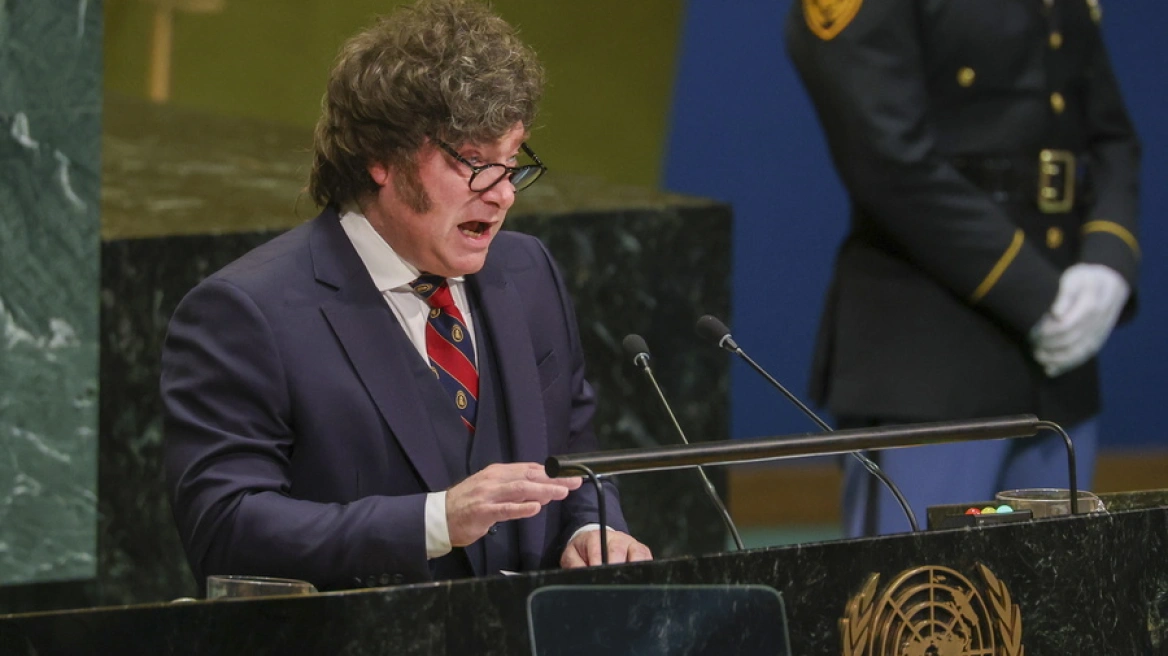
The move comes immediately after Milei’s fierce criticism of the United Nations in his address to the General Assembly last week.
In the speech, which focused on the Falklands, he said, among other things, that the UN had become a “useless organisation” serving only “arrogant parasites disguised as well-meaning bureaucrats”.
In response to Milei’s speech, British Defence Secretary John Healey said that Argentina “does not have the capability” to seize the islands by force.
The “Sea Lion” field, located about 200 kilometers from the Falklands, contains approximately 1.7 billion barrels of oil.
Two oil companies — Britain’s Rockhopper Exploration and Israel’s Navitas Petroleum — are expected to begin extracting oil from the field within two years.
In a 2013 referendum, the islanders voted overwhelmingly to retain their status as a British Overseas Territory, with 99.8% voting in favour and just three people voting against.
Ask me anything
Explore related questions




