





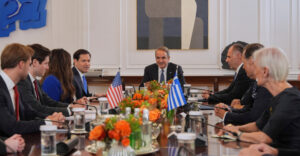
With Greece in the foreground and Europe as the intended audience, Marco Rubio used his visit to Athens to send a message about how Washington measures its allies. He described the country as a ‘model ally’, and the announcement of US$4 billion in military equipment, together with energy cooperation, gave his words weight. Defence, American LNG and sea lanes are binding the interests of the two countries ever more tightly.
On the Pnyx, America’s top diplomat urged Europe to follow the Greek example. In his meeting with Prime Minister Kyriakos Mitsotakis, he set out the foundation of the alliance: a shared understanding of the problems and, most of the time, of their solutions.
Mitsotakis’ message
‘At the highest level ever.’ With these words the Prime Minister assessed Greek-American relations, presenting Greece as a bridge between Europe, the US, the Middle East and the Arab world. He placed particular emphasis on investment in facilities to receive American LNG, on the energy security of Greece’s northern neighbours and on the role of Greek shipping.
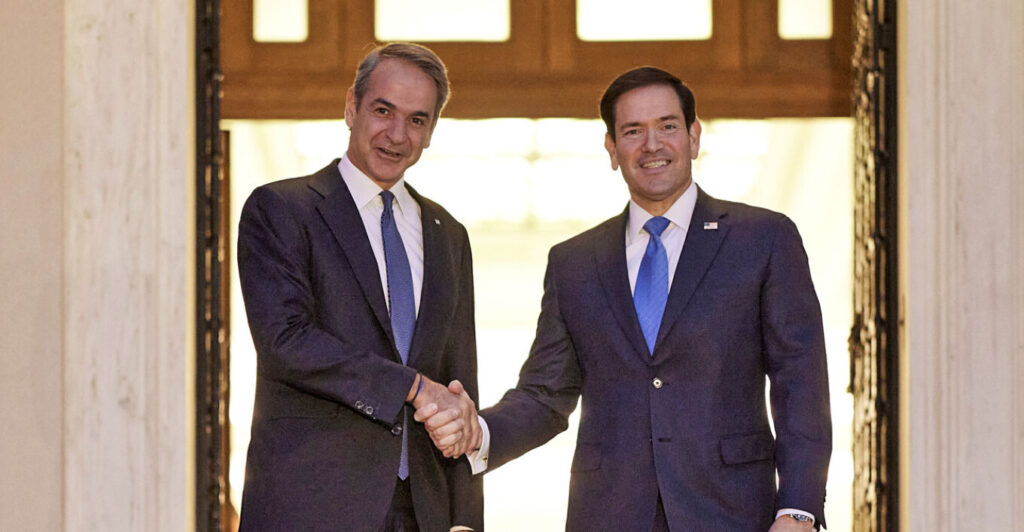
In the talks, Mitsotakis underlined Greece’s support for its partners in the Gulf and the defence of freedom of navigation, with Greek vessels taking part in Operation Aspides. Developments in Ukraine, Iran, the Middle East and the Eastern Mediterranean were also discussed.
‘We see you as such a strong partner,’ Rubio stressed. The US Secretary of State noted that cooperation has expanded beyond defence and diplomacy, seeing scope for more in the economy, energy and trade, to the benefit of both peoples.
The steel casing of defence
The US$4 billion is the most striking announcement to emerge from the sixth Strategic Dialogue, led by Foreign Minister Giorgos Gerapetritis and Rubio. It concerns military equipment sales through FMS, the US government’s mechanism for government-to-government sales, to support Greece’s long-term defence planning.
The Joint Statement does not name the weapons systems that make up the total. It also records the transfer of Stryker armoured vehicles, with no number or delivery timetable, and the exploration of cooperation between the two countries’ defence industries on innovative technologies.
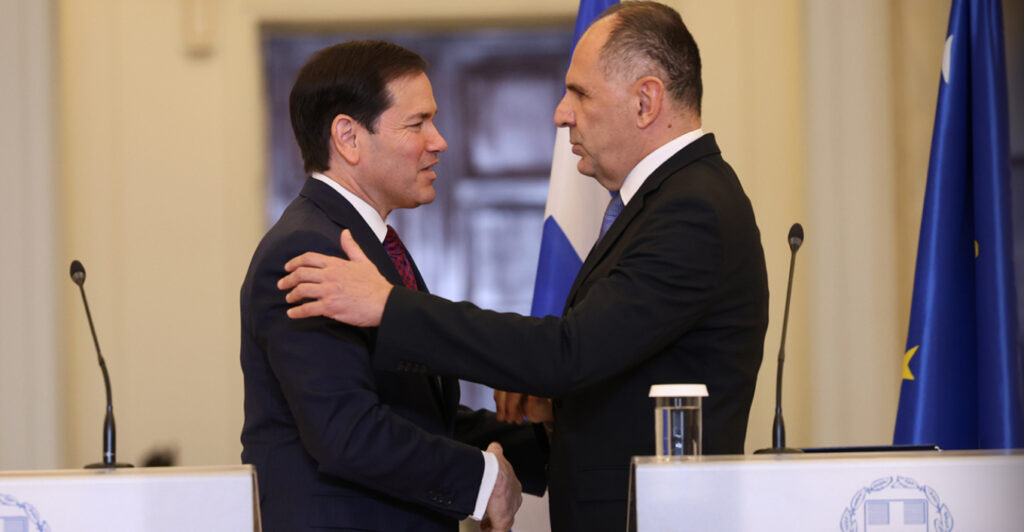
Souda and Alexandroupolis, arms programmes and joint training exercises form the steel casing of the relationship. On the air side, the Greek Foreign Minister linked the upgrade of the F-16 Viper fleet and the arrival of the F-35s to the strengthening of Greek defence. His American counterpart described Greece as an indispensable ally in NATO and a pillar of the American presence in the region.
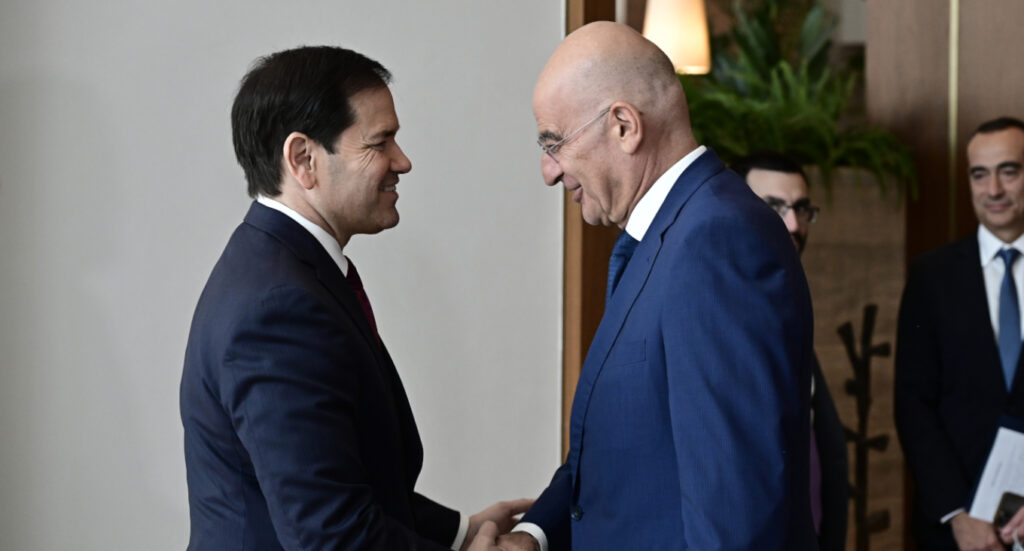
In the presence of Nikos Dendias and Rubio, a Letter of Intent was also signed on cooperation between the Greek Armed Forces and the Florida National Guard, covering everything from joint exercises and air defence to space and cyber operations.
Energy fires up the second engine
Energy powers the second major engine of the Greek-American relationship: the American companies Chevron and ExxonMobil in hydrocarbon exploration in Greek waters, American LNG flowing through Greece to Europe, and the Vertical Corridor, which draws a line towards the central and eastern parts of the old continent.
Gerapetritis spoke of the confidence American companies have in the country’s potential. Rubio stressed that the energy relationship is reaching new heights, hinting at more to come. On the Greece-Cyprus electricity interconnector, American support is a given. Yet Rubio’s message was also clear that the project runs through a geopolitical minefield.
Replying on interconnections and exploration, the US Secretary of State declared absolute commitment to these corridors and to the related efforts. He did acknowledge, however, ‘sensitive situations’ and other countries complicating certain issues, in an unmistakable reference to Turkey.
Athens and Washington are also investing in cooperation with Cyprus and Israel through the 3+1 format. Gerapetritis raised the Cyprus issue, calling for reunification in line with UN Security Council resolutions.
The Joint Statement also covers advanced technologies, cybersecurity, protection of critical infrastructure, counterterrorism and tackling illegal migration. An agreement was signed on the certification of American seafarers on Greek ships, and cooperation on protecting cultural heritage was renewed.
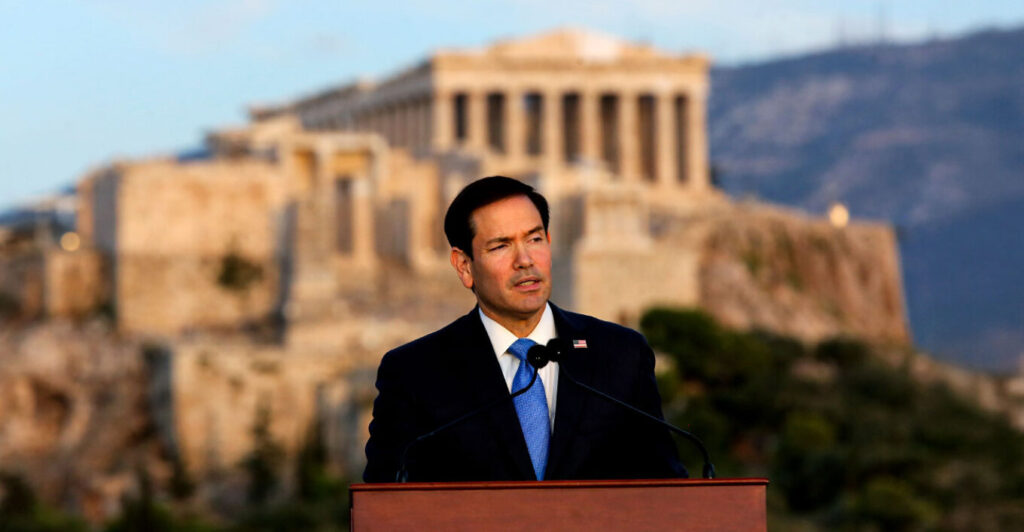
From the Pnyx, with the West as audience
In front of the Acropolis, Rubio traced the roots of the West to Athenian democracy, Plato and Aristotle. He spoke of the Greek contribution to the ideas that shaped Europe and the United States.
But the praise also concerned present-day Greece, which he described as an ‘irreplaceable friend’ on energy, migration and defence. And from the historic hill he addressed the European capitals: ‘It is our sincere hope that the whole of Europe will follow your example.’
Ask me anything
Explore related questions




