





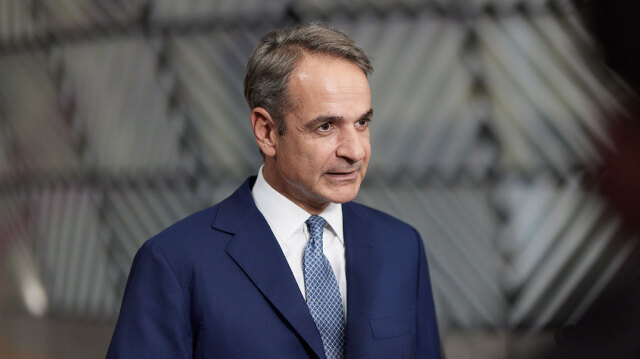
Greek Prime Minister Kyriakos Mitsotakis sent clear messages from Dublin on the energy crisis and the war in Ukraine, calling for energy costs in Europe to be reduced and for dependencies that undermine its competitiveness and security to be curbed.
At the same time, the Prime Minister made clear that there can be no peace agreement in Ukraine without Europe’s participation in the negotiations, putting forward a specific proposal for how it should be represented.
Speaking ahead of the ninth European Political Community (EPC) Summit, Mr Mitsotakis linked the need for energy autonomy to the ongoing conflict in the Middle East and the economic uncertainty it is causing. He also identified securing a ceasefire in Ukraine as an immediate priority, with particular emphasis on protecting commercial shipping in the Black Sea.
Energy costs
With energy representing one of the main challenges facing the European economy, Mr Mitsotakis insisted that Europe must develop its own production and technological capabilities in order to reduce its dependence on third countries.
“I believe that European countries share a common concern about how we can bring down energy costs. And about how we can develop our own capabilities, reducing dependencies that undermine not only our competitiveness but also our future security,” he said.
The Prime Minister placed particular emphasis on the need for Europe to produce more of its own clean energy, while also expanding its capabilities in critical raw materials, space and artificial intelligence.
On the latter, he welcomed the decision to hold a dedicated discussion at tomorrow’s European Council meeting, stressing that the significant opportunities it offers are accompanied by equally major challenges and threats, particularly when its development is left unchecked.
The proposal for Ukraine
On Ukraine, Mr Mitsotakis raised the issue of European representation in peace negotiations, proposing that European institutions should take part alongside some of the continent’s most important countries.
Although he expressed cautious optimism about the recent progress in the talks, he made clear that Europe must have a say both in ending the war and in decisions concerning its own security.
“There can be no discussion of a long-term peace agreement in Ukraine, nor, of course, of Europe’s future security architecture, without Europe being at the negotiating table,” he said, adding that he believed this reflected the common position of the members of the European Council.
He also put forward a specific proposal on the composition of the European delegation.
“My personal view has always been that the European institutions should be represented, potentially alongside some of the most important European countries,” he said, referring to the discussion among European leaders scheduled for tomorrow.
Mr Mitsotakis nevertheless identified securing a ceasefire as the immediate priority, expressing particular concern about the situation in the Black Sea and the safety of commercial vessels.
“As the leader of a maritime nation, I am particularly concerned about what is happening in the Black Sea,” he said, recalling his appeal to the United Nations Security Council for a worldwide halt to attacks on commercial shipping.
He described the protection of commercial vessels as an absolute priority in the talks expected to take place in the coming period, insisting that a ceasefire must come before any long-term peace agreement.
Full statement by Kyriakos Mitsotakis:
“This is the ninth meeting of the European Political Community. I still remember the first meeting, which took place in Prague, immediately after the outbreak of the war in Ukraine. Unfortunately, four and a half years later, we are still facing an open conflict in the heart of the European continent.
We take note of, and remain cautiously optimistic about, the progress that has recently been made in discussions aimed at ending this war. However, I want to be absolutely clear, and I believe I speak for all members of the European Council: there can be no discussion of a long-term peace agreement in Ukraine, nor, of course, of Europe’s future security architecture, without Europe being at the negotiating table.
Tomorrow we will discuss the form this participation should take. My personal view has always been that the European institutions should be represented, potentially alongside some of the most important European countries.
However, the first step must always be to focus on securing a ceasefire. And, as the leader of a maritime nation, I am particularly concerned about what is happening in the Black Sea.
I have also appealed to the Security Council for a global truce, a worldwide ceasefire in attacks against commercial vessels. This is undoubtedly an area of absolute priority in any discussions taking place over the coming days, weeks and months.
We are in Ireland, quite far from my country, Greece, but we must not forget that there is another conflict in the Middle East, which has caused significant economic uncertainty. This issue is also linked to the second topic of today’s discussion, which concerns economic resilience.
I believe that European countries share a common concern about how we can bring down energy costs. And about how we can develop our own capabilities, reducing dependencies that undermine not only our competitiveness but also our future security.
Whether we are talking about energy imports and Europe’s need to produce its own clean energy, or critical raw materials, space capabilities and capabilities in the field of artificial intelligence, these are all areas in which Europe must develop its own capacity within the European continent.
I am also particularly looking forward to tomorrow’s discussion on artificial intelligence. I consider it very important that the European Council is devoting a dedicated discussion to this subject.
The opportunities offered by artificial intelligence are significant, but equally significant are the challenges and threats posed by the unchecked development of this truly transformative technology.
I therefore consider it important that the European Council will discuss these issues in greater depth tomorrow.”
Ask me anything
Explore related questions




