





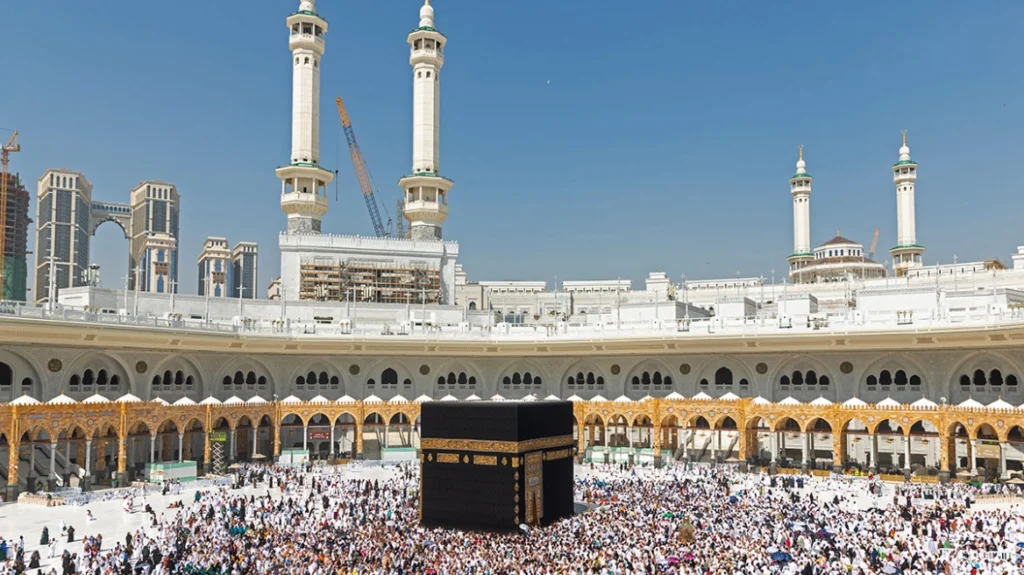
The Pew Research Center, which has been publishing reports on religious populations for 25 years, has projected that Islam will become the world’s largest religion by 2035.
According to Pew’s new projections, by 2035 there will be 2.57 billion Muslims and 2.52 billion Christians worldwide. By 2070, if recent trends continue, the global Muslim population will exceed 3.6 billion, while the number of Christians will be slightly below 3 billion.
As the study notes, although the number of both Christians and Muslims is expected to increase worldwide, Islam is growing at a considerably faster rate. One key reason, according to Pew, is that Muslims tend to have more children than members of other major religious groups.
“It’s the babies,” said Pew demographer Conrad Hackett, explaining that conversions and other forms of change in religious identity are much smaller factors compared with fertility rates.
One striking statistic is that during the 2020–2025 period, the fertility rate among Muslims stood at 3.1 children per woman, compared with 2.5 children per woman among Christians. For context, the fertility rate generally considered necessary to replace each generation is approximately 2.1 children per woman.
According to Pew, the global population is projected to grow by 29% between 2020 and 2070. The organization notes that, among the religious groups examined, only Muslims and Christians are expected to grow at rates comparable to overall population growth. Specifically, the number of Christians is projected to increase by 30%, while the Muslim population is expected to grow by 80%.
This is partly explained by Pew’s estimate that most global population growth over the coming decades will occur in Africa, particularly in the regions south of the Sahara Desert, where the majority of residents are either Christians or Muslims.
Although the number of Hindus and Jews is expected to increase in absolute terms, their share of the global population is projected to decline, according to Pew. By contrast, the number of Buddhists is projected to fall both in absolute terms and as a proportion of the world’s population. This is partly due to the expected decline in the total populations of China, South Korea and Japan.
To produce its projections for individual countries, Pew examined the available data for each religious group, taking into account fertility rates, population age structure, migration and rates of change in religious identity.
Other findings from the study
If current trends continue, Pew projects that by 2070:
- More than half of all Christians worldwide will live in sub-Saharan Africa.
- The Democratic Republic of the Congo will overtake the United States to become the country with the largest Christian population.
- The United States will no longer have a Christian majority, although Christians will remain the country’s largest religious group.
- Pakistan will have the world’s largest Muslim population, followed by India, Nigeria and Indonesia, which currently has the largest number of Muslims.
- Most countries will have more people with no religious affiliation than they do today. However, this increase will be entirely offset by the population decline in China.
- 62% of the world’s Jewish population will live in Israel, up from 46% in 2020.
Ask me anything
Explore related questions




