





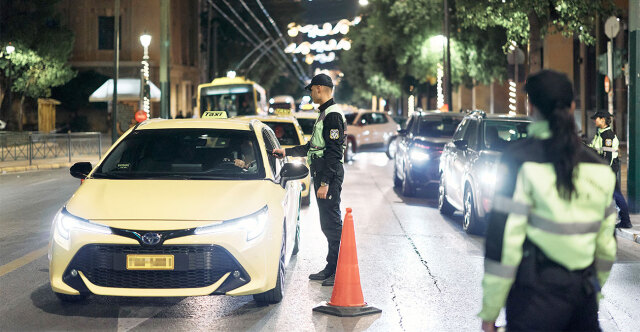
The transport and infrastructure ministry’s draft bill introducing changes to Greece’s Highway Code is expected to be put out for public consultation in the coming days, potentially as early as this week. The aim is to rationalise the provisions so that the Code serves an educational rather than punitive purpose.
Although numerous proposals have been put forward, three main changes currently appear to be the frontrunners. For non-antisocial illegal parking offences, the removal of driving licences will be abolished and replaced by a modest increase in the fine. In cases where someone is caught riding a motorcycle without holding the appropriate licence category, they will be given the opportunity to sit an examination within one month in order to have the fine waived. Sweeping changes are also being proposed to the examination process for obtaining driving licences.
Among other provisions, the bill envisages the mandatory installation of cameras to record both candidates and examiners, who will be selected through a random allocation system.
Other issues have also been raised for discussion, but appear to have been postponed for further examination at a later stage. These include changing right-of-way rules at roundabouts and squares, with priority going to vehicles already circulating within the roundabout rather than those entering it; recording the average speed of vehicles rather than their instantaneous speed on major avenues; and requiring more precise footage from traffic police cameras before fines can be imposed.
Corrections
As government sources told THEMA, “the Highway Code is a dynamic piece of legislation, which means that we make corrective changes wherever necessary, if necessary”.
The same sources stressed that there are no plans for sweeping changes to the new Highway Code, which has been in force in Greece for approximately a year and has been credited with reducing fatal road accidents – its primary objective from the outset.
Beyond the three main changes introduced by the new corrective bill, the ministry, under the responsibility of Deputy Minister of Infrastructure and Transport George Kotsiras, is also considering proposals and participating in discussions with the relevant authorities on possible amendments.
- The first change is intended to reinforce the educational rather than punitive character of the Highway Code. It concerns holders of driving licences for one vehicle category who are caught driving a vehicle belonging to another category.
For example, if someone holds a licence permitting them to ride motorcycles of up to 50cc but is caught riding a 125cc motorcycle, they will have the opportunity to take the relevant examination within one month of receiving the ticket in order to obtain the licence category they did not previously hold. If they pass the examination, the penalties imposed on them will be lifted. According to reports, however, this provision will not apply to professional driving licences.
- The examination and issuing process for new driving licences is also set to undergo radical changes. With the aim of putting an end once and for all to the practice of paying bribes to secure a pass, a new system is being introduced, centred on the digital recording of driving tests through cameras installed in the vehicles in which they take place.
Under the new system, examiners will not know whom they are assessing, nor will candidates know who will examine them, preventing them from arranging illicit payments, as has happened in the past.
An electronic system will randomly select examiners through an algorithm. With cameras recording the examination, the examiner will be required to enter into a dedicated app the criteria on which they passed or failed a candidate, such as any mistakes made. These will also be documented in the relevant video footage.
The result will therefore be issued in real time, immediately after the examination has been completed and the assessment submitted. Candidates will also be able to appeal the result, using the recorded footage and the digital assessment form as evidence.
- A change has also been decided on penalties for illegal parking, as THEMA reveals today. It has been decided that, in cases which are not antisocial in nature and do not endanger other road users, the practice of confiscating driving licences will come to an end.
Instead, the fine will be increased slightly – “slightly” being the word used by sources familiar with the matter. Government officials stress that this will under no circumstances apply to antisocial parking offences, for which the authorities will maintain a very strict approach.
A second package of measures
Of the many proposals put forward – some under consideration, others postponed and others rejected due to insufficient supporting evidence – one that appears likely to be adopted but has been deferred to a later stage is the change to priority rules at roundabouts and squares.
Under the current general principle of the Highway Code, priority is given to vehicles entering a roundabout or square. The proposal is to change this and follow the example of the rest of Europe, where the opposite rule applies: vehicles already circulating within the roundabout have priority.
A second phase is also expected to examine and advance the proposal to rationalise penalties imposed on the basis of traffic camera footage.
As Public Order Minister Michalis Chrysochoidis announced during an appearance on George Evgenidis’s Direct programme on protothema.gr, “with regard to violations recorded by cameras, there can be some flexibility to ensure that the offence is accurately documented, so that there are no excessive measures that unfairly affect citizens”.
According to well-informed sources who spoke to THEMA, the planned changes here concern speeding offences, with the introduction of average-speed monitoring for each vehicle. This would ensure that drivers who travel at excessive speeds over a stretch of road are penalised, rather than those who may briefly exceed the speed limit at a particular moment.
Government sources explain that this could be implemented immediately on major avenues such as Syngrou Avenue – where AI-powered cameras are already operating – as well as on national highways.
Another area in which changes are being prepared concerns the level of detail in camera footage documenting offences. According to reports, the volume of appeals that traffic police are required to handle is considerable, with many drivers claiming that they have been wrongly recorded as committing an offence when they had not.
Further work is nevertheless needed to determine whether, and how, it would be possible to distinguish between briefly touching a mobile phone mounted on a holder to adjust GPS settings while stopped at traffic lights and a driver typing or scrolling through social media while driving.
The approach here is to impose fines only for offences that are clearly captured by cameras and cannot reasonably be disputed as violations of the Highway Code that put the driver and other road users at risk.
Vehicle accessories
As regards the level of fines, the proposal is to introduce a more lenient scale for offences considered to pose a medium level of risk.
For example, exceeding the speed limit by up to 20km/h currently carries a fine of €150. Under the previous Code, the lowest category of speeding offence carried a fine of €40. Given that these tickets account for the largest share of speeding violations recorded, one question is whether these fines could be reduced.
A lower fine, combined with a deadline to bring the vehicle back into compliance with legal requirements, following the practice of other European countries, is the proposal concerning vehicle accessories.
This would cover offences such as aftermarket lights, number plate covers and excessive noise, which currently carry fines of up to €350 and, in some cases, the removal of the vehicle registration licence.
There are still many other proposals under consideration. As Justice Minister Giorgos Floridis has said, “the excessive penalties have already been identified by the traffic police”. These have been examined by the Transport Ministry, and the issue has also been discussed by the Cabinet.
“We will soon proceed with rationalisation to eliminate excesses,” he said, defending the overall philosophy of the new Code and stressing that it has been successful and has delivered results in protecting human life.
The objective, therefore, is to correct excessive provisions without undermining the law’s deterrent effect.
Speed limits
One issue that is not currently on the agenda, despite being a constant source of frustration for drivers, is speed limits.
It is worth recalling that the Highway Code sets a general speed limit of 30km/h in built-up areas. This rises to 50km/h only on one-way streets or two-way roads with at least two lanes and a dividing line or central reservation, unless road signs indicate otherwise.
Although the rationale behind the 30km/h limit outside schools, on narrow residential streets and in areas with heavy pedestrian traffic is not disputed, complaints have been raised about its blanket application to major roads with wide carriageways and few pedestrians, where drivers struggle to understand which speed limit applies.
A second problem concerns abrupt changes in speed limits over short distances. Drivers describe stretches of road where the limit drops from 90km/h to 70km/h and immediately afterwards to 50km/h, within just a few hundred metres, requiring repeated reductions in speed despite there being no obstacle, hazard or bend ahead.
In such locations, sudden braking is not always safe, while a sign missed by a driver can easily result in a camera-issued ticket.
The high cost of fines
In an effort to address Greece’s high ranking in fatal road accidents and serious injuries, as well as improve driving behaviour, the Highway Code provides for particularly heavy fines for certain offences that are both widespread and extremely dangerous.
As a result, Greece has one of the highest fines in Europe for running a red light. Similarly, using a mobile phone while driving carries a €350 fine, compared with €250 in Italy, €135 in France and €100 in Germany.
The government, however, is in no way seeking to send the message that the Highway Code is being relaxed. Its intention is simply to rationalise certain provisions and make the framework fairer where necessary.
This is why offences directly linked to fatal road accidents are excluded from the proposed amendments. These include running a red light, driving without a helmet or seatbelt, drink-driving and excessive speeding.
The Code’s heaviest penalties apply precisely to these categories:
- Illegal street racing or driving at speeds exceeding 200km/h: €2,000 and a one-year driving ban for a first offence, rising to €8,000 and a four-year ban following a second repeat offence.
- Blood alcohol concentration above 1.10g/l: €1,200, a six-month driving ban and criminal prosecution. For a second repeat offence, the fine rises to €4,000 and the driving ban to 10 years.
- Using a mobile phone or running a red light resulting in an accident: fines of up to €4,000 and driving bans of up to eight years in cases of repeated offences.
- Driving without a licence: €1,000 and up to two years in prison, rising to €4,000 for repeat offences.
- Exceeding the speed limit by more than 50km/h: €700 and a two-month driving ban.
George Kotsiras, Deputy Minister of Infrastructure and Transport, tells THEMA: “These changes do not alter the character or the fundamental philosophy of the Highway Code”
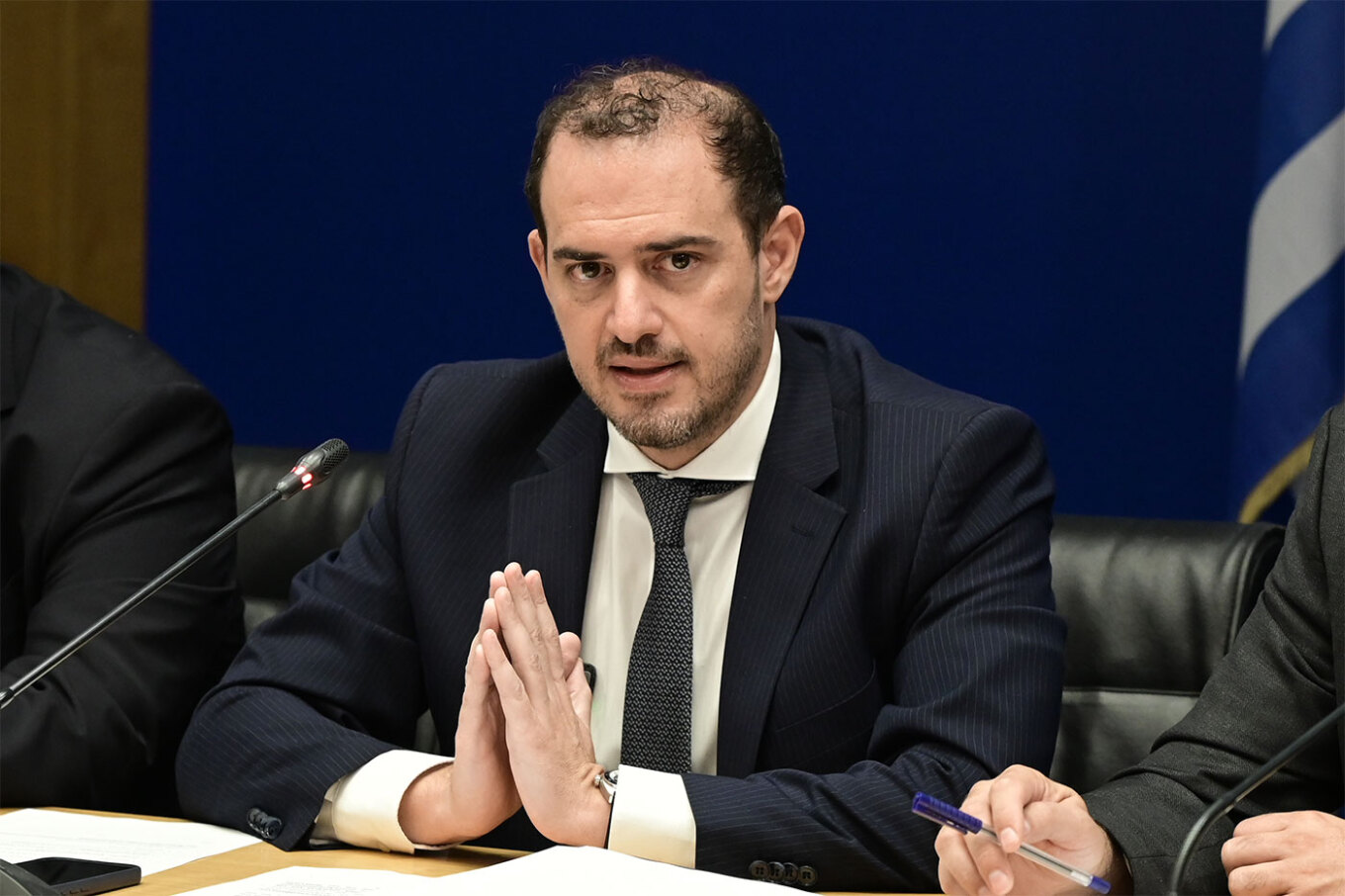
” We are introducing targeted changes to the Highway Code following an assessment of how certain provisions have been implemented and in cooperation with the traffic police, during which cases of disproportionate penalties were identified.
“These changes do not alter the character or the fundamental philosophy of the Highway Code, which is a crucial tool for reducing road accidents and promoting responsible road behaviour.
“We are establishing a more rational, effective and proportionate framework of penalties, without making any concessions on our central objective: protecting human life.”
Ask me anything
Explore related questions




