





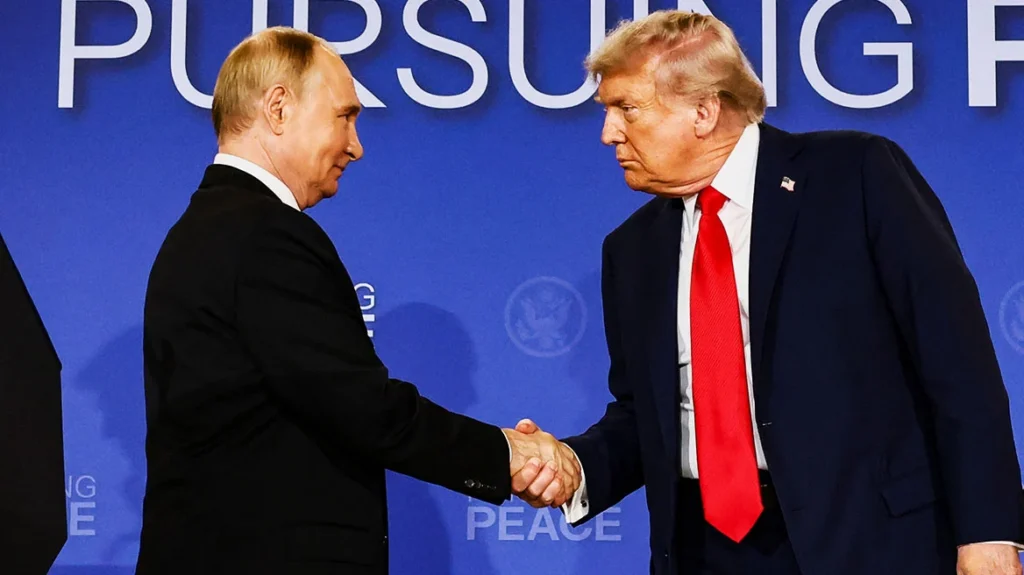
Political scientist Michael Desch argues that a radical change in US strategy is needed to end the war in Ukraine, involving concessions to Russia and greater pressure on Kyiv to accept a peace agreement. He sets out this position in an analysis for Foreign Affairs entitled “Time for a Deal with Russia: What America Should Offer to Achieve Peace in Ukraine.”
According to the American analyst, the Western strategy of sanctions and military support for Ukraine has failed to substantially change Vladimir Putin’s positions, while the continuation of hostilities increases the risk of wider escalation and tests Western unity.
Desch believes that Donald Trump should capitalise on his willingness to negotiate by offering Moscow economic and diplomatic incentives, even if this means Ukraine will have to accept painful compromises.
Why He Believes Sanctions Are Not Working
The author points out that, since 2014 and particularly following Russia’s 2022 invasion, Moscow has faced unprecedented economic and military pressure.
He cites figures presented by the EU’s foreign policy chief, Kaja Kallas, according to which more than 25,000 sanctions had imposed a cost of nearly $1.5 trillion on the Russian economy by June.
At the same time, Ukraine continues to receive substantial economic, military and intelligence assistance from the United States, even under Trump’s presidency. Nevertheless, Desch argues that these measures have failed to force the Kremlin to abandon its objectives.
He also refers to the agreement Trump secured from Putin in October concerning the supply of Russian diesel, in exchange for a temporary suspension of US sanctions. The American president had presented the move as an effort to keep Russia “at the negotiating table.”
According to the analyst, despite Trump’s domestic political and economic motivations, such exchanges could prove more effective in achieving peace.
Ukraine’s Successes and Russia’s Military Superiority
The analysis acknowledges that Ukrainian forces have achieved significant successes, particularly in Zaporizhzhia and the Lyman area, where Operation “Vivaldi” delayed the Russian advance towards Kramatorsk and Sloviansk.
At the same time, Ukrainian strikes on the Crimean Bridge and Russian oil facilities have disrupted Moscow’s transport networks and energy supplies. However, Desch believes that individual military successes do not amount to a strategic victory.
In his assessment, Russia continues to maintain significant advantages on the battlefield, while it has adapted its tactics, favouring the encirclement of fortified areas over frontal assaults.
He further argues that Ukraine’s long-range operations have failed to inflict a decisive blow on Russian energy production, while Moscow has intensified its attacks using drones and ballistic missiles against Ukrainian infrastructure.
He makes particular reference to the shortage of American PAC-3 interceptor missiles for Patriot systems, which limits Ukraine’s air defence capabilities.
What He Proposes Ukraine Should Concede
According to Desch, negotiations now represent the only realistic way out of the war.
For an agreement to be reached, he argues that Kyiv should accept territorial concessions to Russia and abandon the prospect of joining NATO, as well as the possibility of a permanent deployment of Alliance forces on Ukrainian territory.
Indeed, he proposes that Washington use military assistance as leverage if Volodymyr Zelensky refuses to accept a compromise.
Specifically, the United States could restrict or suspend the provision of certain weapons systems and services, such as Patriot missiles, satellite connectivity through Starlink and Starshield, and intelligence used for air defence and Ukraine’s long-range strikes.
At the same time, Trump could offer Moscow a gradual easing of sanctions on energy exports and financial transactions, as well as Russia’s return to the international interbank payment system SWIFT.
According to the analyst, these economic incentives could create the conditions for an agreement that military pressure has failed to achieve.
Fears Concerning NATO and Putin’s Real Objectives
The analysis also examines warnings that an agreement favouring Moscow could encourage Russia to threaten other European countries in the future.
Desch questions whether Putin possesses the military capability to prevail in a broader conflict with NATO, citing both the difficulties Russia has encountered in advancing in Ukraine and the Alliance’s superiority in military personnel, equipment and defence spending.
He also believes that Moscow’s objectives are more limited than some Western analysts suggest, with its main aims being control over eastern Ukrainian territories and the restriction of Kyiv’s military capabilities.
Referring to the recent talks in Abu Dhabi, where Russia reportedly made demands extending even to the withdrawal of NATO forces from Poland and the Baltic states, he argues that these positions may be negotiating tactics.
Trump’s Political Legacy and the Risk of Escalation
Desch warns that the continuation of the war increases the risk of a broader confrontation between Russia and NATO, while the economic and political costs are, in his assessment, beginning to test Western unity.
As indications of diplomatic momentum, he cites communications between Finnish President Alexander Stubb and Norwegian Prime Minister Jonas Gahr Støre with Putin, as well as the ceasefire in Oleshky, which, according to the analysis, was mediated by Melania Trump and the Vatican to evacuate civilians who were trapped.
At the same time, he believes Trump has a strong personal incentive to secure a historic agreement, as he wants to leave behind a significant diplomatic legacy and pursue international recognition, potentially even the Nobel Peace Prize.
An agreement with Russia could also, according to the author, serve a broader US strategic objective: weakening Moscow’s ties with China, which Trump continues to regard as the United States’ more important long-term competitor.
Desch’s conclusion is that an agreement on Ukraine, however painful it may be for Kyiv, could prove preferable to continuing a war with an increasing human toll and the risk of a wider conflict.
Finally, the analyst acknowledges that Trump is unlikely to pursue peace purely out of altruism. However, he adds that the president’s personal ambition could ultimately provide an incentive for a diplomatic success, even if it does not secure him the much-coveted Nobel Peace Prize.
Ask me anything
Explore related questions




