





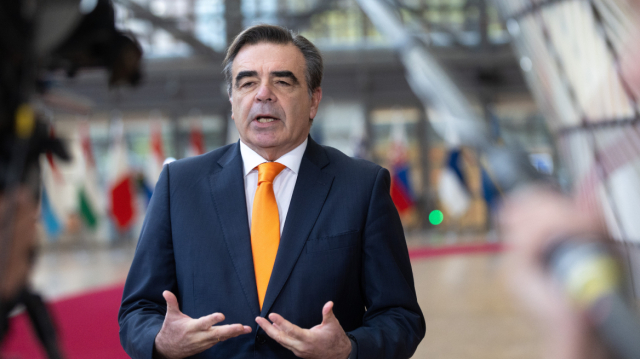
The payment of agricultural subsidies will begin on November 30, with the disbursement of 70% of the basic subsidy and advance payments for measures under the second pillar, Agriculture and Food Minister Margaritis Schinas said in an interview with ERTnews. He said payments to beneficiaries for this year’s scheme are expected to be completed by December 30.
“No beneficiary will lose their money,” the minister assured, adding: “I would even bet that this is the last year we will be talking about delays.” As he explained, this year’s delays were linked to the creation of the new payment platform, which, he said, is now in the hands of the state and will allow payments to begin earlier next year.
Payments and applications
Mr Schinas said the new platform is national and state-owned, while announcing that 500,000 final applications have been submitted. Another 55,000 applications remain provisional and, according to him, will be finalised by the end of November.
Referring to the problems recorded in September and October, he said they were due to the adjustments required by the new system. One of the issues, he explained, was the discrepancy between cultivated areas and Land Registry data. “All these problems were resolved from mid-October onwards, and the rate of application submissions was staggering,” he said.
The minister noted that, from next year, the platform’s operation will allow the payment cycle to begin earlier. He also announced successive payments through the first half of 2027, so that beneficiaries receive money according to the type of subsidy and eligible expenditure.
Compensation for livestock farmers and checks on organic products
Regarding compensation linked to sheep and goat pox and foot-and-mouth disease, Mr Schinas said payments had been made for animals that were culled and for lost income. He added that payments for milk and animal feed had also been approved and began in November. As he said, inspections and the recording of damage caused delays, but the process is under way.
Regarding subsidies for organic products, the minister said a European Commission audit report had identified shortcomings in inspections and certification during the 2023–2025 period. The final settlement has not yet been completed, while the Greek side is responding to the findings.
Mr Schinas said that payments of €80 million for organic products in beekeeping and livestock farming had been “frozen”, while this money had been redirected towards small-scale irrigation projects. “Until we have in our hands a safe, reliable European certification system for organic products, we will not pay for or allow these labels,” he said. He added that a financial correction could arise following the completion of the audit process, but it has not yet been finalised.
Support for production costs and meeting with farmers
Regarding production costs, the minister referred to the introduction of agricultural diesel at the pump from November 1, as well as the payment of €61 million for fertilisers. As he said, high prices are affecting European agriculture as a whole due to geopolitical developments.
Regarding the possibility of an escalation in farmers’ protests, Mr Schinas said he had met with farmers’ representatives and that “my door is always open”. He proposed that the progress of payments be assessed first on Monday, followed by a meeting if a relevant request is submitted.
Finally, regarding the implementation of the digital delivery note from the field to the olive mill from January 1, he said he had conveyed to the Independent Authority for Public Revenue (AADE) the difficulties faced by farmers in rural areas, particularly due to a lack of internet connectivity and familiarity with technology. “George Pitsilis knows about it, and I believe we will find a solution,” he said.
Ask me anything
Explore related questions




