×
GreekEnglish

×
  • Politics
  • Diaspora
  • World
  • Lifestyle
  • Travel
  • Culture
  • Sports
  • Cooking
Sunday
07
Dec 2025
weather symbol
Athens 13°C
  • Home
  • Politics
  • Economy
  • World
  • Diaspora
  • Lifestyle
  • Travel
  • Culture
  • Sports
  • Mediterranean Cooking
  • Weather
Contact follow Protothema:
Powered by Cloudevo
> Culture

How scientists reconstructed a huge statue of Emperor Constantine the Great in Rome

Originally some 11 metres tall, it was later broken up and pillaged for bronze

Newsroom February 15 11:49

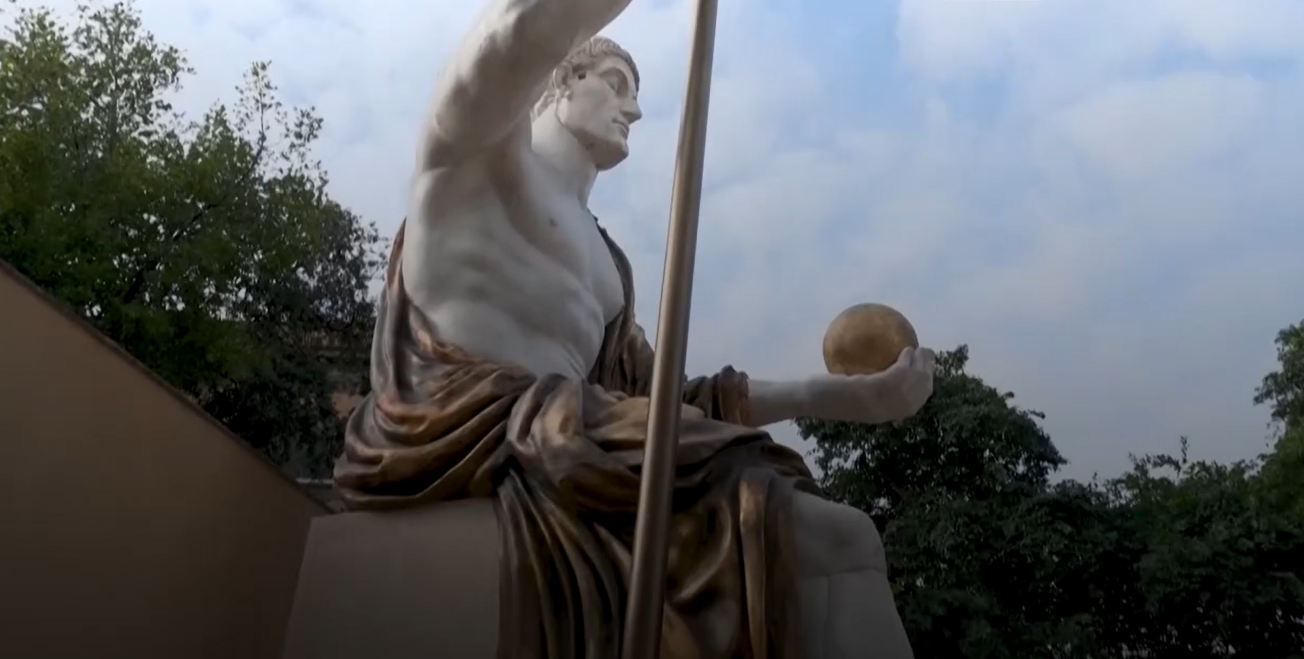
The ancient 11-meter structure was recreated using high tech software to scan a handful of surviving fragments.

It once sat majestically at the heart of ancient Rome.

Now a vast statue of Emperor Constantine the Great is returning to the Eternal City thanks to a high-tech reconstruction based on surviving marble fragments.

“It’s somewhere between documenting and recreating and interpreting. But I really hope that this is the beginning of a revolution, about how to share and how to show,” explains Adam Lowe, the director of Factum Foundation, who oversaw the meticulous reconstruction process.

Born in 306 AD in Naissus, now part of Serbia, Constantine became one of the most influential Roman leaders of all time, strengthening the empire enormously.

But he is perhaps most famous for having converted to Christianity, and experts believe the enormous statue of him served as a recognition that Christianity had become the empire’s religion.

See Also:

Putin announced that Russian scientists are close to creating a cancer vaccine

The so-called Colossus of Constantine, which dates to the early 4th century, was a monumental statue erected to celebrate Constantine’s reign.

>Related articles

History has treated her unfairly”: The 400-year mystery surrounding Shakespeare’s wife and son

From MAGA to Make Europe Great Again, with support for patriotic parties and a “stop” on mass immigration – How to stop the onslaught of China

Billionaire Andrej Babis reappointed Prime Minister of the Czech Republic on Tuesday

Originally some 11 metres tall, it was later broken up and pillaged for bronze. In the 15th century, the few surviving fragments were found: the head, right arm, wrist, right hand, right knee, right shin, right foot and left foot.

Despite the surviving fragments being rediscovered in 1486, it was initially mistaken for a statue of Emperor Commodus. It was only at the end of the 1800s that the fragments were correctly identified as being part of the Colossus of Constantine.

Continue here: Euronews

Ask me anything

Explore related questions

#ancient Rome#archaeology#christianity#Constantine the Great#constantinople#culture#Emperor#history#rome#science#statue#technology#world
> More Culture

Follow en.protothema.gr on Google News and be the first to know all the news

See all the latest News from Greece and the World, the moment they happen, at en.protothema.gr

> Latest Stories

Family confrontation – Andreas Psicharis sues his father’s widow for 19 works of art of immense value

December 7, 2025

The story of Greece’s trolleybuses: From the first routes to the the last

December 7, 2025

“We are really very close to a peace agreement for Ukraine,” says Trump’s special envoy

December 7, 2025

Dismantling of trolleybus cables begins in Piraeus — Watch the video

December 7, 2025

Armed police raid at Heathrow: Train services suspended, arrests and tear gas reported

December 7, 2025

Mitsotakis: “Farmers will receive every euro they are entitled to — Solutions come through dialogue, not roadblocks”

December 7, 2025

Improved weather today — where local showers are expected

December 7, 2025

The livestock farmer who tearfully bid farewell to his 450 sheep collapses; Hospitalized in Giannitsa with stroke symptoms

December 7, 2025
All News

> Greece

Family confrontation – Andreas Psicharis sues his father’s widow for 19 works of art of immense value

Three years after the death of Stavros Psicharis, his son Andreas claims the multi-million euro collection found in the publisher's house in Kolonaki with works by Picasso, Dalí, Delacroix, Munch and others, claiming that he bought it himself and handed it over to his father for safekeeping. His father's widow Christina Tsutsoura denies that it belongs to him and claims it was her husband's

December 7, 2025

The story of Greece’s trolleybuses: From the first routes to the the last

December 7, 2025

Dismantling of trolleybus cables begins in Piraeus — Watch the video

December 7, 2025

Improved weather today — where local showers are expected

December 7, 2025

The livestock farmer who tearfully bid farewell to his 450 sheep collapses; Hospitalized in Giannitsa with stroke symptoms

December 7, 2025
Homepage
PERSONAL DATA PROTECTION POLICY COOKIES POLICY TERM OF USE
Powered by Cloudevo
Copyright © 2025 Πρώτο Θέμα