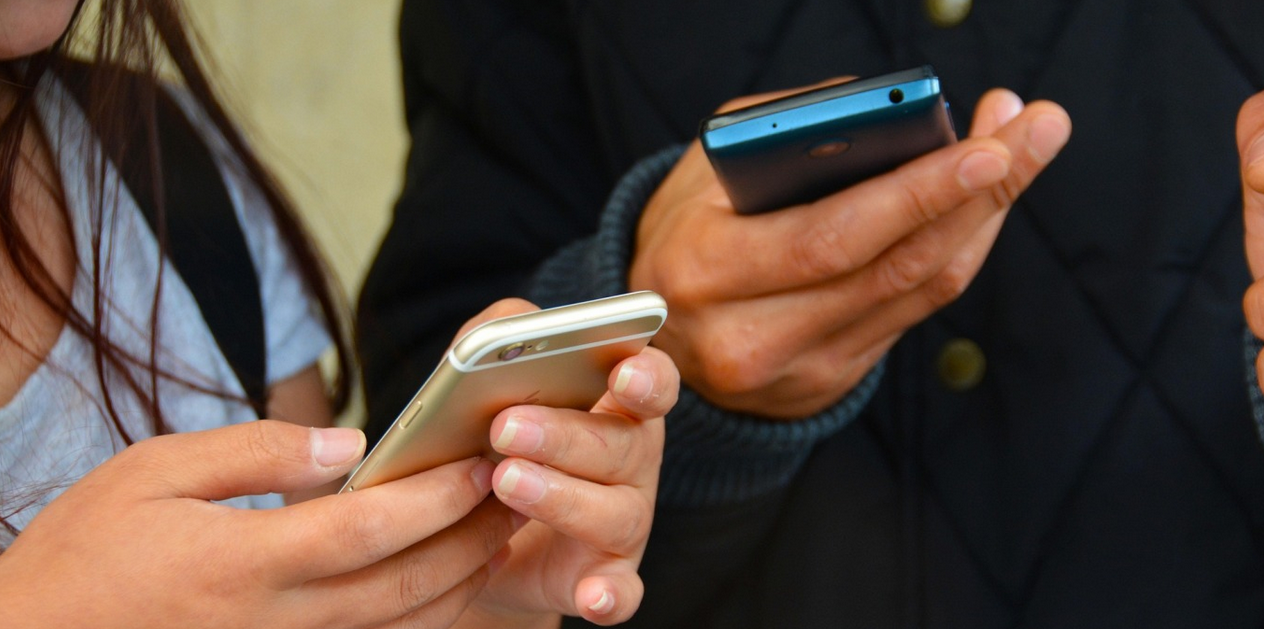
The impacts of using digital media in education are one of the focuses of the report requested by the Ministry of Education from the OECD, within the framework of changes in Greece’s educational policy following the unsatisfactory results of students in the PISA 2022 competition. Among other issues, the competent ministry asked the international organization to examine, within the context of research tailored to Greek data, whether and to what extent the use of smartphones, tablets, and other digital devices affects learning.
This dimension emerged from the analysis of the results of the PISA 2022 competition, as it was found that prolonged use of digital media during lesson delivery does have negative effects, but the use of devices for up to one hour enhances students’ performance in classes.
In all OECD countries, students who spent up to one hour per day in school on digital devices scored 49 points higher in mathematics compared to students whose eyes were glued to their screens for five to seven hours a day.
Specifically, one in three students reports being distracted, with a distinction in the effects when usage is intended for “learning” or for “entertainment” – problems arise from the latter.
In all OECD countries, about 45% of students reported feeling annoyed or anxious if they didn’t have their mobile phones with them. The use of mobile phones and other digital devices can also affect learning in the classroom.
Specifically, about one in three students in OECD member states reported that, due to digital devices, they couldn’t perform well in more than half of their classes – more than 40% of students in Bulgaria, Morocco, and Turkey. 65% of students reported being distracted from learning by using digital devices in at least some Mathematics classes. The percentage reached 80% in Argentina, Brazil, Canada, Chile, Finland, Latvia, Mongolia, New Zealand, and Uruguay. Equally importantly, in all OECD countries, 59% of students said their attention was distracted by other students using phones, tablets, or laptops, at least in some Mathematics classes. In contrast, only 4% of students in Japan and 9% in Korea reported being distracted by other students using digital devices in every or almost every Mathematics class.
The reduced concentration of students due to the use of digital devices is closely related to learning outcomes. Students who reported being distracted by their peers using digital devices in class scored 15 points lower on the PISA Mathematics exam compared to those who didn’t have this experience.
Moderate use-higher performance
The OECD study distinguishes between usage for “learning activities” and usage for “entertainment.” Additionally, as the results show, moderate use of digital devices in school is associated with higher performance. According to the findings, educational outcomes were often better for students who used digital devices for learning from one to five hours per day compared to those who never used them. However, students who used them for more than one hour per day for entertainment purposes – that is, social networking apps, internet browsing, or games – saw a decrease in their Mathematics scores.
Personalized learning
The director of the PISA competition, Andreas Schleicher, underscores the importance of personalized learning and the use of technology in education. He states that in Singapore, which is a leading example of educational practices, the learning process is enhanced through the use of platforms and educational technology in general.
In the international presentation of the PISA competition results, ministers from Korea, Japan, and Estonia – all digitally advanced countries – emphasized that, although technologies such as artificial intelligence play a significant role in education, emphasis must be placed on the importance of human skills and real learning experiences.
Specifically, Japan uses ICT to combat teachers’ overloaded schedules and reduce working hours. Additionally, it provides each child with their own device to facilitate learning.
The Estonian Minister of Education stated that personalized learning is defined as “maximizing students’ personal skills,” and he believes that technologies, such as Artificial Intelligence, can help achieve better classroom management overall.
Korea plans to introduce its first Artificial Intelligence-based textbook in 2025.
However, all three emphasized the importance of “any digital personalization of learning always being combined with real learning experiences,” stressing that “the real world is more important than the virtual world in terms of the educational process.” Human interaction remains vital in education, and educators play a crucial role in developing their students’ cognitive skills. The Korean Minister of Education emphasized that although artificial intelligence and new technologies will play a significant role in teaching and learning, knowledge is only part of learning, highlighting the need for students to become more social through various physical activities.
Emphasis was also placed on the need for all educators to be equipped with digital skills. Estonia has been focusing on this for the past five years by teaching its educators not only how to use modern technology tools but also how to teach through technology.
The results of PISA also showed how important it is to cultivate students’ autonomy in learning. The reason? Students demonstrate more confidence in using digital technology for distance learning than in taking responsibility for their own learning.
What Schools Can Do
A significant challenge lies in promoting the integration of digital technology into learning environments while simultaneously minimizing their potential to distract.
One option is to ban cell phones. PISA data shows that in 13 countries, more than two-thirds of students attend schools where the use of mobile phones is prohibited: Greece, Albania, Brunei, Hong Kong, Jordan, Kosovo, Malta, Morocco, Palestine, Saudi Arabia, Spain, United Arab Emirates, and Qatar. However, regardless of the ban, 30% of students in these schools reported using a smartphone several times a day at school.
USA: Mysterious object falls into a house in Florida – Likely “space junk” from the ISS, experts say
Furthermore, it’s interesting to note that students in schools where phone bans are in place were less likely to disable notifications from social media and apps when going to sleep. Experts interpret this behavior as a consequence of the ban on mobile phones in schools, which results in students’ inability to demonstrate responsible behavior regarding phone use.
As the report highlights, “a complete ban on smartphones from the classroom may not always be the right move. First, in some countries, smartphones are the only available devices for digital learning. Second, not all smartphone applications are truly harmful, as the sources used and how they are applied matter. And third, the report shows that there is an enforcement problem with 30% of students in OECD countries, where the use of mobile phones is banned, still ‘using a smartphone several times a day at school’.”
OECD: Alternative Solutions Needed
According to the OECD’s international report based on PISA results, exploring alternative approaches to managing the use of digital devices in schools is particularly important:
– Educating students about responsible use of digital technologies and developing policies that promote conscious and productive use.
– Creating educational programs that enhance self-management skills and cultivate students’ ability to meet the demands of digital education.
– Implementing technological solutions that allow monitoring and management of digital device usage at the school level.
– Strengthening collaboration between educators, parents, and students to shape and implement policies regarding the use of digital devices, which could lead to a more balanced and effective approach to the issue.
Finally, it is essential to ensure that access to quality educational materials and devices is equitable for all students, as resource imbalances create problems. According to the report, “educational systems must provide adequate and high-quality educational materials and digital devices and develop guidelines for their use,” while emphasizing that “it is important to ensure that all schools, regardless of socio-economic profile, have access to adequate and quality educational materials and digital resources.”
Half of Greek Students Say They’re Not Supported Enough by Their Teachers
According to the OECD report, nearly half of students in Greece report a lack of support from their teachers.
Overall, as indicated by the results of the international PISA competition, students who had more supportive teachers showed better performance in Mathematics and suffered less anxiety. Additionally, it was found that these students had a stronger sense of belonging to the school, were overall satisfied with life, and trusted their abilities to self-manage the learning process.
These findings were mainly recorded in Australia, Cambodia, Denmark, Finland, Hong Kong, Iceland, Korea, Malta, Norway, the Philippines, and the United Arab Emirates – in these countries, those who had teacher support showed an improvement in math scores of ten points or more, whereas the average improvement across OECD countries was five points.
Conversely, as indicated by the results of PISA 2022, many students do not receive the support they need to succeed in school. Specifically, about 30% of students reported that the teacher provides additional help only in some subjects, rarely, or never when needed. Nearly 40% of students stated that, in most subjects, the teacher does not show interest in each student and does not continue teaching until students understand. The highest percentage of lack of support from teachers, approximately 50%, was reported by students in Greece, the Czech Republic, and Poland. In contrast, over 75% of students in Guatemala, Paraguay, and Singapore reported that in more than half of their subjects, the teacher provides help when needed and continues until students understand.
Ask me anything
Explore related questions