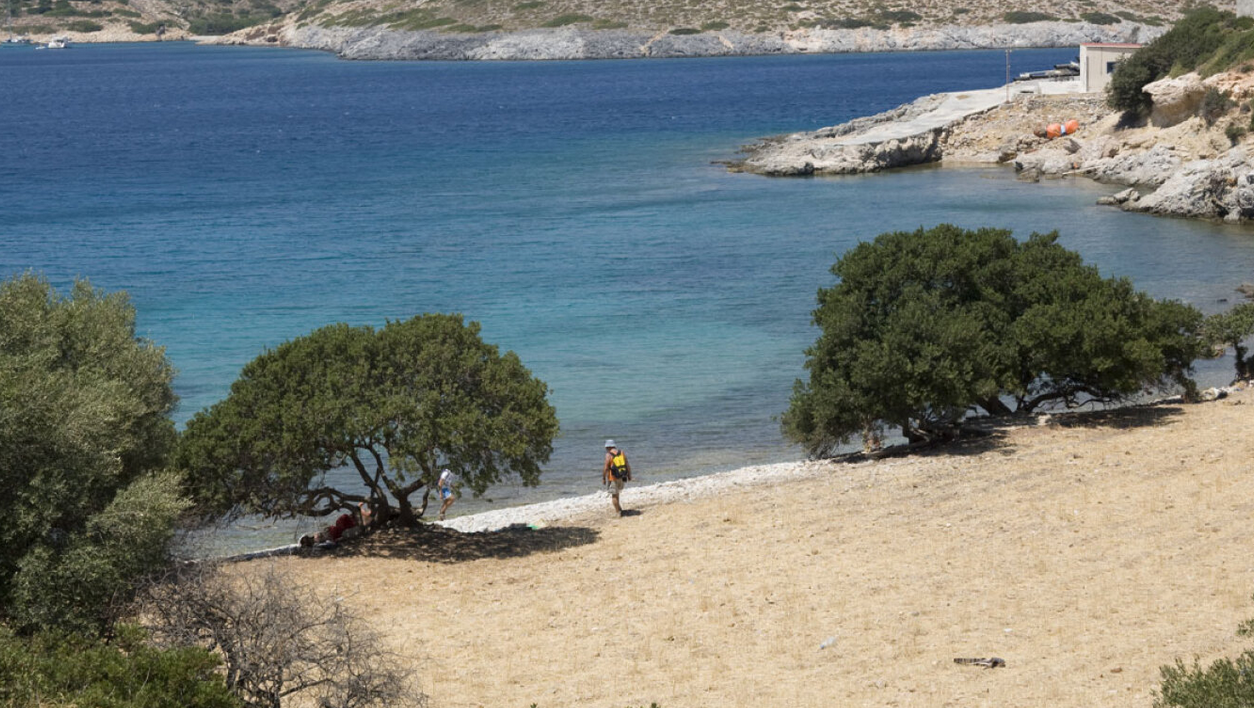
The first summer holiday conversations are slowly starting. Some people want to be “where it’s at” and are thinking of trendy destinations, while others simply want to escape the noise and crowds of everyday life. They seek a place without fuss and aim for maximum relaxation. Here are 4 Greek islands ideal for peaceful holidays:
Kastos
The tiny island of Kastos, located on the western side of Greece near Kalamos and Meganisi and opposite Mytikas in Aetolia-Acarnania, is a haven for those looking for isolation. Kastos has around 35 permanent residents, and to get there you’ll need to take a boat either from Lefkada or from Mytikas. Although it’s known among sailing enthusiasts, Kastos is not a mainstream tourist destination, making it perfect for laid-back, unpretentious holidays.
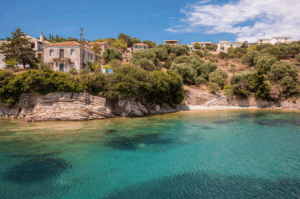
The island consists of a single village split in two: one part sprawls around the harbor, and the other sits slightly higher up, known as the “upper village.” The view of the Ionian Sea from up there is truly stunning. Don’t expect designer hotels or fine dining here.
You’ll find rental rooms, café-bars, and small tavernas. Note that on Kastos, everything is done either on foot or by boat, as there are only one or two cars on the island. These can take you to the more remote beaches for a small fee. The easily accessible beaches are on the island’s eastern side, while the western side is steep and rocky, only reachable by boat. Accommodation options are very limited, so plan early. When you’re not at the beach, you can spend your time strolling the island’s paths, relaxing at one of the few cafés with a book in hand, or simply chatting with the locals.
Agathonisi
On the opposite side of Greece, in the eastern Aegean, lies the small island of Agathonisi. Covering just 13.4 sq. km, it has three small settlements: Agios Georgios (the port), Mikro Chorio, and directly opposite it, Megalo Chorio. Here too, you won’t need a car—everything is close by. A scooter or bicycle might help with convenience.
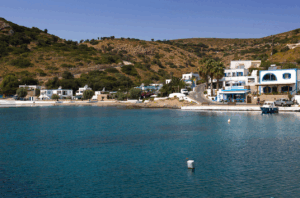
Days here are spent swimming and sunbathing on beaches, which are reached via footpaths or by boat and are, naturally, unorganized. You can also explore the island’s chapels, which offer beautiful views of the crystal-clear Aegean Sea. Boat rentals allow you to discover the island’s rugged, indented coastline, which hides charming little coves perfect for a dip. To learn more about the island’s history, visit the Archaeological Site of Tragaia at Kastraki—about 3–4 km north of the village—where you’ll find a fortified settlement with a port, military facilities, a sanctuary, a beekeeping station, and a purple-dye workshop from the Hellenistic period.
Pserimos
Pserimos, located on the eastern edge of the Aegean, is an ideal destination for a crowd-free holiday. West of it is Kalymnos, to the south lies Kos, and to the east is Turkey. Slightly larger than Agathonisi at 14.6 sq. km, Pserimos has only one settlement—the port. From this alone, you can guess the pace of life on the island. Mornings begin in total quiet, sipping a Greek coffee with a couple of biscuits while deciding which beach to visit for the day.
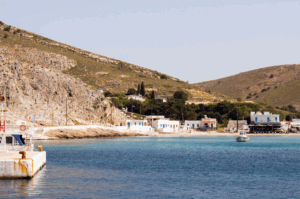
Here too, beaches are accessed on foot or by boat. The closest is Avlakia Beach, right in front of the settlement, but it’s worth exploring others like Panagia Grafiotissa Beach with its semi-ruined chapel, Trevathia Beach, Vathy, Tafos Beach, Roussa, Glistra, Marathounta, and more. In the eastern and northern parts of the island, you’ll find shipwrecks—great spots for those interested in diving. The islet of Plati to the west, with its small chapel of Saint Nicholas, is perfect for a day trip if you’re craving even more seclusion.
Oinousses
Between Chios and Turkey lies the long, narrow island of Oinousses, known for producing many of Greece’s renowned sea captains. It essentially has one main organized settlement—the port—characterized by beautiful neoclassical buildings and grand captains’ houses. With 15 sq. km and around 800 residents, it’s the largest and most populated of the four islands mentioned here. It’s also a protected area under the Natura 2000 network. In fact, Oinousses is part of an island complex made up of nine islets and rocky outcrops, with Oinoussa (or Aignousa, as the locals call it) being the only inhabited one.
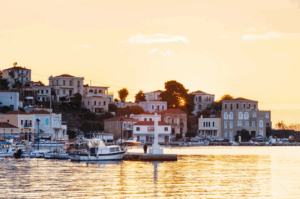
The island boasts beautiful beaches such as Chochlakas and Katsika in the north, Bilali, Fasoli, Apigano, Fokia, Fourkerou, Marmaro, Alyki, Tselepí, and more—all with stunningly clear waters. After swimming, you can wander the village’s uphill alleyways, visit the Maritime Museum housed in the Pantelis A. Lemos Mansion with ship models, nautical instruments, paintings, documents, and books, or explore the Church of Saint Nicholas, the island’s patron saint. This church holds numerous votive offerings from seafarers, and even a relic of Saint Nicholas, brought from Sicily in 2001. If you enjoy hiking, take one of the island’s paths to remote chapels offering scenic views. One of the best-known routes leads to the Cross of Oinousses—a huge cross built on a hill offering spectacular views of both land and sea.
Ask me anything
Explore related questions