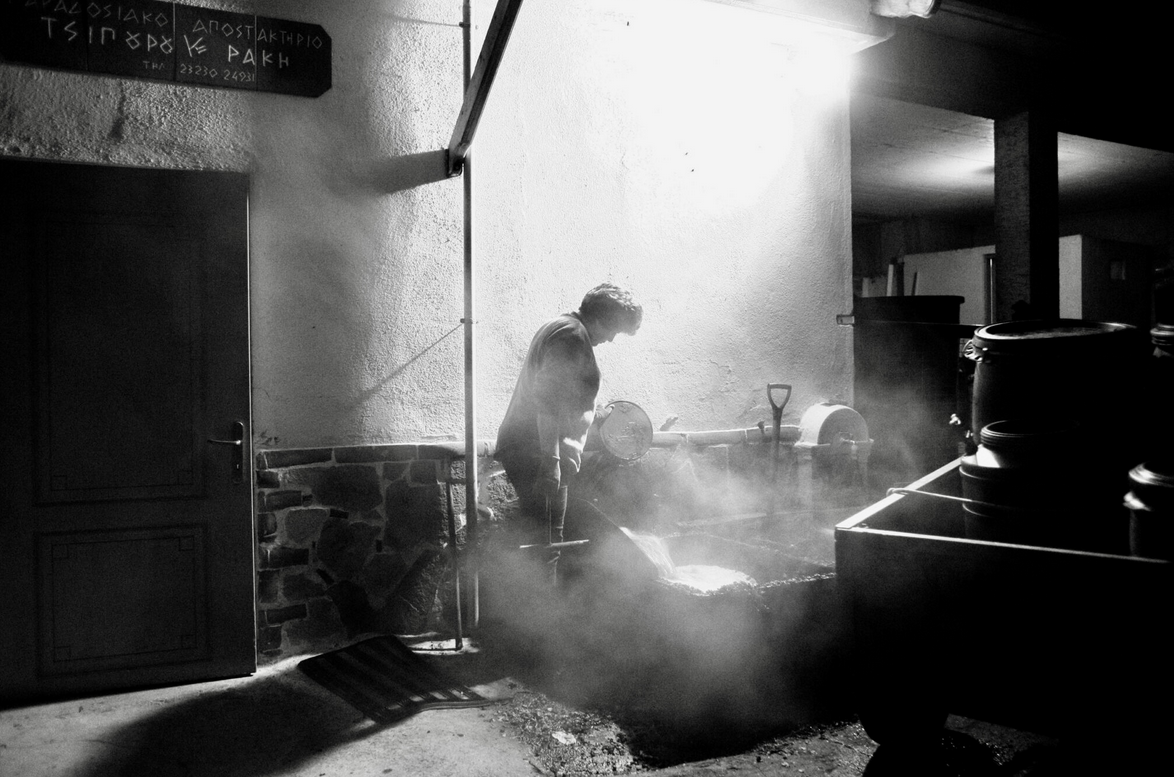
Each autumn in Crete, when the grape harvest ends and the vineyards quiet down, another season begins. In villages from Chania to Lasithi, fires are lit under copper stills, and the island fills with the scent of fermenting grape skins and wood smoke.
This is the time of tsikoudia – the spirit more commonly known as raki – when winemaking’s humble leftovers are transformed into a drink that embodies the Cretan way of life.
Raki is recognized by the European Union with a protected geographical indication, ensuring that only tsikoudia made in Crete may bear the name. Unlike ouzo or Turkish rakı, it contains no anise; its clarity comes solely from the grape.
But what truly distinguishes it is its role in Cretan life. Each drop carries the weight of the island’s history – from the ingenuity of farmers who refused to waste a harvest to the social bonds that have kept the tradition alive. Around the kazani, the boundaries between work and festivity, labor and joy, have long dissolved. What remains is connection: to the land, to the season, and to one another.
Read more at Travel.gr/en
Ask me anything
Explore related questions