





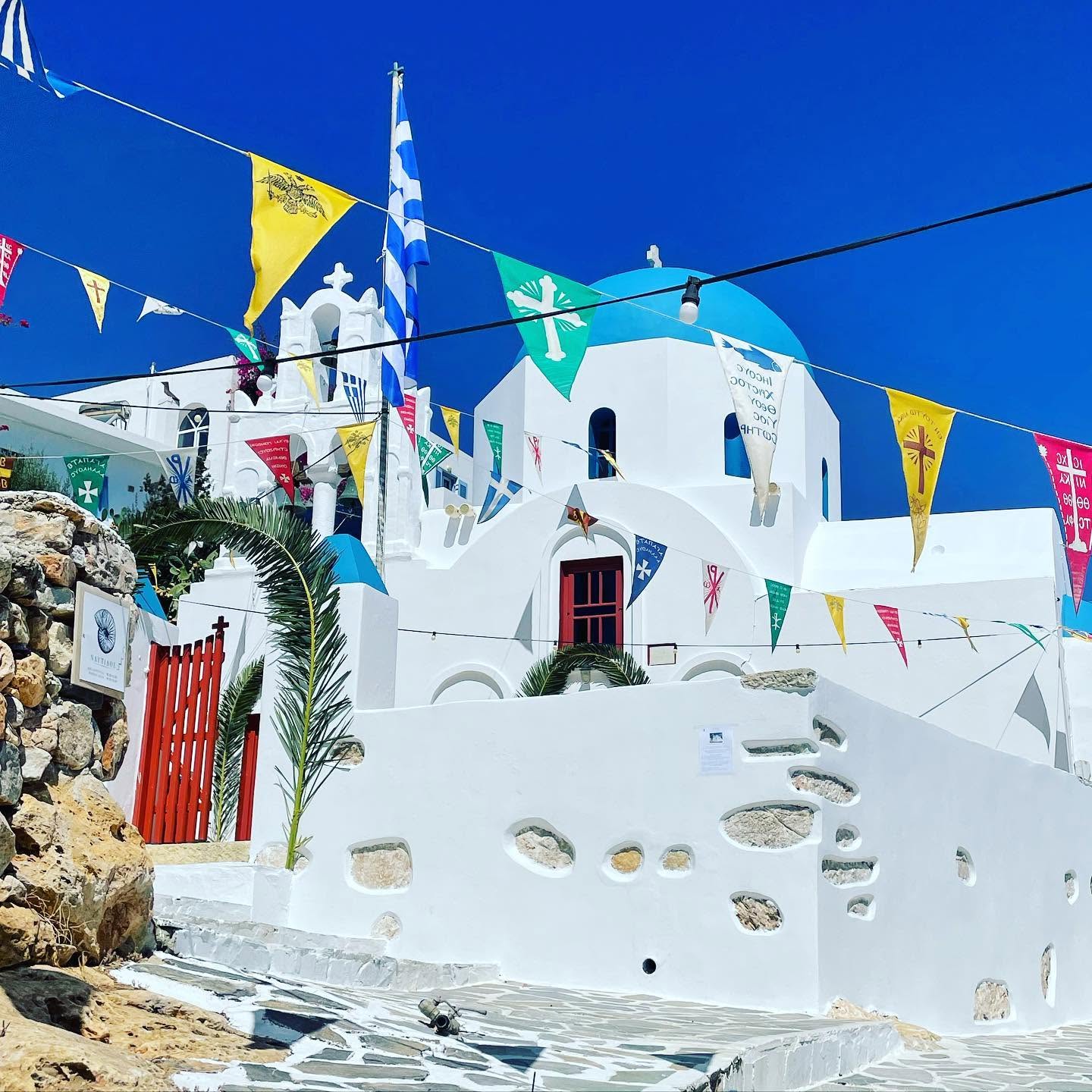
The last stop on the ferry route through the Small Cyclades, Donousa is the northernmost of the group and, for many travelers, the whole point of the journey. The island spans around 14 square kilometers, and its year-round population, numbering only in the low hundreds, swells just modestly even at the height of summer. The landscape splits in two moods: jagged and dramatic in the northeast, all cliffs and sea caves, then soft and sheltered in the south, where a string of sandy bays holds some of the clearest water in the Aegean.
Stavros, also known as Agios Stavros, is both the port and the main village, a tidy amphitheater of whitewashed houses facing the harbor, while a handful of smaller hamlets, among them Mersini, Kalotaritissa and Haravgi, sit further along the island’s single road. The island has been inhabited since prehistory, served as a place of exile under Rome, sheltered pirates in the Middle Ages, and briefly supported a small mining industry that worked until 1938. Its reputation today is simpler and more seductive: the bohemian outlier of the Small Cyclades, long beloved by free campers and still the island of choice for anyone who wants to vanish for a while, in the best possible way.
Ask me anything
Explore related questions




