×
GreekEnglish

×
  • Politics
  • Diaspora
  • World
  • Lifestyle
  • Travel
  • Culture
  • Sports
  • Cooking
Thursday
25
Dec 2025
weather symbol
Athens 17°C
  • Home
  • Politics
  • Economy
  • World
  • Diaspora
  • Lifestyle
  • Travel
  • Culture
  • Sports
  • Mediterranean Cooking
  • Weather
Contact follow Protothema:
Powered by Cloudevo
> Culture

Who does the tomb of Amphipolis belong to?

The tombs discovery last year led to speculation about the royal person who is buried within

Newsroom August 11 10:37

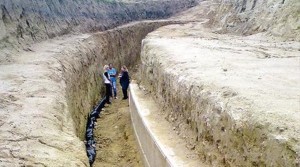
Archaeologists believe that they may be on the verge of a major discovery as part of their excavations at Ancient Amphipolis, a Greek city founded by Athenians in eastern Macedonia on the Strymon River in 438-437 B.C. The Tomb of Casta Amphipolis, discovered last year, captured the immediate attention of archaeologists with site archaeologist of the Ministry of Culture, Katerina Peristeri, voicing hopes of finding a significant individual within.

Over the last week there has been a lot of commotion at the excavation area with guards on duty round the clock. Questions are raised as to whether the identity of the person buried at the tomb will soon be revealed. The tomb, dated from 325-300 B.C. appears to be the creation of acclaimed ancient architect Dinocratis of Rhodes, who was also a technical adviser and friend of Alexander the Great.

Both Alexander the Great’s wife, Roxanne, and son were ostracized and killed at 311 B.C. in the region and this serves to escalate speculation regarding the ownership of the tomb. Legend has it that two victims are buried here but this has yet to be confirmed.

When the site was first excavated, experts enthused that the mount had yielded a very remarkable marble-faced wall from the late 4th century B.C. that could contain the remains of a king or at least a very important royal Macedonian figure. The wall is an impressive 500 meters long and three meters high. According to findings, a large member of the enclosure had been dismantled during the Roman Ages with a number of parts not in their places.

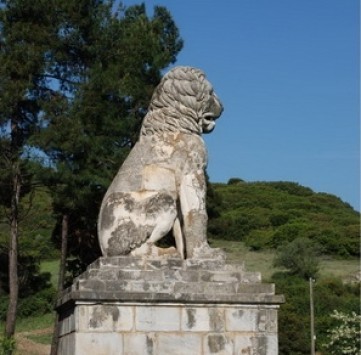
A funeral Lion of Amphipolis, 5.2 meters in height, had been excavated in 1934 by French archaeologists in the area. Acclaimed architect Michael Lefantzis said that the Lion of Amphipolis most likely stood at the top of the funeral mound.
>Related articles

Empress Elisabeth of Austria had a passion for the Greeks and learned Greek

Aikaterini Laskaridis Foundation: Awarded by the Academy of Athens for its contribution to culture and education

Singer Chris Rea dies at the age of 74

Alexander-the-great-tomb

A legend says that the unknown sculptor of this lion – at the peak of his career when he created it – realized that the Lion had no tongue. He was so frustrated that he threw it into the river.

Many daring theories are circulating about the grave site with tentative speculation about the royal person it could belong to.

Ask me anything

Explore related questions

> More Culture

Follow en.protothema.gr on Google News and be the first to know all the news

See all the latest News from Greece and the World, the moment they happen, at en.protothema.gr

> Latest Stories

The Hadid method: The mother’s strategy behind two million-dollar careers

December 25, 2025

The Roumlouki of Macedonia with the “rare breed of sheep and goats” — From Alexander the Great and female warriors to the Romans and the Ottomans

December 25, 2025

The last time it snowed on Christmas in Athens – The coldest and the hottest holidays in Greece in recent years

December 25, 2025

2025 Review: these are the 10 most important events of the year, according to AFP

December 25, 2025

Andreas Drymiotis to Danikas: It is a shame for political leaders who resigned to return to politics

December 25, 2025

With showers and thunderstorms today, a drop in temperature is coming: Which areas will be affected

December 25, 2025

Shocking: No prosecution of the Bob Vylan band for the anti-Israel slogans at the Glastonbury Festival

December 24, 2025

Hadjivassiliou: The Trilateral proved that the cooperation between Greece, Israel and Cyprus has strategic depth

December 24, 2025
All News

> Culture

Empress Elisabeth of Austria had a passion for the Greeks and learned Greek

Empress Elisabeth of Austria and Hungary, who went down in history as “Sisi,” learned Greek so well that she eventually translated literary texts. Who her teachers were and by what criteria she chose them

December 24, 2025

Aikaterini Laskaridis Foundation: Awarded by the Academy of Athens for its contribution to culture and education

December 23, 2025

Singer Chris Rea dies at the age of 74

December 22, 2025

Ancient treasures unveiled: The Royal Palace of Pella opens to the public with stunning Hellenistic statues

December 22, 2025

Rare video shows Domna Samiou teaching Cretan Christmas carols

December 20, 2025
Homepage
PERSONAL DATA PROTECTION POLICY COOKIES POLICY TERM OF USE
Powered by Cloudevo
Copyright © 2025 Πρώτο Θέμα