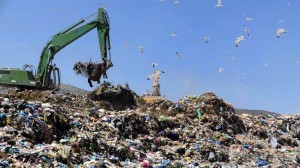
The European Commission is referring Greece back to the European Court of Justice for poor treatment of hazardous waste. Five years after the first ruling, Greece is still failing to comply with EU standards. The Commission is therefore asking the Court to impose fines, proposing a lump sum of 14,904,736 euros and a daily penalty payment of 72,864 euros until the obligations are fulfilled.
Hazardous waste must not be mixed with other waste streams as it poses a greater risk to the environment and human health than non-hazardous waste. It therefore requires a stricter control regime. The 2009 ruling noted the absence of a management plan to deal with various types of hazardous waste, such as medical waste and chemicals, which persist in the environment for a long time and are likely to cause cancer polychlorobiphenyls (PCBs) and polychloroterphenyls (PCTs).
In order to comply, Greece has:
* To adopt an adequate management plan for hazardous waste
* To create adequate facilities to deal with the hazardous waste generated. By way of example, Greece lacks installations for the regeneration of oils, treatment of end-of-life vehicles, recycling of batteries, recuperation of some metals.
* To tackle the issue of “historical waste which has been temporarily stocked until it can be efficiently managed.
Greece was expected to comply in full in 2013. However, the first step necessary to solve the problem, the adoption of an adequate national management plan for hazardous waste, has still not been taken and to date the Commission has not received any credible calendar of compliance.
On the recommendation of Environment Commissioner Janez Potočnik, the Commission is therefore taking Greece back to the EU Court of Justice and asking for fines.
Ask me anything
Explore related questions