

×
GreekEnglish

×
  • Politics
  • Diaspora
  • World
  • Lifestyle
  • Travel
  • Culture
  • Sports
  • Cooking
Saturday
19
Sep 2026
weather symbol
Athens 21°C
  • Home
  • Politics
  • Economy
  • World
  • Diaspora
  • Lifestyle
  • Travel
  • Culture
  • Sports
  • Mediterranean Cooking
  • Weather
Contact follow Protothema:
Powered by Cloudevo
> Culture

7,000-year-old Greek tomb holds burial secrets

The Ancient Greek tomb at the temple of Apollon Smintheus in Çanakkale provides archaeologists with information about ancient burial methods

Newsroom January 23 10:59

Δείτε περισσότερα άρθρα μας στα αποτελέσματα αναζήτησης

Add Protothema.gr on Google

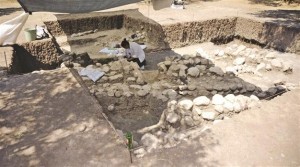
A 7,000-year-old tomb unearthed at the temple of Apollon smintheus inthe northwestern province of Canakkale’s Ayvacik district could hold secrets to ancient burial methods. Excavations are headed by Professor Coşkun Özgünel with the participation of the head of Canakkale’s Onsekiz Mart University’s Archaeology Department Professor Turan Takaoğlu.

>Related articles

Turkish Culture Minister confirms the existence of a 9-km tunnel beneath Hagia Sophia

95 Years of Papastratos: The anniversary story, told by its people

Onassis Mandra hosts award-winning French artist Celeste Boursier-Mougenot’s art installation

The tomb is an important discovery for the area’s archaeological history as it gives crucial information about burial methods. The bodies were laid in the tombs in a fetal positions with ceramics placed next to them as gifts. They were covered with stones.

The Apollon Smitheus Temple is located in the Bahçeleriçi area, in a valley northwest and northeast of Gülpinar village in Ayvacik. It was built in the later half of the 2nd century B.C. and was a sacred place designed by architect Hermogenes with eight columns at both the front and back of the temple and 14 columns along its sides.
The temple has three chambers, including a sacred front chamber (pronaos), a sacred room (naos) and a back chamber (opisthodomos), as well as the statue of the god Apollon by Greek sculptor Skopas.

Ancient geographer and traveler Strabo refered to the site 2,000 years ago in his book, “Geographica. He said Ions came from Greece and surrounded the city as a host of rats came from the underground at night to gnaw away at their weapons and equipment, causing the Ions to lose the war. As a sign of appreciation to the gods, the residents of the area built the temple to Apollon.

Ask me anything

Explore related questions

> More Culture

Follow en.protothema.gr on Google News and be the first to know all the news

See all the latest News from Greece and the World, the moment they happen, at en.protothema.gr

> Latest Stories

Greek PM denies ‘woke agenda’ as new school textbooks spark row over same-sex families

September 18, 2026

Fire on Renti rubbish plot of rubbish eases as emergency alert warns of black smoke

September 18, 2026

Search for missing Romanian tourist on Zakynthos enters third day

September 18, 2026

Ceuta boils over again: Serious clashes as thousands of migrants take to the streets for a place in new camp

September 18, 2026

Macron warns Russia attacks won’t be tolerated and pushes to convene G7 energy summit

September 18, 2026

Police uncover one million files linking missing women to Philadelphia house of horrors

September 18, 2026

Farm Life, Elevated: 21 Agritourism Retreats Across Greece

September 18, 2026

‘They are ready for war at any time’: Turkish defence minister’s response when asked about the S-400s

September 18, 2026
All News

> Greece

In reverence, the emotional deposition in Jerusalem, see photos & video

The Holy Temple of the Resurrection opened after many days due to the war between Israel and Iran

April 10, 2026

In the final stretch for the accreditation of joint master’s degrees: Aiming for their launch in the coming academic year

April 10, 2026

Schedule for Epitaph Procession today (10/4)

April 10, 2026

Perfect weather for Easter excursions, according to Tsatrafyllia’s forecast

April 10, 2026

Easter in Greece: The customs that continue in Greek tradition – From Nafpaktos to Corfu

April 10, 2026
Homepage
PERSONAL DATA PROTECTION POLICY COOKIES POLICY TERM OF USE
Powered by Cloudevo
Copyright © 2026 Πρώτο Θέμα



