





Representatives of international creditors from the European Commission, European Central Bank and International Monetary Fund are continuing to intervene in government decisions damping the government optimism concerning the Eurogroup decision of February 24. Technical groups are continuing to demand commitments such as those last-seen in the controversial e-mail by former finance minister Gikas Hardouvelis. Specifically, the government is being pushed to make painful cuts to wages and pensions, decide on new tax measures and stick to austerifity reforms enforced by the previous government.
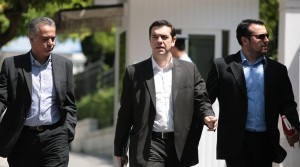
Prime Minister Alexis Tsipras had a meeting with his economics team to discuss the negotiation with European partners as well as meetings that finance Minister Yanis Varoufakis will have in Washington D.C. with U.S. President Barack Obama as well as meetings with German Finance Minister Wolfgang Schauble and ECB Chief Mario Draghi. Apart from Varoufakis, Deputy Prime Minister Giannis Dragasakis, Chief Economic Spokesman Euclid Tsakalotos and Deputy Minister of Finance Nadia Valavani were also present at the meeting.
Greece’s chief economists gathered to look at specific moves that could convince their Eurozone partners to unlock funds benchmarked for Greece on April 24. The Greek team looked at new tax proposals that could immediately and effectively yield revenue to moisten Greek money reserves.
Official sources deny that there is a deadlock, pointing to daily progress. Government deputies however point to April 24 as an important date, perhaps the absolute deadline. Speaking to Parapolitika FM, Energy Minister Panagiotis Lafazani said that negotiations are at a “difficult and critical point”, however he said that “no deal would not be the end of Greece as the country has many alternative solutions.”
Ask me anything
Explore related questions




