





The United States is facing serious shortages of air defence missiles, which could take several years to address, according to a CBS News report citing US officials and expert assessments of the state of the American arsenal.
According to the report, former US Army Chief of Staff General Randy George had warned as early as late December 2025, approximately two months before the start of the US war with Iran, that the American armed forces were facing critical shortages of interceptor missiles. He estimated that stockpiles of Patriot and THAAD systems would remain at critically low levels until 2030.
The warning was included in the Pentagon’s annual Global Force Management Allocation Plan (GFMAP), which is approved by the Secretary of Defense and determines where US troops and weapons systems will be deployed around the world.
George drew up his assessment as part of planning for the 2027 financial year, before the start of the US-Israeli war against Iran, which is now in its seventh month.
Defence Secretary Pete Hegseth removed the general from his post in April, while the war was already under way.
US officials who spoke anonymously to CBS News said the shortages were attributable to a combination of factors: the supply of Patriot missiles to Ukraine following Russia’s 2022 invasion, the use of large numbers of missiles to protect Israel, and the limited production capacity of the US defence industry.
Up to 82% of THAAD Stockpiles Used in War with Iran
Data presented by CBS News, citing estimates from the Center for Strategic and International Studies (CSIS), illustrate the extent of the strain the war with Iran has placed on US stockpiles.
Before hostilities began, the United States was estimated to have approximately 2,300 Patriot interceptor missiles. During the war, between 1,050 and 1,430 missiles were used, according to estimates, equivalent to as much as 61% of pre-war stockpiles. Meanwhile, fewer than 500 new missiles were expected to be delivered in financial year 2026 to replenish supplies.
The strain on THAAD system stockpiles appears even greater. Before the war, the US had approximately 355 THAAD interceptors, of which an estimated 190 to 290 were used, representing up to 82% of the original stockpile. No new THAAD missile deliveries were expected in financial year 2026, while the United States has requested more than 800 for the current 2027 financial year.
As the report notes, the US continues to hold substantial stocks of certain offensive weapons, such as Joint Direct Attack Munition (JDAM) guided bombs and Small Diameter Bombs, but is facing particularly low stockpiles of critical missile defence systems.
Why Patriot and THAAD Systems Are Critical
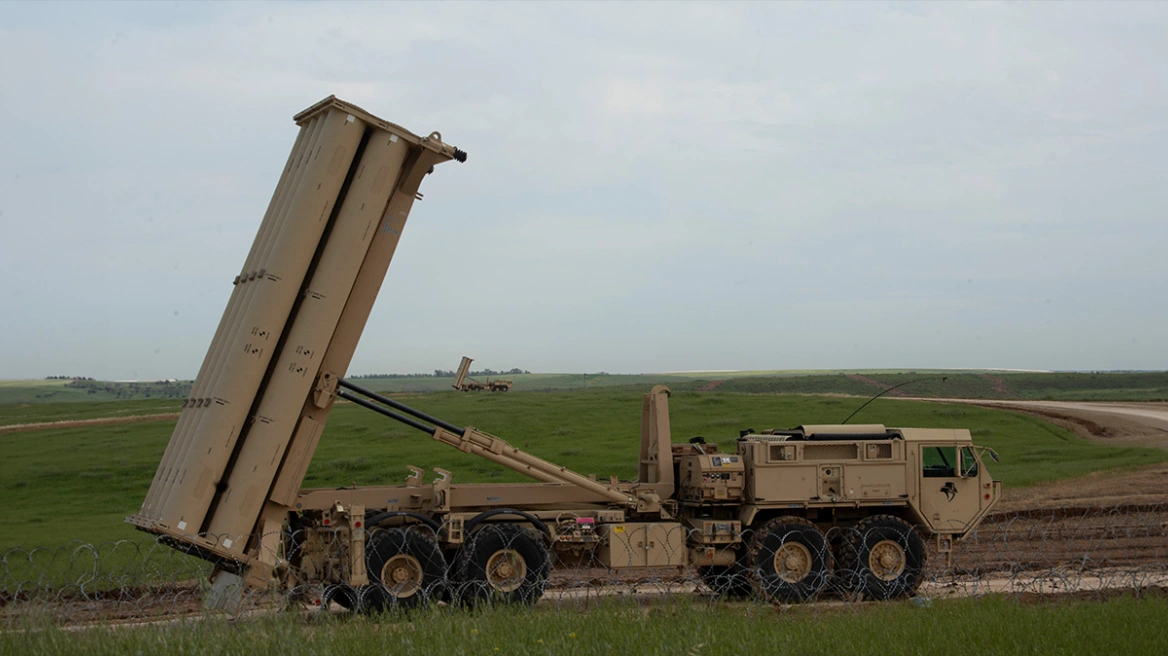
THAAD systems are among the most advanced missile defence capabilities in the US arsenal. They are designed to intercept and destroy ballistic missiles during the terminal phase of their flight, either within or just outside the Earth’s atmosphere.
The US Army has eight THAAD batteries, each staffed by approximately 90 military personnel and comprising six vehicle-mounted launchers.
Each launcher can carry eight interceptor missiles, giving a fully equipped battery a total of 48 missiles, according to a 2025 report by the Congressional Research Service.
Patriot systems, meanwhile, are used to protect military installations, personnel and critical infrastructure against ballistic missiles, cruise missiles and hostile aircraft. They can engage a wider range of aerial threats at lower altitudes than THAAD, while the combination of the two systems provides successive layers of missile defence.
Stockpiles of Patriot Advanced Capability-3 (PAC-3) missiles appear particularly limited. These missiles are designed to destroy incoming ballistic and cruise missiles through direct impact with the target. They can also shoot down enemy aircraft.
Mark Cancian, a retired Marine Corps colonel and senior adviser on defence and security at CSIS, stressed that these missiles would also be crucial in a potential military conflict with China.
“These are the two types of Army munitions that would be used most heavily in a conflict with China,” he said, explaining that such a scenario would probably involve limited ground combat, in contrast to air and missile defence, which would play a particularly important role.
Major Delays in Producing New Missiles
One of the most serious problems is the time required to manufacture and deliver new interceptor missiles.
According to a CSIS assessment published in April, defence manufacturers take an average of four years and five months to complete deliveries under new THAAD missile orders, while the equivalent lead time for Patriot PAC-3 missiles is three and a half years.
Two of the largest US defence contractors, Lockheed Martin and RTX, through its subsidiary Raytheon, are involved in producing these systems and their key components.
The companies have recently signed agreements to accelerate production, while Lockheed Martin announced a plan in January to quadruple its annual THAAD missile production capacity, from 96 to 400. However, a US official told CBS News that even if the United States stopped using additional THAAD and Patriot missiles in Iran or other conflicts, it would take until 2030 to return to the already low stockpile levels recorded in December 2025.
This forecast is based on the assumption that production programmes proceed without delays and that no new military operations arise to deplete stockpiles further.
Pentagon: ‘Claims of Shortages Are False’
The US Department of Defense has once again categorically rejected reports of ammunition shortages.
Pentagon spokesman Sean Parnell told CBS News that “claims of American ammunition shortages are false”.
“When fake news media irresponsibly repeat these lies, the real-world consequences are clear: our enemies are emboldened and encouraged to attack American soldiers,” he said.
Parnell also maintained that the United States still has “everything it needs to strike at the time and place of the President’s choosing”.
“We have already conducted successful operations across multiple combatant commands while maintaining a large and combat-ready arsenal to defend our personnel and interests,” he added.
How Ukraine and the Middle East Have Strained US Stockpiles
The current shortages are not attributable solely to the war with Iran.
According to CBS News, decisions made by the Pentagon over previous decades, the contraction of the defence industry and successive military operations have created a problem that worsens whenever the United States is required to use large quantities of ammunition.
After the end of the Cold War, US military planners abandoned preparations for a prolonged war against a rival superpower.
“After the Cold War, we planned to fight short regional conflicts against countries like Iraq or North Korea. For those conflicts, we did not need the large stockpiles required during the Cold War,” Cancian explained.
The strategic shift led to a reduction in production capacity and mergers among defence companies. According to a CSIS analysis, the number of major aerospace and defence companies in the US fell from 51 to just five.
At the same time, the Pentagon spent years cutting expenditure on ammunition and missiles in order to allocate more funding to fighter aircraft, tanks and warships.
As Cancian pointed out, the result was a defence industry that operates efficiently in peacetime but cannot rapidly increase production when a major war breaks out.
“We completely curtailed the ability to surge production because it was considered unnecessary. Then we reached the start of the war in Ukraine and, about six months later, realised that we did not have enough ammunition and equipment for a prolonged conflict,” he said.
The 600 Patriots Sent to Ukraine and the Missiles Used to Defend Israel
During the Biden administration, efforts were made to strengthen the production capacity of the US defence industry, but implementing these measures takes time.
Following Russia’s 2022 invasion, approximately 600 Patriot interceptor missiles were transferred to Ukraine. Not all of them came from US Army stockpiles: some were manufactured through the US military assistance programme for Ukraine, while others were supplied by European countries.
At the same time, both the Biden and Trump administrations used Patriot and THAAD missiles to protect Israel against Iranian attacks.
Six months before General George issued his warning, during the 12-day war, US forces had fired approximately 150 THAAD missiles and nearly 80 Patriot missiles.
The continued transfer of weapons systems from one part of the world to another is, according to the report, one of the most significant challenges facing US military planning. The Pentagon must allocate limited resources among different combatant commands, which frequently request the same weapons systems.
For example, US European Command may request additional Patriot systems for Poland at the same time as US Central Command needs similar systems in Kuwait, while US Indo-Pacific Command considers them essential in the event of a potential crisis with China.
In April 2025, Admiral Samuel Paparo, head of US Indo-Pacific Command, told a Senate committee that a Patriot unit had been transferred from his area of responsibility to the Middle East amid operations against the Iran-backed Houthis in Yemen.
The problem, experts point out, is that the United States is consuming interceptor missiles far faster than it can replace them. Even if production is accelerated as planned, restoring stockpiles to their pre-war levels could take several years.
Ask me anything
Explore related questions




