

×
GreekEnglish

×
  • Politics
  • Diaspora
  • World
  • Lifestyle
  • Travel
  • Culture
  • Sports
  • Cooking
Thursday
30
Apr 2026
weather symbol
Athens 17°C
  • Home
  • Politics
  • Economy
  • World
  • Diaspora
  • Lifestyle
  • Travel
  • Culture
  • Sports
  • Mediterranean Cooking
  • Weather
Contact follow Protothema:
Powered by Cloudevo
> Culture

Magna Graecia’s Legacy: The stories of Italy’s ancient Greek colonies (video)

Today these Greek colonies are often forgotten, but their legacy can still be felt in the region’s cultural landscape

Newsroom February 15 09:48

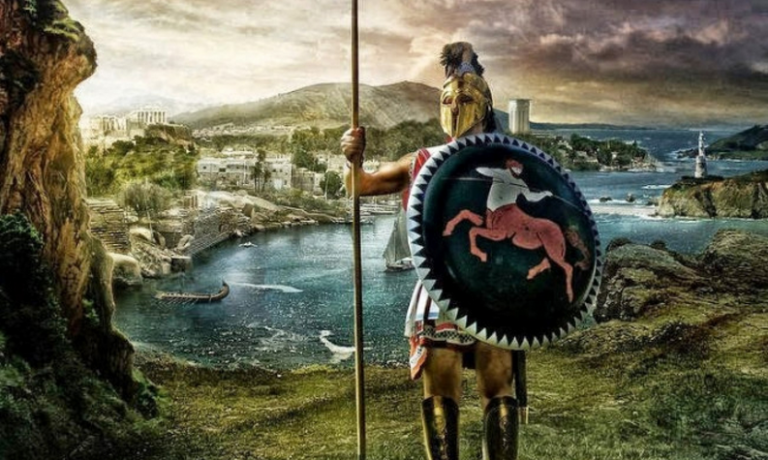
Long before the Roman Empire came along, the Ancient Greeks controlled much of southern Italy. From the 8th to the 5th centuries BC, intrepid Greek settlers transformed this region into a mosaic of independent city-states, fostering a unique blend of Hellenic and indigenous Italian influences. Amidst the fertile landscapes, colonies like Syracuse and Taranto thrived, becoming hubs of trade and innovation. Over time this series of colonies became known as Magna Graecia. This isn’t to say Magna Graecia was as idyllic. When the Greeks weren’t innovating, they were either fighting amongst themselves or battling outside threats. Over time Magna Graecia’s glory waned and eventually, it fell to a new power, the Roman Empire. Today these Greek colonies are often forgotten, but their legacy can still be felt in the region’s cultural landscape.

The Greeks Discover Colonization

When we think of empires establishing colonies, we normally associate it with trade and the spreading of power. Colonies are a fantastic way for nations to project their power from their borders and rule over faraway lands. Greek colonization was a little different, however. While power projection and increased trade were certainly bonuses, something else drove their colonization efforts – necessity.

During the Archaic period (800 to 480 BC) ancient Greece became too successful for its own good. Massive population growth (estimated to be ten-fold, with Greece’s population going from 800,000 to 7-10 million) meant the mainland quickly ran out of the arable land needed to feed so many mouths. The answer to this problem was to take other peoples’ land.

See Also:

Outrage as young Spanish girls dressed like “prostitutes” at LGBT-themed Carnival performance (video)

>Related articles

“Emily in Paris” officially to film in Mykonos in May, with Mitsotakis seal of approval – What he said at Cabinet

Ministry of Culture: Restoration and enhancement of the acropolis of Ancient Pelinna in Thessaly

Trump rejects Iranian proposal: “We will not lift naval blockade without a nuclear deal”

Colonies fixed this overpopulation and food shortage problem in two ways. Firstly, they expanded and strengthened Greece’s trade network. This meant Greece could import more food and feed all those hungry mouths. It also did wonders for the economy. Secondly, sending out settlers displaced some of Greece’s population growth and spread its population a little thinner.

Unlike Roman colonies, Greek ones weren’t dependent on their mother city. Instead, they acted as independent city-states. There were two main types of Greek colonies. The first were permanent settlements that largely acted independently but mostly remained loyal to their Greek heritage. The second, known as  emporia, was more akin to trading outposts. In these, Greeks and non-Greeks lived side by side and the population focused on manufacturing and selling goods to mainland Greece and other colonies.

Continue here: Ancient Origins

Ask me anything

Explore related questions

#ancient greece#colonies#colonization#culture#greece#history#italy#legacy#Magna Graecia#stories#video#world
> More Culture

Follow en.protothema.gr on Google News and be the first to know all the news

See all the latest News from Greece and the World, the moment they happen, at en.protothema.gr

> Latest Stories

UN: Athens calls on Ankara to respect international agreements, term “Turkish Straits” inconsistent with Montreux Convention

April 29, 2026

May Day: Metro, Electric Railway, Tram, trains and ferries come to a halt – how buses will operate

April 29, 2026

Metron Analysis: ND at 28.6% with losses, PASOK at 15%, gains for Tsipras, decline for Karystianou

April 29, 2026

“Emily in Paris” officially to film in Mykonos in May, with Mitsotakis seal of approval – What he said at Cabinet

April 29, 2026

Ministry of Culture: Restoration and enhancement of the acropolis of Ancient Pelinna in Thessaly

April 29, 2026

Trump rejects Iranian proposal: “We will not lift naval blockade without a nuclear deal”

April 29, 2026

Tripartite Greece–Bulgaria–Turkey meeting in Athens on migration: “strict line and measurable results,” says Plevris

April 29, 2026

Brown and purple jellyfish fill the Euboean Gulf — video shows hundreds along the coast

April 29, 2026
All News

> Greece

In reverence, the emotional deposition in Jerusalem, see photos & video

The Holy Temple of the Resurrection opened after many days due to the war between Israel and Iran

April 10, 2026

In the final stretch for the accreditation of joint master’s degrees: Aiming for their launch in the coming academic year

April 10, 2026

Schedule for Epitaph Procession today (10/4)

April 10, 2026

Perfect weather for Easter excursions, according to Tsatrafyllia’s forecast

April 10, 2026

Easter in Greece: The customs that continue in Greek tradition – From Nafpaktos to Corfu

April 10, 2026
Homepage
PERSONAL DATA PROTECTION POLICY COOKIES POLICY TERM OF USE
Powered by Cloudevo
Copyright © 2026 Πρώτο Θέμα



