





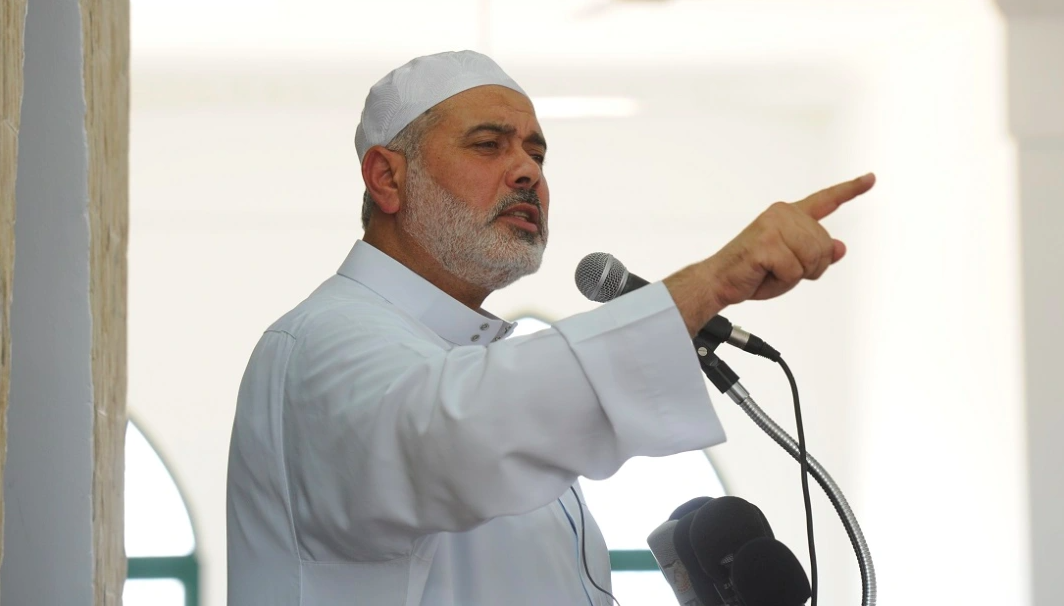
The temperature is soaring. The already incendiary region of the Near Middle East is one step closer to the danger of a broader escalation after the assassination of Hamas’ top political leader, Ismail Haniyeh, in Tehran early this morning. His death has enormous symbolic significance for Hamas’ prestige and power, and it marks the second consecutive painful blow to terrorist organizations in the region. It occurred in Iran’s capital.
Despite his harsh rhetoric, Haniyeh was considered by analysts to be relatively moderate and realistic compared to the more hardline Hamas leaders based in Gaza, Mohammed Deif and Yahya Sinwar, who are deemed the masterminds behind last year’s bloody attack in southern Israel. Western sources insist that operationally, his death hardly affects Hamas.
However, he was the public face of Hamas’ diplomacy in Arab capitals. He led efforts to negotiate ceasefires in Gaza. Many fear that his death will “freeze” even the minimal chances that existed for a ceasefire.
Tehran
It is noteworthy that while Hamas Islamists speak of a heinous and treacherous Zionist crime, Tehran, through the Revolutionary Guards, initially confirmed Haniyeh’s death – along with that of one of his guards – “under conditions that are being investigated.” Any admission that it was an Israeli strike confirms how porous the Iranian security system is, as Haniyeh’s assassination occurred in the heart of the Iranian state. Meanwhile, the Supreme Security Council of Iran is meeting at the residence of Supreme Leader Khamenei.
According to sources cited a little while ago by the Saudi news agency Al-Hadath, the assassination of Hamas’ political leader was carried out with a guided missile targeting his residence in Tehran. Haniyeh was in Tehran in anticipation of assuming his duties as the new Iranian president, Masoud Pezeshkian.
The Second Assassination in Two Days
Yesterday (Tuesday), an air raid in Beirut, Lebanon’s capital, killed a senior Hezbollah commander responsible for last Saturday’s rocket attack, which resulted in the tragic death of 12 children and teenagers in the Golan Heights, occupied by Israel. The Israeli Defense Forces (IDF) took responsibility for the raid.
This is the first “reading” of the latest events in the region, with the new episodes added to the cycle of bloodshed that began after Hamas’ horrific attack on Israel on October 7, 2023, which killed hundreds of civilians and resulted in many hostages, increasing global concern about further escalation and military involvement by third parties. Israel has since targeted Hamas leaders. Until now, apart from the Beirut strike, it had not managed to “approach” those at the top of the most-wanted list.
However, the deaths of some senior Hamas officials since then, including deputy political leader Saleh al-Arouri and Marwan Issa, deputy commander of its military wing, are attributed to Israeli hands. Haniyeh’s three sons and four of his grandchildren were also killed in an Israeli air raid in Gaza last April.
Austin’s Reading
The second, more measured reading comes from Western sources, who speak of a dangerous escalation but say that, under certain conditions, it may not develop into a full-blown conflagration. Indicative is the first statement by US Defense Secretary Lloyd Austin, who reiterated that he does not believe that a broader conflict in the Middle East is inevitable. “I don’t think war is inevitable. I believe there’s always room and opportunities for diplomacy,” Austin said from the Philippines, avoiding commenting on the climate following Haniyeh’s death. He reiterated, in response to a question on how Washington could support Israel in the event of a widening regional conflict, that the goal remains to de-escalate tensions and lower the temperature.
The first estimates by Western analysts, even before their governments take a stand, indicate that this is certainly a strong message that neither Hamas nor the Iranian defense system can remain invulnerable indefinitely.
Israel
Tel Aviv is currently avoiding any official comment on Haniyeh’s death. In a post on X, Israeli Defense Forces (IDF) spokesperson Daniel Hagari said, “There are no changes in the country’s defense policy. At this moment, the IDF is conducting a situation assessment. If changes are decided, we will immediately inform the public.”
Official acceptance by Israel of responsibility for Haniyeh’s assassination in Tehran, i.e., within Iranian territory, will undoubtedly raise the tension to unprecedented heights. Similarly, an acknowledgment by Iranian authorities that it was an Israeli strike would be a significant blow to the country’s power and prestige. Haniyeh’s assassination brings the region closer to an all-out war than ever before, said Nader Hashemi, a professor of Middle East Studies at Georgetown University, to the BBC.
From the Israeli side, the only comment so far came from Heritage Minister Am. Eliahu, who stated that Hamas’ leader’s death “makes the world a little better.” “No mercy for these mortals. The iron hand that will strike them is what will bring peace and some comfort and strengthen our ability to live peacefully with those who desire peace,” Eliahu said.
Other Reactions
Palestinian President Mahmoud Abbas described Haniyeh’s assassination as a “cowardly act and a dangerous development.” Moscow, through Deputy Foreign Minister Mikhail Bogdanov, called Haniyeh’s death an “unacceptable political assassination” and expressed fear that it would lead to further escalation of tensions. The Turkish Foreign Ministry also condemned the “shameful assassination in Tehran, which aims to extend the Gaza war to a regional dimension,” according to Reuters.
Hard, But Realistic
In recent years, Haniyeh had been based in Qatar, which hosts the group’s political wing, but he constantly moved between Turkey, Lebanon, Iran, and Egypt.
He was a popular figure, even among those strongly opposed to his positions. Born in the refugee camps of Gaza, at al-Shati, or Beach Camp, he joined the group as a young man and rose through its ranks. He led its political arm when it defeated Fatah in the 2006 Palestinian national elections. The international community would not accept the result, followed by a brief civil war in Gaza between Hamas and Fatah, with the latter being expelled from the area. Haniyeh’s brief tenure as Prime Minister of Palestine ended, and since then, Hamas and Fatah remain fierce rivals.
What is certain is that Hamas will now undergo changes at the leadership level.
News Today:
Ask me anything
Explore related questions




