





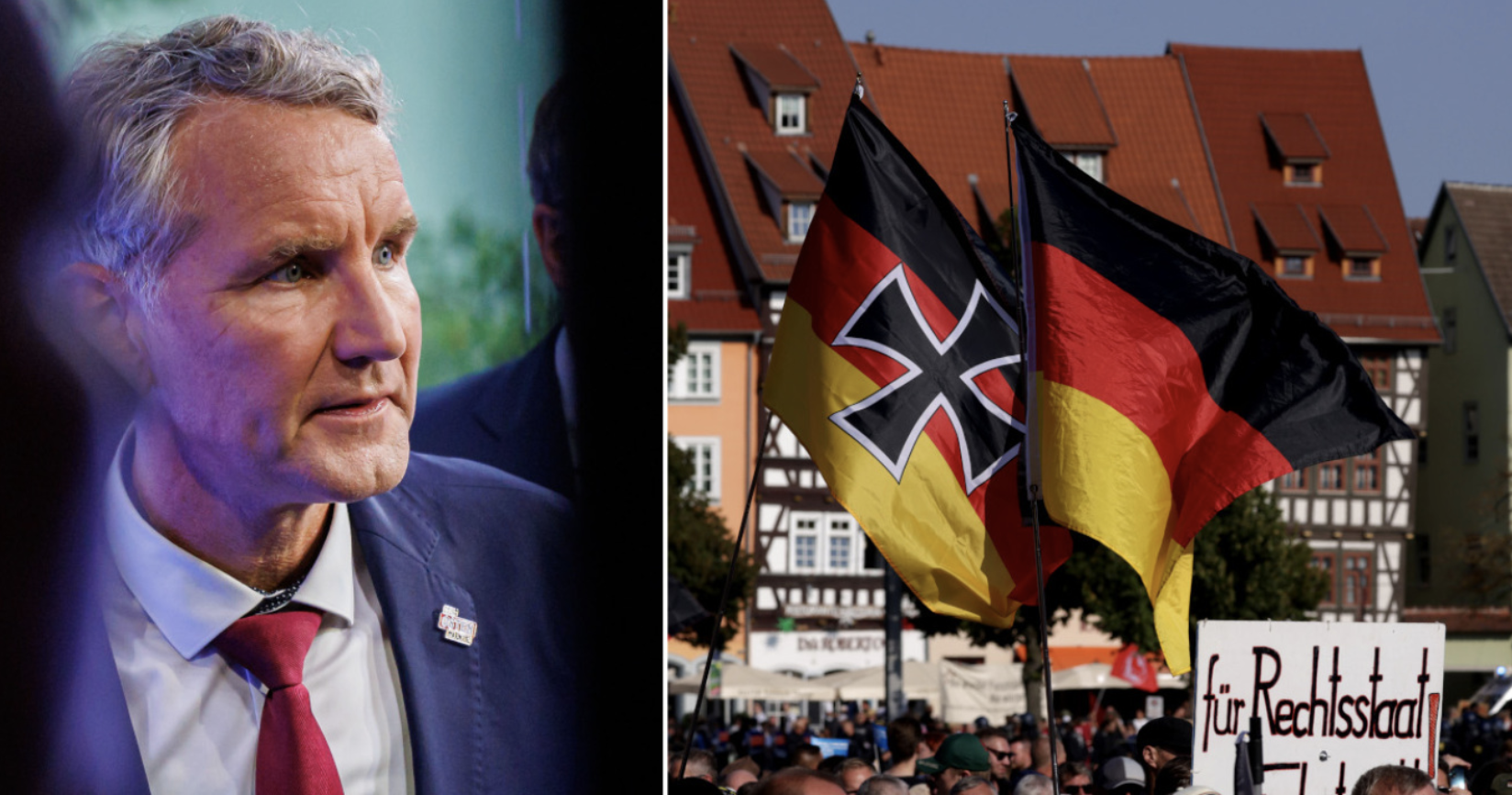
The Alternative for Germany (AfD) party achieved an impressive victory in the local elections in Thuringia, securing nearly 33% of the votes amid growing voter dissatisfaction with Chancellor Olaf Scholz’s center-left government.
This victory, coupled with the AfD’s second-place finish in Saxony, has caused significant concern in Berlin as Germany heads toward national elections next year, which could signal a shift to the right. The shock is even greater as this marks the first victory for a far-right party since 1945.
Chancellor Olaf Scholz commented on the results, stating that “our country cannot and should not get used to this. The AfD harms Germany. It weakens the economy, divides society, and damages our country’s reputation.”
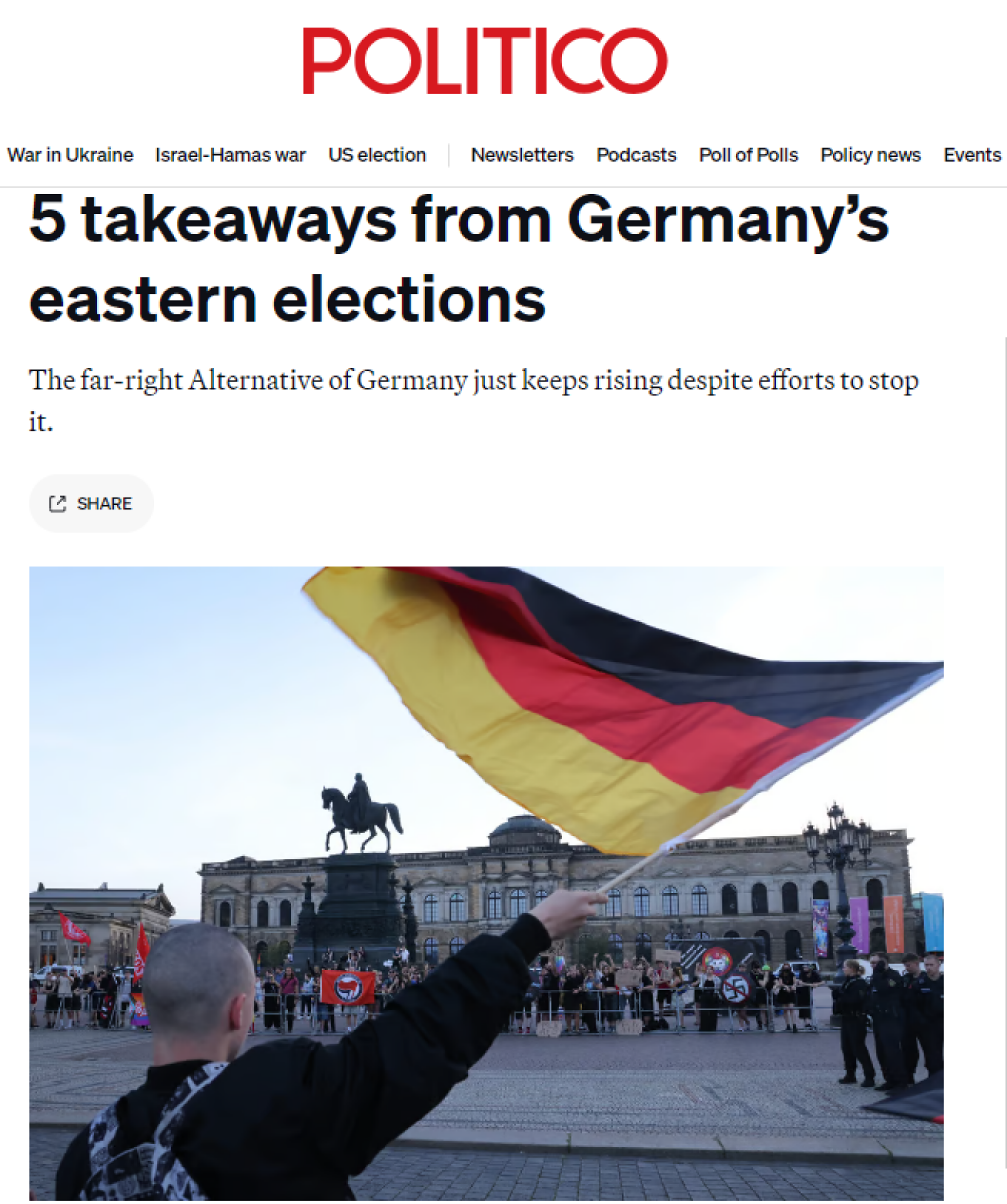
Politico, in its analysis, outlines five key points about what is happening in Germany, what comes next, and what we need to know about the developments.
- The Rise of the AfD Continues Despite Efforts to Stop It Leaders of Germany’s centrist parties have made significant efforts to curb the rise of the AfD, warning voters about the party’s extremism, even going so far as to label it as Nazi-like. Local security authorities have classified the party’s branches in Saxony and Thuringia as extremist organizations aiming to undermine German democracy. Despite warnings from politicians, institutions, and courts, the AfD continues to gain ground, particularly in eastern Germany, highlighting growing voter distrust of the country’s centrist parties and institutions. This phenomenon suggests that warnings from centrist leaders may have the opposite effect, further alienating AfD voters.
- The New BSW Party Emerges as a Key Political Player and Kingmaker One of the biggest winners of the night was the populist-left BSW party (Sahra Wagenknecht Alliance), which finished third in both states. The party, formed just a few months ago, combines traditional right-wing positions on immigration and other social issues with anti-war stances, calling for an immediate halt to Germany’s military aid to Ukraine and negotiations with Putin. The BSW’s success is largely due to other political formations’ commitment not to form coalitions with the AfD, making the BSW essential for forming governments at the state level.
- Voters Punish the Government Coalition in Berlin Again The three parties of the ruling coalition—Scholz’s SPD, the Greens, and the liberal FDP—suffered significant losses in Sunday’s elections. In Thuringia, the Greens and FDP failed to pass the 5% threshold and lost their representation in the local parliament. The SPD, though suffering fewer losses, continued its downward trend, reflecting voter frustration with the government’s performance. Scholz’s government tried to reverse its political fortunes shortly before the elections by announcing stricter measures on immigration, reflecting the AfD’s influence on the political scene. However, these efforts did not seem to help the SPD, which continues to decline.
- The AfD Has Become a “People’s Party” in Eastern Germany Far-right parties in Europe often gain protest votes, but in Eastern Germany, it appears that voters are embracing the AfD. According to surveys, every second AfD voter in Thuringia and Saxony votes for the party because they believe in its message. Voters believe that the AfD is the best party to represent the interests of Eastern Germany, particularly on asylum and immigration policy. This suggests that the AfD has established itself as a “Volkspartei” (People’s Party) in Eastern Germany, a title that until recently belonged to traditional parties like the SPD and CDU.
- Government Formation Negotiations May Be Lengthy Forming governments in Eastern Germany is becoming increasingly difficult, as shown by the example of Thuringia in 2019, when a major political crisis erupted after Thomas Kemmerich of the FDP was elected prime minister with AfD support. This collaboration sparked intense national reactions, forcing Kemmerich to resign. Despite the AfD’s strong performance in Thuringia and Saxony, it is unlikely to take power, as all other parties have stated they will not form coalitions with it. However, the complexity of the political landscape makes it likely that government formation negotiations will last for months, with the AfD trying to exploit the situation and strengthen its position.
Ask me anything
Explore related questions




