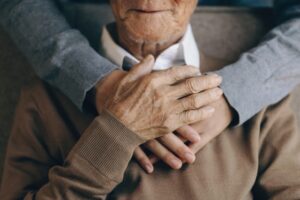
“In Greece, unlike in other European countries, this international day usually goes almost unnoticed, although ageing is a particular concern, as while our total population increased by 39% between the beginning of the first post-war decade and today, those aged 65 and over increased 4.6 times (from 520 thousand to 2.4 million), while those aged 85 and over multiplied by 20 (600 thousand today compared to only 30 thousand in 1951).” This is what Vyron Kotzamanis, Director of the Institute of Demographic Research and Studies (IDEM), stresses to the Athens-Macedonian News Agency, on the occasion of the International Day of Older Persons, which the United Nations has established since 1990 to be celebrated on October 1 of each year.
Greece, the scientist continued, with 23% of its population aged 65 and over, is currently among the oldest countries in the EU and will remain in this group for the next three decades. At the same time, there are strong spatial variations as the percentage of people aged 65 and over ranges from 12.6 % (minimum, Mykonos Region) to 33.9 % (maximum, Evritania Region). Greece therefore is heading, according to him, towards an explosive combination of ‘ageing’ and ‘overwork’ in more than 1 in 4 prefectures of the country, with the result that soon (well before 2050) it will have a group where 1/3 of the population will be 65 years old and over, while at the same time 1/4 of them will be ‘overworked’.
Considering that in the post-1970 generations we have a decline in marriage rates and an increase in both divorce and the percentage of those who will not have children, we will have an ever increasing number of people who will find themselves after 65 with very few people in their immediate family environment. The welfare state – and not the family – will therefore be called upon increasingly to meet the needs of these people, given that the costs will be impossible to cover by themselves.
Mr Kotsamanis also stresses that the rapid increase in the number of elderly people highlights, among other things, the importance of health promotion throughout the life cycle. It is no coincidence that for 2024 the United Nations has chosen “Ageing with Dignity: The importance of strengthening health and care systems for older people worldwide”. In Greece, he says, as in most ageing developed countries, we are now at a critical juncture, in an uncertain transition period. The future history of our ageing has not yet been written and social actors are reluctant to choose between the existing scenarios, scenarios that do not carry the same economic and social weight, nor do they have the same chances of being realised. The worst option, in his opinion, is to trap our society in the existing structures and operating mechanisms, in the present mechanisms for conceiving and considering ‘problems’, in the persistence of the current systems of social resource extraction and redistribution. The best solution, according to him, is to widen the age boundaries, to create alternatives between work, leisure and education during the successive cycles of life, to partially remove the walls separating active from inactive life, to bring out and exploit the enormous reserve of strengths and resources possessed by people in the so-called ‘third’ or even ‘fourth’ age’. It also consists of building new policies, ‘reinventing’ ageing and rebuilding institutions, changing attitudes, revising the perspective of conceiving and approaching the ‘problem’ and, finally, the dynamic, organised emergence of those directly concerned, who will cease to be merely statistical categories.
To conclude by stressing:
“The challenge is present: the solutions that will be given will also determine in our country whether the social stigmatization, the marginalization of the “elderly” – a consequence of their hitherto perceived absence of “collective usefulness” – will be lifted, whether the social clock will catch up with the biological one, whether the imbalance between the two basic components of ageing (social and demographic) can be reversed. The choices made will also determine whether ‘noble’ activities (such as care and treatment), which are still largely regarded today as ‘unproductive’, will be given their rightful place, so that they can boost the economy of the future, together with the increased demand for goods and services for older people. Our ways of adapting to ageing will of course vary and are a direct function of the policies adopted and the time we have from the moment we decide to act. But the question that can reasonably be asked is whether the above-mentioned restructuring and reallocation can be achieved without – among other things – changes in our production model and in the ways in which we produce and distribute collective wealth, changes that are necessitated by – among other things – our demographic developments. The answer to this question will also determine whether the collective and intergenerational solidarity that everyone claims is a myth or a reality…”.
Ask me anything
Explore related questions