In a flowing narrative filled with factual observations, critical details, and a deeply personal tone—far from the formal style typically associated with the German Chancellery—Angela Merkel, the “Iron Lady” of the eurozone, recounts the “Greek drama” in her autobiography. She details the stages of handling the eurozone debt crisis, which existentially threatened the union’s cohesion.
Like a private diary, Merkel assigns roles, responsibilities, and initiatives to the key institutional players of the era. She retraces the milestones of creating bailout programs for Southern Europe, starting with Greece. Initially unaware, at an informal meeting at the Solvay Library in February 2010, she quickly grasped the gravity of Greece’s fiscal crisis and the potential collapse of the eurozone. Merkel took charge of rescue programs that were built almost “handcrafted” in airplanes, meeting rooms, and even makeup studios.
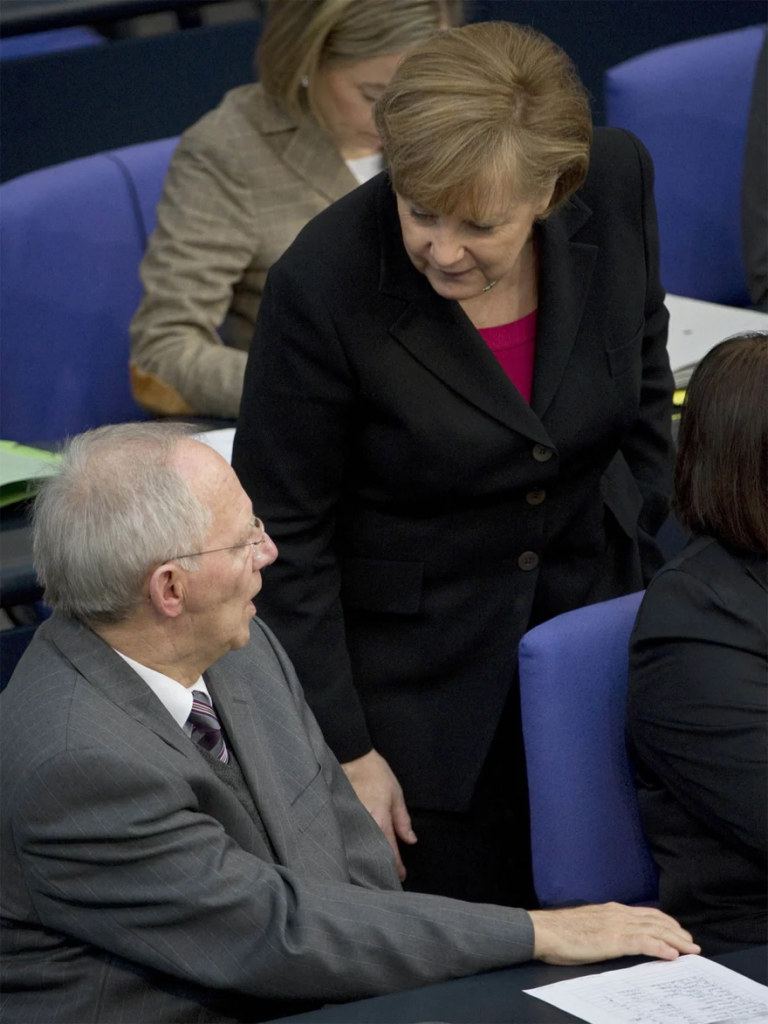
Guided by an acute sense of urgency, Merkel describes the bailout agreements as a “last resort” while reflecting self-critically, questioning if other, unexplored alternatives might have existed. Amid resistance at both the European and domestic (German) levels, Merkel paired financial aid with painful structural reforms. She candidly notes: “I was not prepared to assist Greece before it presented a credible reform program.” She identifies Wolfgang Schäuble as her sole ally within her government, despite his shock upon learning the financial commitment Germany would make.
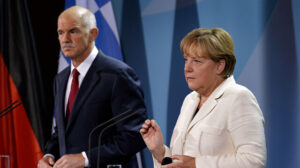
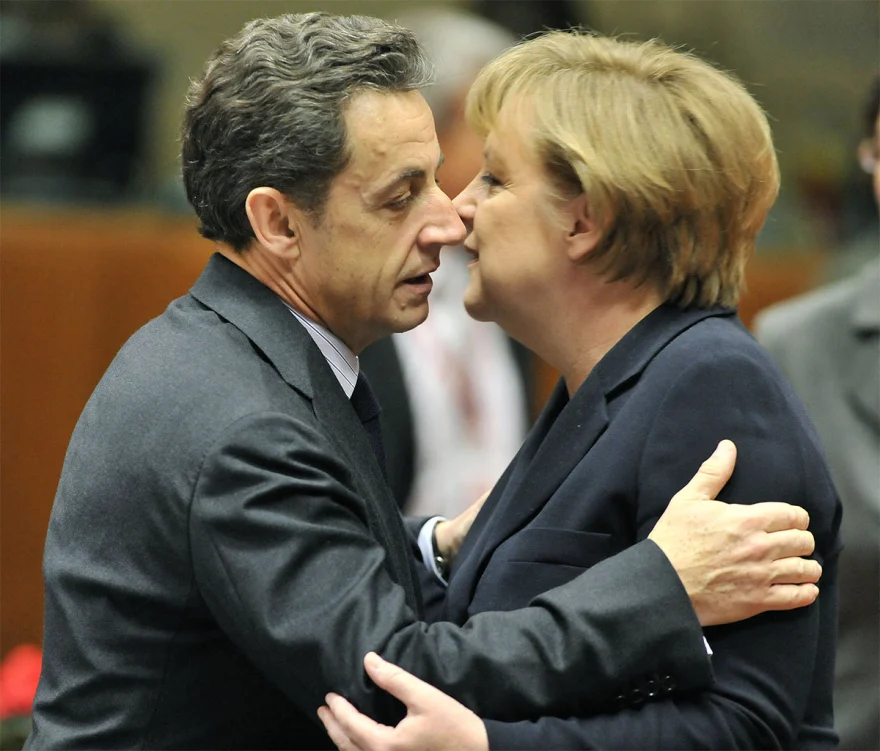
Besides mobilizing European institutional leaders, France emerged as a steadfast ally. Successive French presidents strongly supported fiscal aid for Southern Europe. Merkel’s memoir also touches on Greece’s three bailout-era prime ministers. She criticizes Giorgios Papandreou’s slow response, finds Antonis Samaras’s government falling short of targets, but praises Alexis Tsipras for his negotiation strategy. She observes that despite rejecting the bailout in a referendum, the majority of Greeks wanted to remain in the eurozone, a sentiment affirmed by Tsipras’s reelection in September 2015.
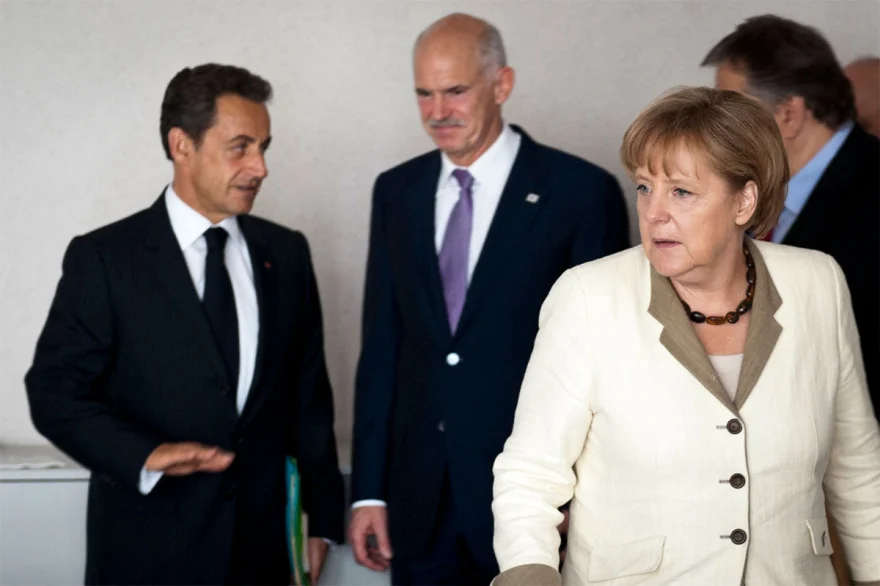
Nothing foretold the challenges that lay ahead when Merkel attended a secret meeting in Brussels in February 2010. The aim was to gauge European leaders’ willingness to support Greece’s economy. By May 2010, the situation had escalated, leading to the first bailout package, shaped by intense deliberations under Merkel’s leadership.
In the autumn of 2011, the lending capacity of the EFSF was increased in order to be able to grant the planned loans amounting to 440 billion euros with the highest credit rating. Greece benefited from the EFSF and received a second bailout package in December 2012.
The road to the agreement for this program was paved with thorns. Germany had demanded the participation of Greece’s private creditors in the cost through a “haircut” of debt. Sarkozy and Trichet feared that such a step would permanently shake investor confidence in the eurozone. Eventually, we agreed on a voluntary “haircut” by creditors; the relevant agreement was signed in the spring of 2012.
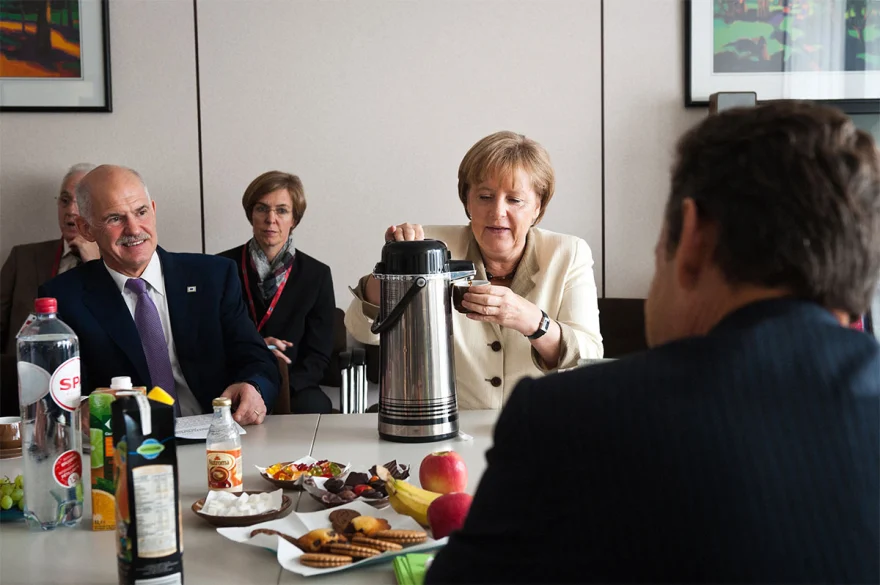
Meanwhile, Greece’s Prime Minister Giorgios Papandreou, who was facing great difficulties in implementing the promised reforms in his country, decided in October 2011 to hold a referendum on the austerity package – a plan he quickly abandoned: on the sidelines of the G20 Summit in Cannes, France, on November 3-4, 2011, Barroso, Van Rompuy, Sarkozy, and I made it absolutely clear to him that the reforms in his country were inevitable. Very soon, Papandreou resigned, a transitional government took over the leadership of the country, and later, after the parliamentary elections of June 2012, Antonis Samaras assumed the office of prime minister.
The negotiations about the scope of the bailout package were brief. Things became difficult, as always, when the conditions for accessing the package, the so-called conditionality, were discussed. Some countries, including Germany, the Netherlands, and Finland, wanted to specify exactly what the recipient countries had to do to receive the funds, while others did not consider it particularly important. As with the program for Greece, this involved austerity measures and structural reforms, for example, in the labor market.
After midnight, Italy’s Prime Minister Silvio Berlusconi called me on my mobile phone and tried to convince me to agree to soften the terms of joining the bailout mechanism. The Italian Finance Minister had not succeeded with de Maizière, and I also remained firm. Shortly after the Tokyo Stock Exchange opened at 2:00 PM (our time), the €750 billion bailout package was finalized. €440 billion would come from bilateral loans and guarantees from eurozone members, with Germany’s share amounting to €123 billion. For this purpose, a special purpose vehicle would be created, the European Financial Stability Facility (EFSF), which could grant emergency loans to eurozone countries under certain conditions. The Commission would contribute €60 billion. The IMF wanted to participate with up to €250 billion.
The next morning, there were meetings of the CDU’s Presidium and Federal Committee at the Adenauer House, as always on Mondays after state elections. Before the meeting even started, I explained to the press, in the chancellery, the decision made the previous night in Brussels. At 3:00 PM, I briefed the party leaders and the parliamentary group leaders of the parties represented in the Bundestag. Nine days later, on May 19, 2010, the first reading of the EFSF took place in the Bundestag.
At this meeting, I made the following government statement, placing the situation in its historical context: “The current euro crisis is the greatest test Europe has faced in decades, indeed since the signing of the Treaty of Rome in 1957.” I then described the importance of our decision: “The monetary union is a community of destiny. What is at stake here is, quite frankly, the preservation and defense of the European idea, which we have a historical duty to safeguard. Because if the euro fails, Europe fails.” Finally, I addressed what was legally necessary and politically right to prevent: “Specifically, there was the threat of heading toward a union of mutual sharing in which there would be direct and binding responsibility for decisions taken by the individual member states, which they themselves are responsible for.” I continued my argument by saying: “The price for our stance was criticism for hesitancy or slowness. However, ladies and gentlemen, the German government is happy to pay this price if, in the end, the right decisions are made.” I then explained and justified the fundamental principles upon which we based our decisions and highlighted the necessary reforms within the eurozone: fiscal consolidation in the various member states, reform of the Stability and Growth Pact, the ability for smooth state bankruptcies, European financial supervision, the ability to restructure and resolve banks, and taxation of financial markets.
On May 21, 2010, the German Bundestag approved the legislative package in its second and third readings, and Germany signed the framework agreement for the European Financial Stability Facility on June 7, 2010, with validity until the end of 2013. Emergency loans from the EFSF were necessary. Ireland and Portugal made use of them, while Spain had to apply for funding for its banks in the summer of 2012.
In the autumn of 2011, the lending capacity of the EFSF was increased to be able to grant the planned loans of €440 billion with the highest credit rating. Greece benefited from the EFSF and received a second bailout program in December 2012.
The road to the agreement for this program was thorny. Germany had demanded that Greece’s private creditors share the cost through a “haircut” of debt. Sarkozy and Trichet feared that such a step would permanently undermine investor confidence in the eurozone. In the end, we agreed to a voluntary “haircut” by creditors; the relevant agreement was signed in the spring of 2012.
Meanwhile, Greece’s Prime Minister Giorgios Papandreou, who faced great difficulties in implementing the promised reforms in his country, decided in October 2011 to hold a referendum on the austerity package—a plan he quickly abandoned: on the sidelines of the G20 Summit in Cannes, France, on November 3-4, 2011, Barroso, Van Rompuy, Sarkozy, and I made it absolutely clear to him that reforms in his country were inevitable. Very soon, Papandreou resigned, a transitional government took over the leadership of the country, and later, after the parliamentary elections of June 2012, Antonis Samaras assumed the office of Prime Minister.
Ask me anything
Explore related questions