The Greek government is now moving towards prohibiting children under the age of 15 from accessing social media. Education Minister Kyriakos Pierrakakis announced the proposal by the Ministry of Digital Governance for the “Kids Wallet,” a dedicated parental control application, as well as the development of a comprehensive national strategy to tackle internet addiction among minors.
Tomorrow morning, a closed preparatory meeting will take place at the Maximos Mansion to outline this national strategy. Two ministers are primarily overseeing the planning: Minister of Digital Governance Dimitris Papastergiou and Minister of Social Cohesion and Family Sofia Zacharaki. The strategy also includes initiatives involving schools and the Hellenic Police (EL.AS.).
The meeting aims to provide guidelines from Prime Minister Kyriakos Mitsotakis for upcoming measures.
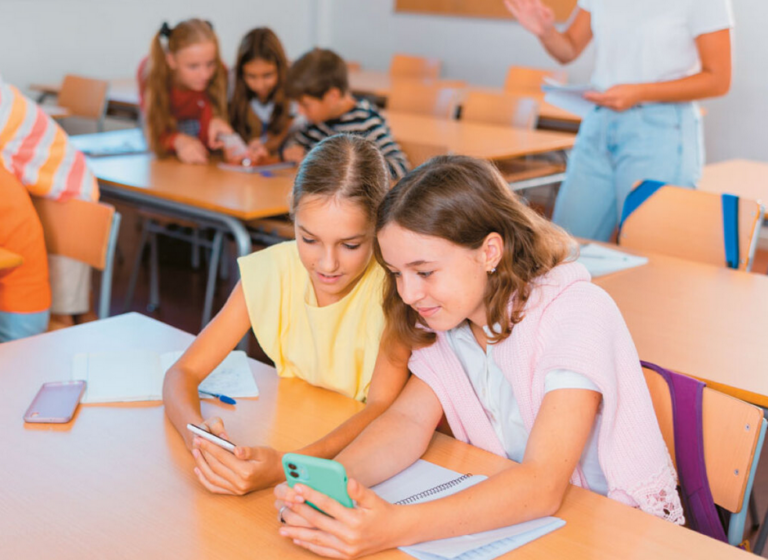
The data is particularly concerning worldwide, as 30% of social media users are children. In Greece, this percentage rises sharply, with 75% of elementary school children having social media profiles. At the same time, Greece ranks first in Europe for calls to the Safe Internet Helpline regarding internet addiction cases.
“We are considering creating a children’s wallet through which age verification can be conducted,” said Digital Governance Minister Dimitris Papastergiou. “However, the main focus should not just be on the child’s device but on the content itself. That is, how we, as Europe, can restrict the use of inappropriate material, especially in cases where platforms are aware that children are on the other end. We need a collective approach to ensure that our children are not exposed to such risks, which have so far gone largely unchecked.”
Regarding age verification, the minister explained, “One solution could be the personalization of devices — age verification via the citizen registry to enable access to social media.” He emphasized the urgency of addressing the availability of inappropriate material on social media platforms, noting that “a more extreme solution is needed for younger children.” Papastergiou added, “If platforms were to implement ethical limits on what content they serve to children, this issue could be managed differently. We need to assess the current situation, determine what we are doing as a country, and see what actions providers can take in this unregulated and uncontrolled environment of social media.”
“Social media platforms and digital providers must come to the table and demonstrate measurable actions prioritizing safety over profit. Their designs must be age-appropriate, protect children from addiction, and avoid using their personal data to build personalized profiles. The overarching principle is simple: do no harm,” emphasized the minister.
User data generated by platforms has become the “oil” of the internet. In early August, the Financial Times revealed a secret advertising agreement between Google and Meta targeting minors online. Last week, the European Commission launched a preliminary investigation into this deal, specifically the advertising campaigns promoting Instagram through YouTube. Reports suggest Google employees assisted Meta in bypassing company policies to target minors, in clear violation of Google’s official rules. This essentially involved hacking the data of users under 18.
Social media algorithms are designed to keep users engaged, leading to prolonged usage and addictive behavior, according to Papastergiou. Such patterns often disrupt sleep, reduce focus, increase introversion, and harm mental health.
The intense reliance on mobile devices and the virtual world traps minors in a state of “unfreedom.” Algorithms on social media dictate behaviors and influence subconscious decisions. “Before we even decide what to purchase or where to vacation, they can predefine our habits based on collected data, then bombard us with targeted ads,” noted Georgios Kormas, head of Greece’s Safe Internet Help Line. He expressed full support for the government’s initiative to restrict children’s access to social media. “This effort to enhance children’s safety on social media is crucial. It’s naïve to think extreme challenges or violent phenomena don’t multiply through social media. Daily, we observe influencers and YouTubers setting behavioral trends that children adopt uncritically.”
He also highlighted the particularly addictive nature of platforms like TikTok. Young users often bypass age restrictions using their parents’ credentials to access prohibited platforms.
How Can Children Be Protected?
Kormas praised the government’s efforts to tackle internet addiction and suggested complementary measures, such as programs to develop social skills, promote sports and culture, and engage children in the real world. He also called on parents to actively support the initiative, emphasizing that abstinence from social media could be a form of modern-day “revolution” for young children.
“Parents can’t expect children to quit social media while they themselves are on Instagram,” he noted. “They must also lead by example.”
Actions in Other Countries
- Australia: From next year, a law will require tech giants like Instagram, Facebook/Meta, and TikTok to restrict access for users under 16, with fines up to $32 million for non-compliance.
- Norway: A proposal seeks to raise the minimum age from 13 to 15 for social media access, while maintaining parental consent for younger children.
- UK: A government study found that 60% of children aged 8-11 have social media profiles, despite the official age limit being 13.
- France: A 2023 law requires parental consent for social media accounts for children under 15. President Macron also proposed banning mobile phones for children under 11 and limiting internet access for those under 13.
- Netherlands: Mobile phone use will be prohibited from January 2024, except for computer science classes or medical needs.
Digital Literacy in Schools
As part of the new parental control app rollout, the Education Ministry plans to introduce an augmented reality educational tool called “Jimanious” to teach children how to manage their personal data online. The initiative will be integrated into the school curriculum this academic year, with a more extensive version expected next year.
Nationwide Survey Highlights
A 2024 study of 4,800 teenagers aged 12-18 revealed:
- 46% feel unsafe online, particularly on social media and live streaming platforms.
- 83% view online violence as a major problem for minors.
- 24% have experienced bullying online, including non-consensual sharing of personal images/videos.
- 75% of elementary school children have social media profiles.
- Greece ranks first in Europe for calls to its Safe Internet Help Line regarding internet addiction.
Ask me anything
Explore related questions