





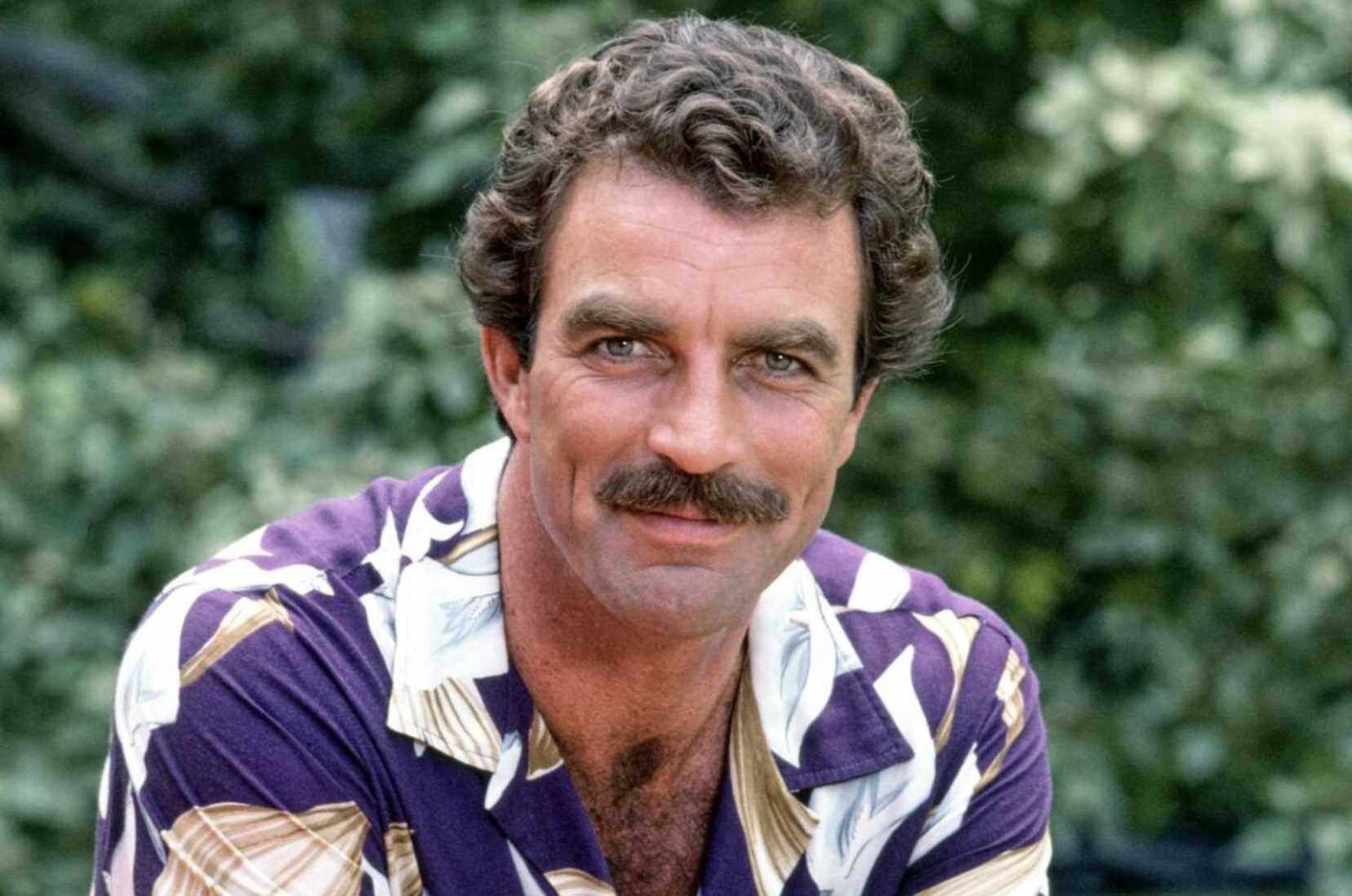
The towering Tom Selleck has been enjoying his ranch in Ventura County, California, even more in recent months—a place where he has found peace for the past 35 years. He spends his time tending to agricultural work and poring over newspapers when he’s not on television or film sets. Perhaps feeling a sense of relief now that the popular TV series Blue Bloods, which ran for 14 seasons, has concluded, the tall and undeniably charming actor, satisfied with his long and successful career, appears ready to retire from show business.
However, Selleck still holds out hope that he might make one last—great—Western, a genre where he excelled as a film star. Recently, he expressed his desire to ride a horse again. It’s a wish that, if fulfilled, could be the final gift cinema has to offer him, as he prepares to celebrate his 80th birthday at his beloved ranch, surrounded by his family.
The Rise of Magnum
Along with turning 80—a milestone he wears lightly—Tom Selleck marks 55 years in the entertainment industry. His career began with his debut in the suspenseful TV thriller The Movie Murderer. His big breakthrough came in the 1980s when he starred as Thomas Magnum, a private detective in Hawaii, in the television series Magnum, P.I.. The show, which ran for eight years, was a massive hit and earned Selleck seven Golden Globe nominations, one of which he won. During this time, he also starred in numerous action-adventure films and proved his mettle in Westerns, suggesting he could have been the rightful heir to John Wayne.
A Hero Out of His Time
With his commanding presence, rugged masculinity, distinctive deep voice (which even landed him advertising gigs), trademark mustache, and relaxed yet confident acting style, Selleck exuded trustworthiness—a hero who could meet every expectation and become your “best friend.” Another asset was his old-fashioned approach to his roles in Westerns and crime dramas, giving the impression that he had stepped straight out of the cinematic universe of past decades. Yet, he also seemed somewhat “underappreciated,” as he arrived in the film industry later than many Western stars of the past—despite arguably surpassing many of them in talent. While he may not be compared to legends like Gary Cooper, Jimmy Stewart, Burt Lancaster, Gregory Peck, or Clark Gable, it’s fair to say he outshines others like Randolph Scott, Joel McCrea, or Audie Murphy—not to mention the rest.
Selleck’s connection to John Wayne goes beyond the cinematic realm. They share many similarities, which we’ll explore in the brief biography below. The main differences lie in their personal lives: Wayne was notorious for his drinking and womanizing, while Selleck is the epitome of a family man and devoted husband, a stark contrast to the legendary actor.
From Basketball to Acting
Thomas William Selleck was born in Detroit, Michigan, on January 29, 1945, as one of four children to Martha and Robert Dean Selleck, who were of English descent. His family moved to Sherman Oaks, a neighborhood in Los Angeles, in 1948. There, Selleck attended the University of Southern California, where his athletic build earned him a spot on the USC Trojans men’s basketball team. He also played baseball before leaving university in his final year to pursue acting, studying at the Beverly Hills Playhouse.
A Vietnam Veteran
In 1967, Selleck received a draft notice and enlisted in the California Army National Guard. He served for six years, including time on the front lines in Vietnam, eventually reaching the rank of sergeant and earning several commendations. His experience as a Vietnam veteran often influenced the characters he portrayed on screen.
A Caring Family Man
Selleck enjoyed numerous successes on television, particularly in crime dramas and TV movies that far exceeded the genre’s average quality. He achieved widespread fame in 1987 with the family comedy Three Men and a Baby, directed by Leonard Nimoy, where he starred alongside Steve Guttenberg and Ted Danson. The film’s success spawned a sequel, Three Men and a Little Lady, though it was less successful.
The Best Westerns
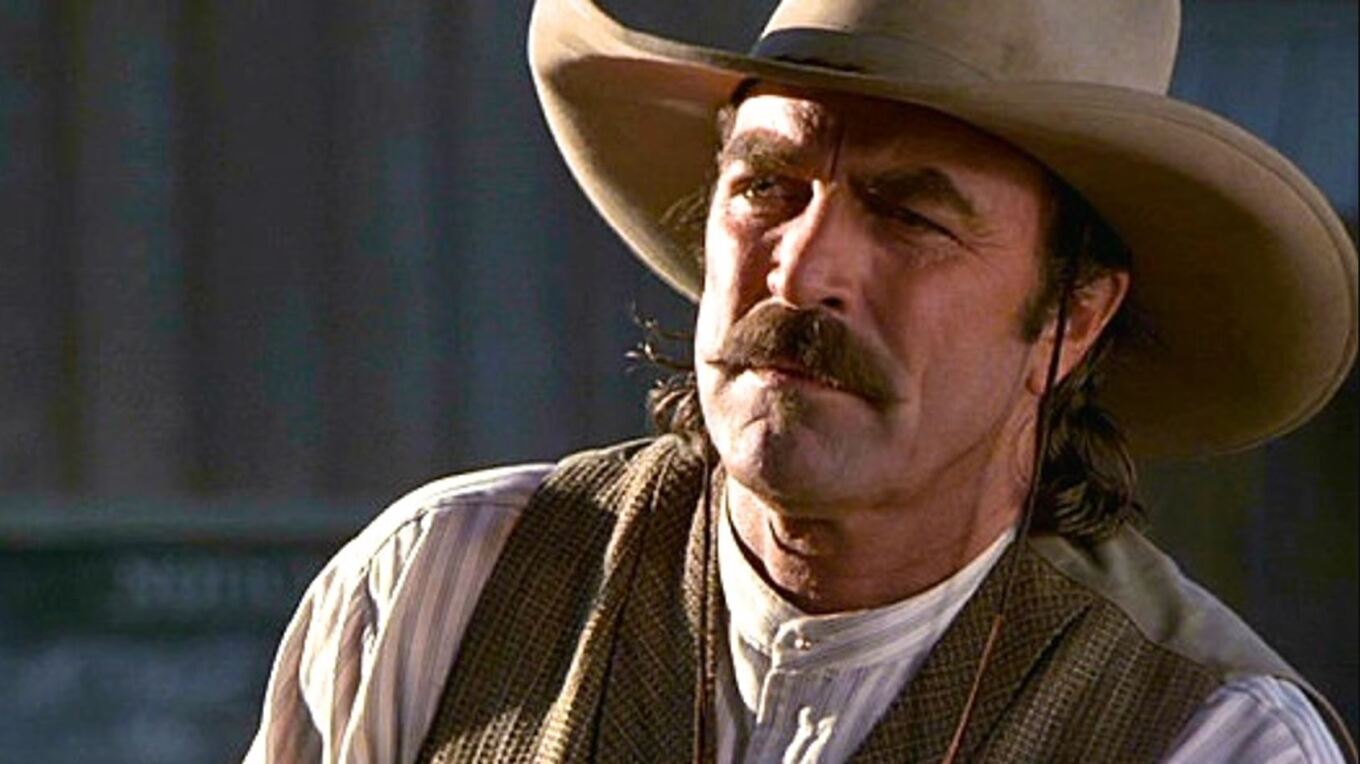
Tom Selleck was destined for Westerns, despite the genre’s decline during his career. Nevertheless, he made several exceptional Westerns that reminded audiences the genre wasn’t completely dead. In 1979, he starred in the melancholic and deeply compelling Shadow Riders, a story about two wandering cowboys who realize their time and values have passed. The film, directed by veteran Andrew V. McLaglen (who worked extensively with John Wayne), featured Sam Elliott alongside Selleck. In 1990, Selleck led the thrilling Quigley Down Under, and in 2001, he gave another strong performance in Crossfire Trail, co-starring Virginia Madsen. His most recent Western was Monte Walsh (2003), directed by Simon Wincer, where he starred alongside Isabella Rossellini and Keith Carradine.
Traditional, Pro-Gun, and a Gentleman
Although not affiliated with the Republican Party, Selleck supports gun ownership in the U.S. and was a long-time member of the NRA. He served as its spokesperson from 2003, when his close friend Charlton Heston stepped down, until 2018, when Selleck resigned from the board. Like Wayne—known for his ultra-conservative, patriotic, and anti-communist views—Selleck has never been fanatical, ensuring his beliefs didn’t harm his relationships with colleagues or industry professionals.
When He Said No to Indiana Jones
Tom Selleck is among the select group of actors who turned down roles that became iconic in cinematic history. Notably, he declined the role of Indiana Jones, a decision that Harrison Ford is undoubtedly grateful for. At the time, Selleck was too busy with Magnum, P.I. to take on the role. It’s a part that could have propelled him to stratospheric fame and transformed his career. Some argue—perhaps not without merit—that this decision saved Spielberg and preserved the Indiana Jones mythos, which required qualities different from those Selleck embodied.
Humble Yet Content
Tom Selleck has always possessed an inherent humility, perhaps born of a strict sense of self-awareness. As such, he harbors no regrets about his life or career. He feels grateful for his “very lucky life” and finds happiness in the simple pleasures of “a cigar and a glass of whiskey to end the day.” Always at his beloved ranch, surrounded by wildflowers he treasures, Selleck embodies a sense of contentment that few can match.
Ask me anything
Explore related questions




