





Zelensky: Ukraine must double the size of its army if it does not join NATO
At the same time, the Ukrainian president stated that Ukraine should double the size of its army to 1.5 million people if it is unable to join the NATO military alliance.
According to Zelensky, the U.S. opposed Kiev’s accession to the Euro-Atlantic Alliance, and he believes that Washington has never viewed his country as a NATO member.
Zelensky said it would be in the interest of both Ukraine and NATO for Ukraine to join the alliance: “We have a strong army that can make NATO stronger everywhere.”
Boris Pistorius: J.D. Vance’s comments are unacceptable
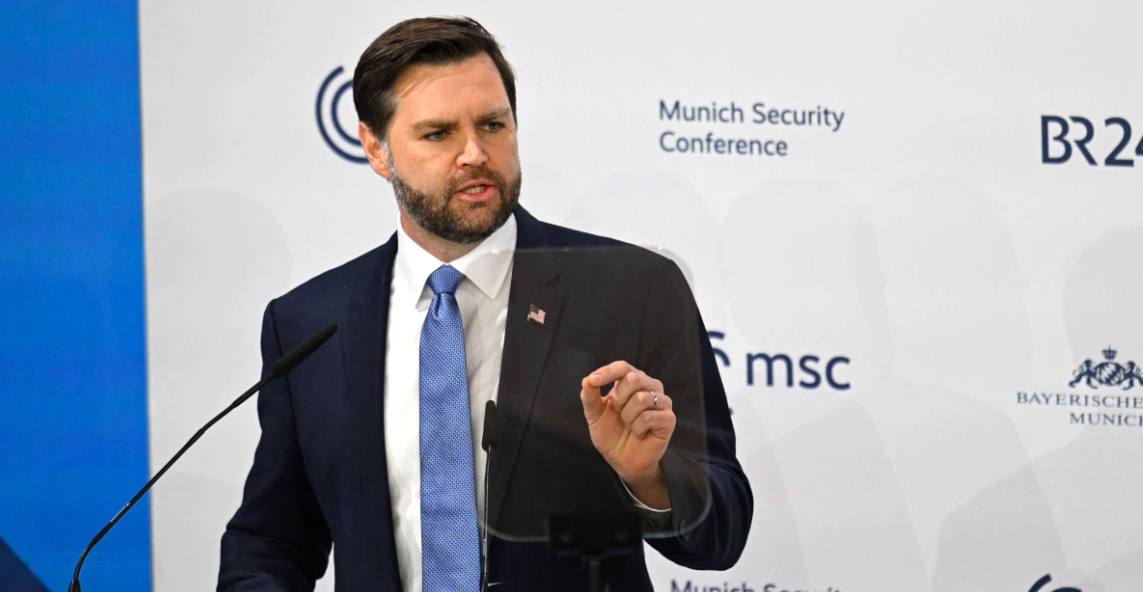
J.D. Vance’s intervention at the Munich Conference seems to have caused reactions. Already, the German Defense Minister emphasized that his comments were unacceptable.
“If I understood correctly, he is comparing parts of Europe to authoritarian regimes. This is unacceptable,” stated the German Minister.
Earlier, Vance said, “When I look at Europe today, sometimes it’s not so clear what happened to some of the winners of the Cold War.”
At the same time, Pistorius rejected the claims about democracy. “I would like to explicitly deny and oppose the statement of (Vance) that our democracy oppresses and silences minorities. We know against whom we defend our countries and why we defend them. It’s for democracy, freedom of speech, the rule of law, and human dignity.”
The meeting between Volodymyr Zelensky and J.D. Vance is ongoing.
The meeting is taking place on the sidelines of the Security Conference in Munich, as announced by the spokesperson for the Ukrainian president.
“The meeting between Ukrainian President Volodymyr Zelensky and U.S. Vice President J.D. Vance has begun in Munich,” said Serhiy Nikiforov to reporters.
Expected Meeting Between Zelensky and Vance
Volodymyr Zelensky is expected to meet with U.S. Vice President Jay D. Vance, who, in his fiery speech, did not clarify the intentions of the new administration under Donald Trump regarding Ukraine. The meeting will follow the surprise move by President Trump, who called Russian President Vladimir Putin and announced the beginning of peace talks. Zelensky publicly expressed cordiality regarding Trump’s phone call with Putin, but also warned global leaders not to “trust Putin’s claims of readiness to end the war.”
Vance: “There’s a New Sheriff in Town”
Jay D. Vance also commented on Donald Trump’s election, stating, “There’s a new sheriff in town.” According to Vance, topics such as defense budgets will be discussed in the coming days. The U.S., he noted, believes European countries should play a “larger role” in the future of the continent. The American vice president further pointed out that it is becoming increasingly unclear why Europe is defending itself. “What is the positive vision that inspires this security pact?” he asked. “I deeply believe that there is no security if you fear the voices and opinions that guide your own people.”
At the Munich Security Conference, U.S. Vice President JD Vance delivered a scathing speech against European leaders, criticizing them on issues like freedom of speech and immigration. His comments left the audience stunned, as he bluntly told the Europeans that if they are governed by fear of their own voters, there is nothing America can do for them.
Vance stated, “If you are running with the fear of your own voters, there’s nothing America can do for you. And, in fact, there is nothing you can do for the American people who elected me and elected President Trump.” He followed this with a call from Pope John Paul II urging European leaders to embrace the will of their people, even if it is surprising or goes against their own leadership.
On the immigration issue, Vance took a harsh stance, referencing the 24-year-old Afghan suspect in the recent Munich attack, questioning how many more “horrific failures” Europe would need before changing course. He also pointed to the Brexit vote as a clear message from the people, who wanted to end uncontrolled immigration.
Vance criticized the European Union’s establishment for undermining democracy by silencing populist parties and stifling alternative viewpoints. He argued that Europe’s democracy would not survive if leaders continued to dismiss the concerns and demands of their people.
Addressing free speech in Europe, Vance warned that Europe was forgetting the lessons learned from the Cold War, where freedom of speech was vital. He expressed concern over the growing restriction on free expression in Europe, drawing comparisons with past totalitarian regimes.
Additionally, he criticized the EU establishment for making “reckless statements” about democracy, specifically calling out former European Commissioner Thierry Breton, though he did not name him directly. Vance suggested that such actions could threaten the integrity of democratic processes, even suggesting that the EU’s commitment to democracy was being questioned.
In summary, Vance’s speech was a sharp critique of European leaders and their handling of democracy, immigration, and freedom of expression, asserting that America would no longer support Europe if it continued down this path.
A top advisor to Ukrainian President Volodymyr Zelensky, Andriy Yermak, met with Keith Kellogg, the U.S. Special Representative for Ukraine and Russia, at the Munich Security Conference in Germany on Friday. Their discussion centered on joint efforts to achieve a just and lasting peace. Yermak emphasized that any agreement without strong coercion of Russia would fail, as the Kremlin’s imperial ambitions are rooted in controlling Ukraine. He also stated that the aggressor must pay a real price for its actions.
The conference also saw urgent meetings, such as Ukrainian Foreign Minister Andriy Sibiga’s discussions with IAEA Director General Rafael Grossi following a drone attack on the Chernobyl nuclear plant. Sibiga urged strong international reactions to Russia’s nuclear blackmail, and Zelensky expressed readiness for peace talks with Russia, provided there is a unified stance among Ukraine, the U.S., and its allies. In parallel, NATO Secretary General Mark Rutte called for increased defense spending in Europe, with a suggested target of more than 3%, while emphasizing the need for European countries to take on more responsibility within NATO. U.S. Vice President Jay D. Vance stressed that Europe must be involved in any peace negotiations for Ukraine, alongside the U.S. and Russia. At the same time, Rutte underscored the importance of European countries contributing more to defense to ensure security in the coming years.
Ask me anything
Explore related questions




