





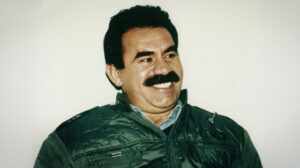
26 years after the dramatic capture of PKK leader Abdullah Öcalan at the Greek embassy in Nairobi he now faces a crucial crossroad
After months of negotiations and permission for members of the pro-Kurdish party to visit him at his prison on Imrali Island, where he is serving a life sentence, Öcalan appears ready to make a historic decision: to call on PKK members to lay down their arms in exchange for his release and to initiate a new peace process with the Turkish state. Such a move could bring an end to a civil conflict that has cost thousands of lives and created deep divisions within Turkey since the 1980s.
The announcement of Öcalan’s call for PKK members to lay down their arms and begin a peace process was expected to come on February 15, marking the 26th anniversary of his capture.
Kurds make up more than one-fifth of Turkey’s population, which stands at 90 million, and the conflict has led to economic hardship in Southeast Turkey due to a lack of infrastructure, investment, and economic activity. The isolation of Kurdish areas was another pressure point used by the Turkish state to break the armed Kurdish movement.
Erdoğan’s Major Gamble
For Turkish President Recep Tayyip Erdoğan, the Kurdish issue is a significant gamble. Not only would resolving the issue end the undeclared war against the PKK, which has also targeted Kurdish populations in Southeast Turkey, but it would also provide him with an opportunity to bypass constitutional restrictions and seek another term as president of Turkey.
However, given the new dynamics in Syria, Erdoğan hopes that a decision from the PKK to lay down its arms would include those members who have taken refuge in Northeast Syria with the YPG, and who control the autonomous Kurdish region via the SDF.
Expectations from the Dissolution of the PKK
The “solution” to the Kurdish issue and the abandonment of armed struggle by the PKK, founded by Öcalan in 1978, would significantly strengthen Turkey, neutralize separatist tendencies, and make relations with Iran and Iraq, where large Kurdish minorities live, more manageable. Northern Iraq, in fact, already hosts an autonomous Kurdish region.
The expectation is that a new peace process would put an end to the vision of Kurdish nationalism for an independent Kurdish state in the Middle East, which is a major security threat to Turkey. The two peoples who, after a century of changes to the Middle Eastern map, have remained without national completion and the creation of independent states are the Kurds and the Palestinians.
The PKK’s Dilemma and Skepticism About Erdoğan’s Sincerity
“The leader Apo will make a significant and historic statement on February 15 and will use it as the beginning of an effort to find a solution,” said Murat Karayilan, one of the PKK’s top commanders, according to Kurdish media outlets.
Although the PKK has announced it is ready to follow the decisions of its imprisoned leader, no one knows if Öcalan’s “surrender” will be accepted by all PKK fighters. There is considerable skepticism and caution within the Kurdish community, especially in the armed wing of the PKK, towards the Turkish state, after four decades of armed struggle for autonomy in Turkish Kurdistan.
In Syria, PKK rebels will also need to assess whether Erdoğan’s peace intentions are genuine, or if the “peace process” is just a tactical maneuver. There is always the risk that, after laying down their arms, they will be caught between the Turkish military’s special forces and armed Islamic groups of HTS, now disguised as the Syrian “government army.”
If the PKK fighters in Turkey have nothing to lose, the Kurds of the YPG in Syria would essentially be asked to abandon and surrender a vast autonomous region they have conquered with arms. This region includes Syria’s vital natural resources, giving them significant leverage in shaping Syria’s future.
Since October, the nationalist president of the MHP, an ally of Erdoğan, Devlet Bahçeli, surprised many when he welcomed representatives of the pro-Kurdish party DEM to parliament. He stated that Öcalan could be released on the condition that he calls for PKK leaders to disarm and participate in a political process for resolution.
The DEM, whose natural leader is Selahattin Demirtaş (who remains imprisoned in Turkish jails), has supported this initiative from the beginning. The party’s members were the first to establish direct contact with Öcalan after receiving special permission to visit him in prison.
A Wave of Arrests Targeting Kurdish Minority Leaders
The PKK’s objectives include the recognition of Kurdish identity and culture in Turkey’s Constitution, the teaching of the Kurdish language in schools, and “democratic autonomy,” with the devolution of more power from the state to local authorities. However, this remains a red line for power circles in Ankara, as they believe such autonomy would promote the vision of “self-determination.”
Turkish authorities, however, appear to be taking measures. In the last four months, a wave of arrests has taken place in Southeast Turkey, targeting members of the Kurdish minority to weaken voices opposing the peace process and Öcalan’s call.
The PKK’s major problem is that there is no guarantee that any potential agreement within the peace process would be upheld by Ankara. There is a fear that, after the Kurds disarm and help Erdoğan achieve his goal of securing another presidential term, they will face a new wave of repression.
Ten years ago, in 2015, Erdoğan, as prime minister, initiated another peace process. The delicate negotiations were led by the head of MIT, now Foreign Minister Hakan Fidan. The negotiations progressed, but after the June 2015 elections, the increase in the Kurdish parties’ votes deprived the AKP of an absolute majority. The process collapsed, followed by a wave of persecution against the Kurds, and in the next elections, the AKP regained its majority in the parliament.
Back then, there was intense internal opposition, as the Turkish society, after four decades of armed conflict and thousands of victims, had deeply ingrained the perception of the “criminal PKK.” However, the strategic alliance with Bahçeli aims to calm nationalist reactions.
In 2015, after the collapse of the peace process and the subsequent wave of persecution, many PKK fighters fled to northern Syria and joined the YPG. Later, through the SDF, the YPG became a key U.S. ally in the fight against ISIS, as well as a balancing force against Iranian and Russian influence on the Assad regime.
Ask me anything
Explore related questions




