“Scientists don’t make predictions; they use specialized instruments and make forecasts, which can never be entirely accurate. There is a possibility of a larger earthquake occurring,” said Minister of Climate Crisis and Civil Protection Vassilis Kikilias on Monday, speaking to ANT1.
Vassilis Kikilias referred to the large-scale mobilization by Civil Protection, Security Forces, the Armed Forces, and companies related to electricity and telecommunications, all working proactively in Santorini and the surrounding islands to ensure a rapid response to any needs arising from a major earthquake.
“The distances between the islands are small. In the event of a major earthquake, the 112 emergency alert must be activated within minutes. Efforts will be made if and when necessary, but the residents of Santorini and the surrounding islands know that if a large earthquake occurs today or in the coming years, they should move away from coastal areas and head to higher ground,” Kikilias noted.
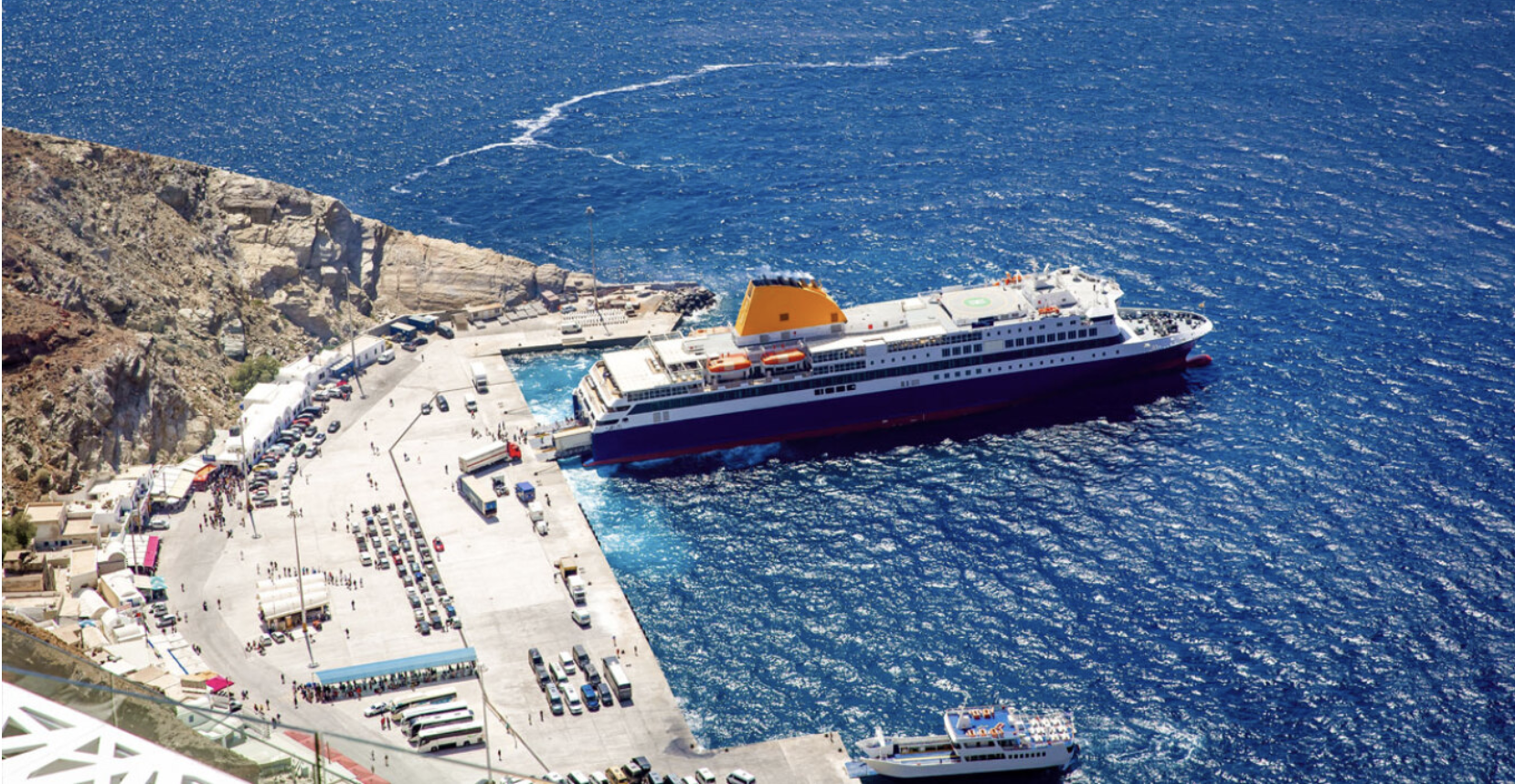
The Minister of Climate Crisis and Civil Protection revealed that “Beyond the new port of Santorini that is being prepared, it was decided during a meeting with the Prime Minister that an emergency escape port will also be created on the side of the island where passenger ships can dock in case of emergency. This is a tripartite agreement involving Civil Protection and the Armed Forces, who will be responsible for building the port.”
Referring to the region’s volcanoes, he stated, “Santorini has a unique geological feature with the volcano on Nea Kameni, which has shown minor activity in recent months. Then there’s another volcano, Kolumbo, which has remained in a state of ongoing activation for years and is closely monitored by scientists from Greece and abroad. There is also a third volcano, located between Santorini and Amorgos, which causes earthquakes due to the rising magma—something that naturally occurs deep within the Earth. According to scientists, this magma is currently at a depth of about five kilometers.”
When asked about statements by experts that sometimes cause confusion among the public, Kikilias sharply commented on “scientists, retired scientists, and scientists nearing retirement,” indirectly pointing to certain individuals. Emphasizing his stance, he said, “A little restraint, please,” explaining that these discussions involve people who are not necessarily familiar with scientific terminology—locals, business owners, and tourism professionals. However, he stressed, “Our top priority—mine, the Prime Minister’s, and everyone’s—is the safety of our citizens.”
He added, “I have managed major crises such as the pandemic and devastating wildfires, and as always, we will provide information with honesty, security, and solid arguments so that everyone stays informed.”
Land Uplift and Ground Movement in Santorini
Regarding the land uplift and ground movement in Santorini, Kikilias explained that “the elevation and movement of the ground are occurring across the entire island, not just in specific areas. This may happen gradually or at an accelerated pace. Scientists are monitoring the situation and keeping us informed. It is an important finding that they are evaluating. This has happened in the past, though at a different rate. We will see how it evolves, and the scientists will provide their recommendations.”
He further noted, “Between 2011 and 2012, for about 15 months, there were periods of increased and decreased activity. But back then, as the islanders tell me, no one was listening to the scientists because the focus was on the financial crisis, the bailout programs, and economic measures. We, however, are listening to the scientists.”
Concluding, he highlighted that “the seismic activity is centered near Anydro, off the coast of Santorini, specifically at a fault line that scientists are closely monitoring.”
Ask me anything
Explore related questions