





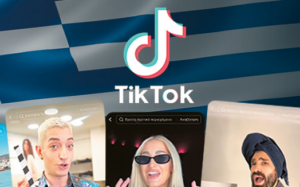
The most popular “heroes” next door and the videos with millions of views. Product-persons, but also influential opinion-makers in a global community of 1 billion users, including 4 million Greeks.
Content is king, they say. But what is the content that reigns supreme on TikTok? Content creators, the so-called creators, are now the celebrities of our time who belong to a digital star system. Some examples are Dimitris Naoum, a well-known BookToker, Smaragda, who simplifies and makes Geography lessons attractive, Dimitris Kouloumasis, a chemistry professor, Georgios Theodoropoulos, who shares food experiences, Mauves Travel Buddies, who focus on travel, and Elina Kalitzaki, who shares makeup tips.
You’re Made, Not Born
Juststella is perhaps one of the most prominent examples of the Greek TikTok ecosystem. She started out during quarantine, like most Greek TikTokers, creating humorous videos with herself, her daughter, and her husband. One video was enough for her to now be walking down the street and being recognized by the public.

Of course, she didn’t stop there. Content creation is a daily occurrence, despite the fact that she has two other businesses outside the Internet sphere. “TikTok changed my whole life, it opened doors for me that otherwise wouldn’t have opened,” explains the entrepreneur who is now considered a professional creator. “It’s also included in my tax return as a service,” she tells us characteristically.
They are often accused of vanity and evasion, but in reality they sweat their way through, to the point where they sometimes lose the boundaries between personal and professional life. “There is no 8-hour day, it’s over 14 hours a day, maybe 16, which includes filming, preparing the stage, communicating with the audience, researching for future topics,” explains Elpida Bograkou, Strategic Planner and Digital Marketing Specialist.
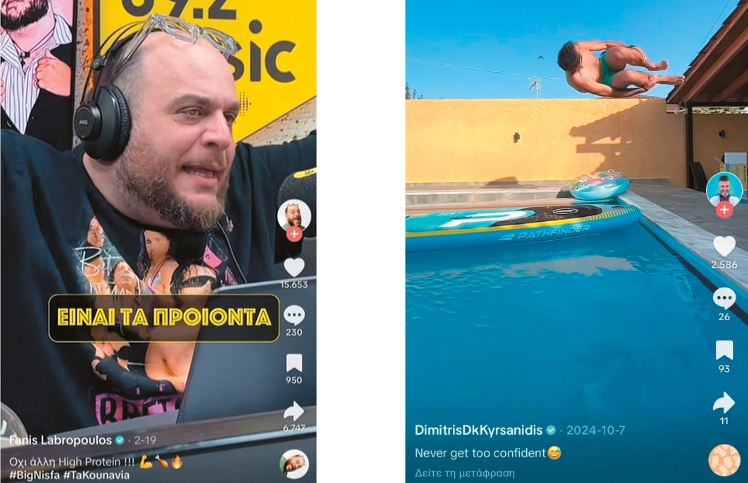
“Influencers end up managing their entire daily lives as content, they enter into a mental process that keeps them alert all day long,” she notes, noting that those who use the platform not as a primary means of livelihood, but to frame their work, such as young artists, may not have the full picture of the time that needs to be spent.
She herself knows firsthand the non-existent schedules. As head of influencer marketing and talent management at White Canvas Athens, which collaborates with some of the most popular accounts on TikTok, such as Petros Maounatzis, Yannos Valianos and recently Elena Kremlidou (Mariposa), she will dedicate hours to educating new and old TikTokers on how the algorithm works, but mainly to teaching what every influencer “burns” most: how to manage their public image, find the balance between their personal style and the demands of the audience and brands in order to “catch” their channel and avoid mishaps on a professional and personal level.
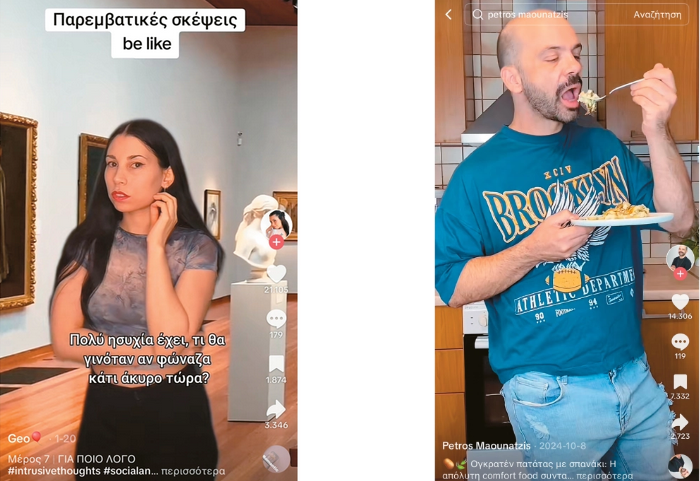
According to Elpida Bograkou, TikTokers need to be “in the thick of it,” socially sensitive, with a sense of purpose, focus, and an understanding of how the industry works. What else do aspiring influencers need? A good phone, a home studio—“not something fancy; as long as the space that appears in the videos reflects the content you want to create”—and probably a few thousand euros.
“Most importantly, if someone wants to succeed on TikTok, they need to realize that it’s not just a hobby; it’s a full-time job, requiring dedication, time, and strategy. And, of course, it involves risk, since there may come a time when they’ll need to leave a stable job, with a steady salary, to devote themselves exclusively to it, possibly without income for even a year.”

Nikos Michalos, founder and director of the rapidly growing communications and advertising company FMN, which specializes in influencer marketing, agrees with all of the above. His company started working with young TikTokers and gradually built a large client base on them, now reaching some of the most well-known faces on the app.
“Brands love to work with content creators, because of their direct connection with the audience,” he explains. “TikTok has had a profound impact on the advertising sector, as it has shaped the habits of the buying public. Everything is happening quickly and youthfully. The buying public is getting younger in age (18 to 25) and the favorite products that we all want to see advertised are those of beauty, food and travel.”
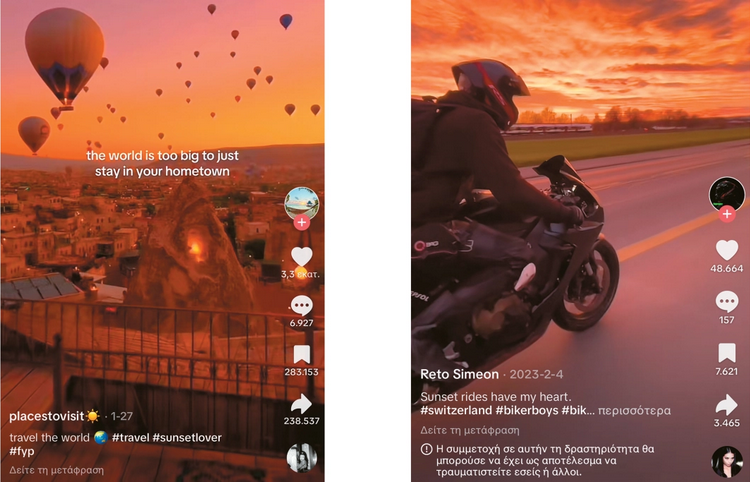
He even notes that now in Greece, in order to go out for a meal, someone will do so after first consulting their TikTok. “Food has been influenced more than any other sector by the platform, both due to organic trends and the impressive images of food consumed by everyone’s favorite creators that make us want to enjoy them too.” In a way, being a successful TikToker in Greece involves having partnerships with many powerful brands in the space, which are ultimately the ones who will put their hand in your pocket, ensuring creators generous annual incomes, up to over 40,000 euros.
How powerful is the algorithm?
TikTok’s algorithm works with a complex recommendation system based on machine learning and is designed to maximize user engagement. It analyzes user interactions—such as watch time, likes, shares, comments, and replays—to prioritize content that aligns with individual preferences. Unlike traditional social media, TikTok prioritizes content relevance over follower count, allowing even new creators to go viral.
TikTok is not just an entertainment platform, but a cultural force. It has given voice to marginalized communities, spread awareness about social issues, and even played a role in political movements. During the 2020 US election, for example, TikTok users organized the disruption of political rallies, and activists used the platform to raise awareness about everything from climate change to mental health.

In the modern era, multimedia environments (with images, videos and sound) are changing the way we perceive ourselves, comments Angeliki Gazi, associate professor at the Department of Communication, Media and Culture at Panteion University.
Individual and collective identity are now shaped through digital data, creating “fragmented identities, just like the characteristics of vision itself, which intersect. People direct digital selves, choosing what to show the audience, with the result that reality turns into a simulated performance. TikTokers are no longer everyday people. They are more simulated people. The individual turns into a huge self-viewing screen.”
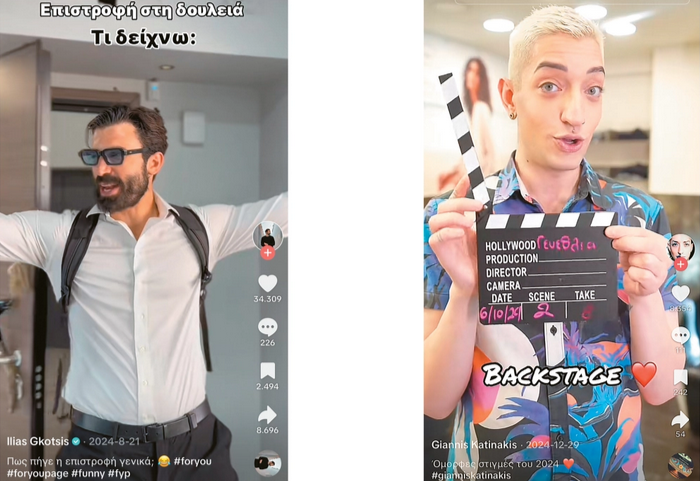
Professor of Sociological and Anthropological Theory and Epistemology of Social Sciences at the University of Crete, Antonios Georgoulas, explains that what happens on TikTok is a rapid exchange of emotions. “We leave the unpleasant behind and move on to the next video.
The platform’s algorithm essentially attacks our emotional state and keeps us connected to humor or intense anger, not logic. We live in an era of predetermined standards, which makes us trapped in specific identities.”
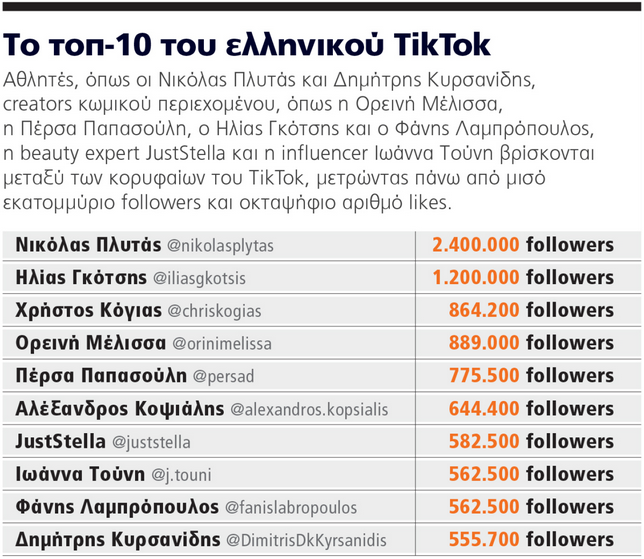
5 Popular TikTokers Speak Out on “THEMA”
Yannis Katinakis, Content Creator: “Something’s gone wrong”

“I started on Instagram alone two years ago and moved to TikTok during quarantine. For those of us who are involved in this, I think something inside us is a little different, not necessarily good or bad. But when a person is overwhelmed by communication and exposure to so many people, well, a screw has probably come loose. Sometimes you forget what your role is, your persona… Because I’m an actor, I want to create material on my work that reminds me of a scene from a series. In the beginning, I uploaded every day, it was my outlet. Now, I upload two videos a week, because if the other person sees you all the time, at some point they’ll get sick of you. I would like everyone to use their platform in the most noble and useful way possible. And for people to understand how important it is to laugh.”
Vidali Mirketa, Content creator, beauty entrepreneur: “You become a canceler very easily”
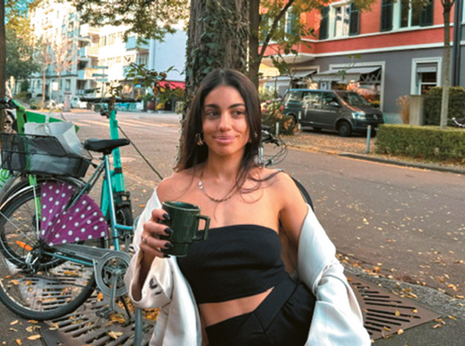
Mirketa Vidali uses the platform very frequently, mainly as a powerful tool for promoting her business ideas and steps. “At first we just showed products, but now their advertising through TikTok, although it is more indirect, is also faster.” However, for her, as positive as this whole part of the promotion is, the negative is how quickly one can be canceled on the app. “Suddenly you can find yourself facing millions of judges, which is quite difficult to manage, even if you just make a wrong choice, like everyone does.”
Just Stella, Beauty expert – family content creator: “We show a different self”

“People want to share jokes, humor, social issues and a little gossip and a lot of family content.” The worst thing for her, however, is that many people think it’s something simple. “Everyone is waiting for something, but not all days are the same, sometimes we turn on the camera and show something other than who we are,” she explains. “On the other hand, I’ve always had a love for the camera and I think for someone to do what we do, they really have to feel comfortable in front of it and talk to the audience, otherwise they won’t be successful.”
Petros Maounatzis, Food Creator: “It’s a way of expressing themselves”
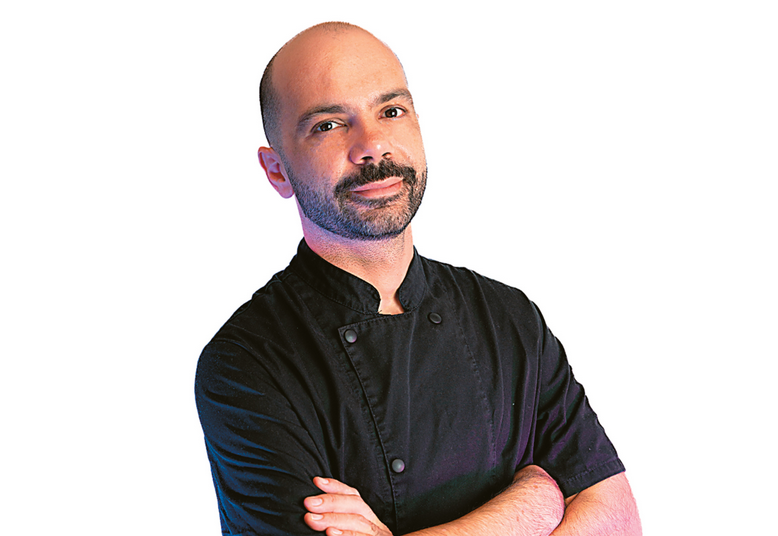
“I have been active on social media for 10 years, starting with YouTube, where I passionately recorded family and traditional recipes. Despite initial failures – 20 people were watching me at the time – and financial sacrifices in the first few years, I continued with perseverance. I cook, film, edit by myself, while maintaining my own store, a demanding job and therefore time pressure – I can prepare a video at 2 in the morning. I am inspired by everyday life, I develop recipes and follow trends, giving my own touch, with consistency and precision in detail – I respect even the few euros that someone gives to make my recipes. The income came gradually, I choose collaborations with a strict filter. Creating content is a way of expression, it relaxes me and fills me. I don’t know what the future will bring, but now I enjoy every moment.”
Geo, Content Creator: “I walk alone, without an agency”
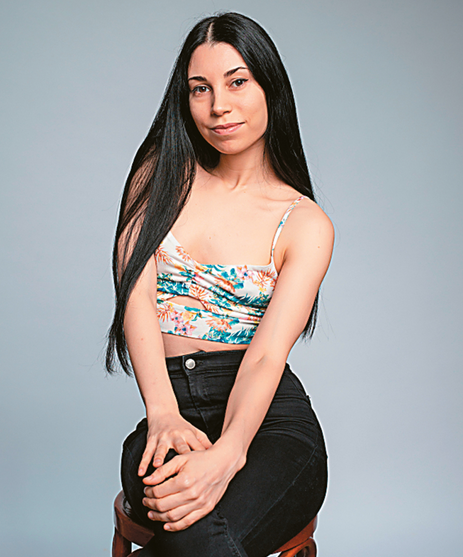
“Since I was little, I have been involved in films, music and dance, which I do professionally as a teacher. Content creation entered my life in 2005 by making funny videos with my first mobile phone. TikTok came during the quarantine and now social media is my main occupation. I love humor, spontaneity and the outburst of the moment – my content is 99% one take -, I am infinitely funny and I make family friendly videos that my niece, for example, can also watch. I don’t have an agency, I travel alone, I love the community I built and I want to find good collaborators and friends in the field. Although motherhood has limited my time, content remains a priority. I dream of crazy things for the future! May we have health and everything will be possible.”
Ask me anything
Explore related questions




