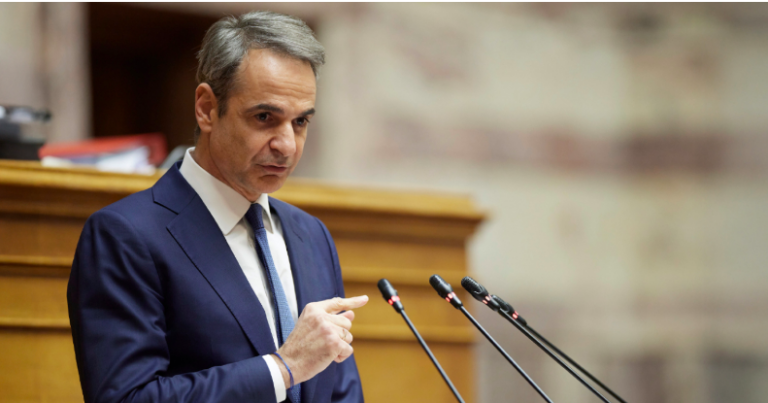
Prime Minister Kyriakos Mitsotakis is pressing the reset button after the government survived a no-confidence vote with 157 “no” votes in Parliament. With protests outside and tension running high inside the chamber, the vote capped off a dramatic week that saw heated debates, personal attacks, and even leaflet-throwing from opposition members.
Emerging from the session, Mitsotakis stated, “A chapter closes for us today. From tomorrow, the government continues its work, and I continue mine.” His remarks signal a governmental restart, with a cabinet reshuffle expected soon and a fresh political agenda taking shape.
Reforming Ministerial Accountability
A key policy move Mitsotakis unveiled is a reform of Article 86 of the Constitution, aiming to remove parliamentary influence over judicial investigations involving politicians. This would essentially abolish pre-investigative committees and introduce a special judicial body to handle such cases. The technical details remain vague, but the prime minister has invited PASOK to support the amendment, which would be put to review in the next Parliament.
Additionally, Mitsotakis challenged PASOK to back the constitutional protection of public sector employee evaluations and the revision of Article 16, which restricts the establishment of private universities in Greece.
A 12-Year Defense Strategy Discussion
Linking domestic reforms to geopolitical challenges, Mitsotakis announced that in the coming weeks, Parliament will hold a special session on the country’s 12-year defense strategy. This will be followed by a closed-door briefing by Defense Minister Nikos Dendias. Sources indicate that this move confirms Dendias’ continued role at the Defense Ministry despite the upcoming reshuffle.
Reshuffle and Government Realignment
A cabinet reshuffle has been widely anticipated, with speculation surrounding key ministerial changes. Finance Minister Kostis Hatzidakis is rumored to be moving to a new coordination role in the Prime Minister’s office, possibly as Deputy PM.
With the Infrastructure Ministry in need of a new head and discussions about changes at the Finance Ministry, the reshuffle is expected to be more extensive than previous ones. Meanwhile, Shipping Minister Christos Stylianides’ departure is confirmed, and rumors suggest Vasilis Kikilias could be moved to another national security-related ministry. Former Minister of State Stavros Papastavrou is also expected to return to government.
Significant changes among deputy ministers are also anticipated, with more ND MPs set to take on government roles. The final decisions will likely be made over the weekend, while Mitsotakis is also set to meet Cypriot President Nikos Christodoulides ahead of the March 17-18 Geneva summit on Cyprus, despite low expectations for breakthroughs.
Additionally, the ND members who will serve on the pre-investigative committee for Christos Triantopoulos will be announced by Monday, with the committee’s work expected to begin within 10 days.
Political Calculations Ahead of 2027 Elections
Mitsotakis reaffirmed his intention to serve out his full term, with elections set for 2027. The reshuffle and policy shifts signal an effort to consolidate support within ND and win back undecided voters—a crucial battleground as the political landscape remains volatile.
Ask me anything
Explore related questions